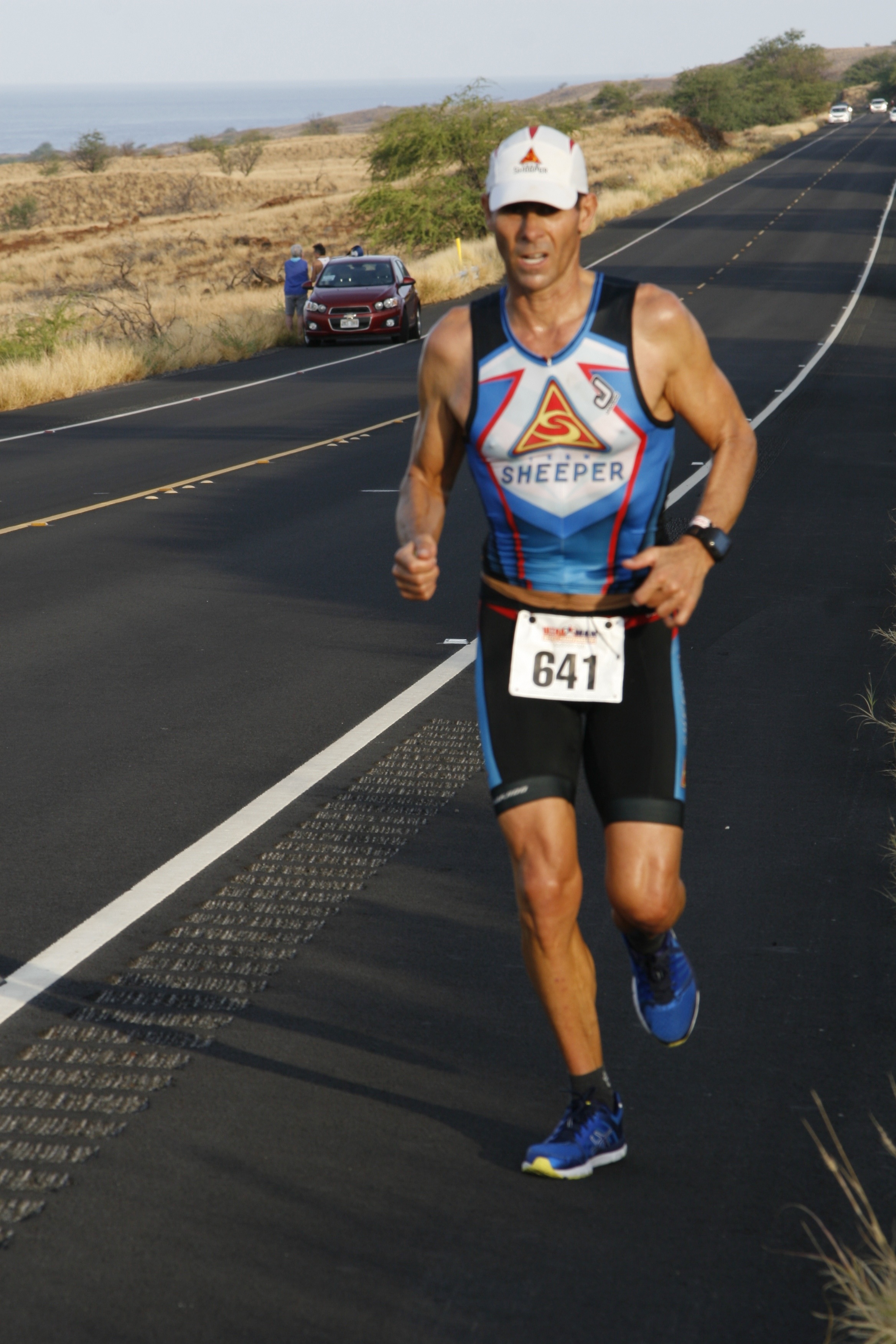
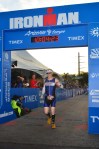
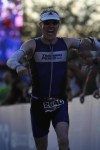
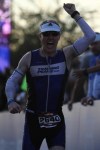
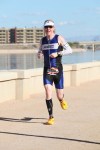
Since I paid for the official race photos, I might as well post ’em!
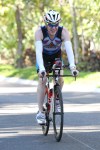
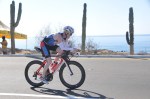
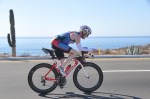
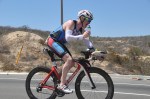
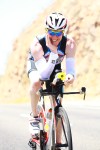
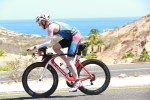
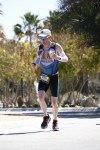
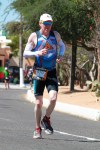
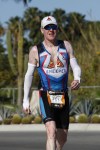
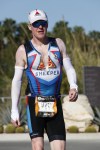
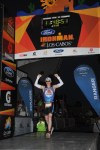

Since I paid for the official race photos, I might as well post ’em!

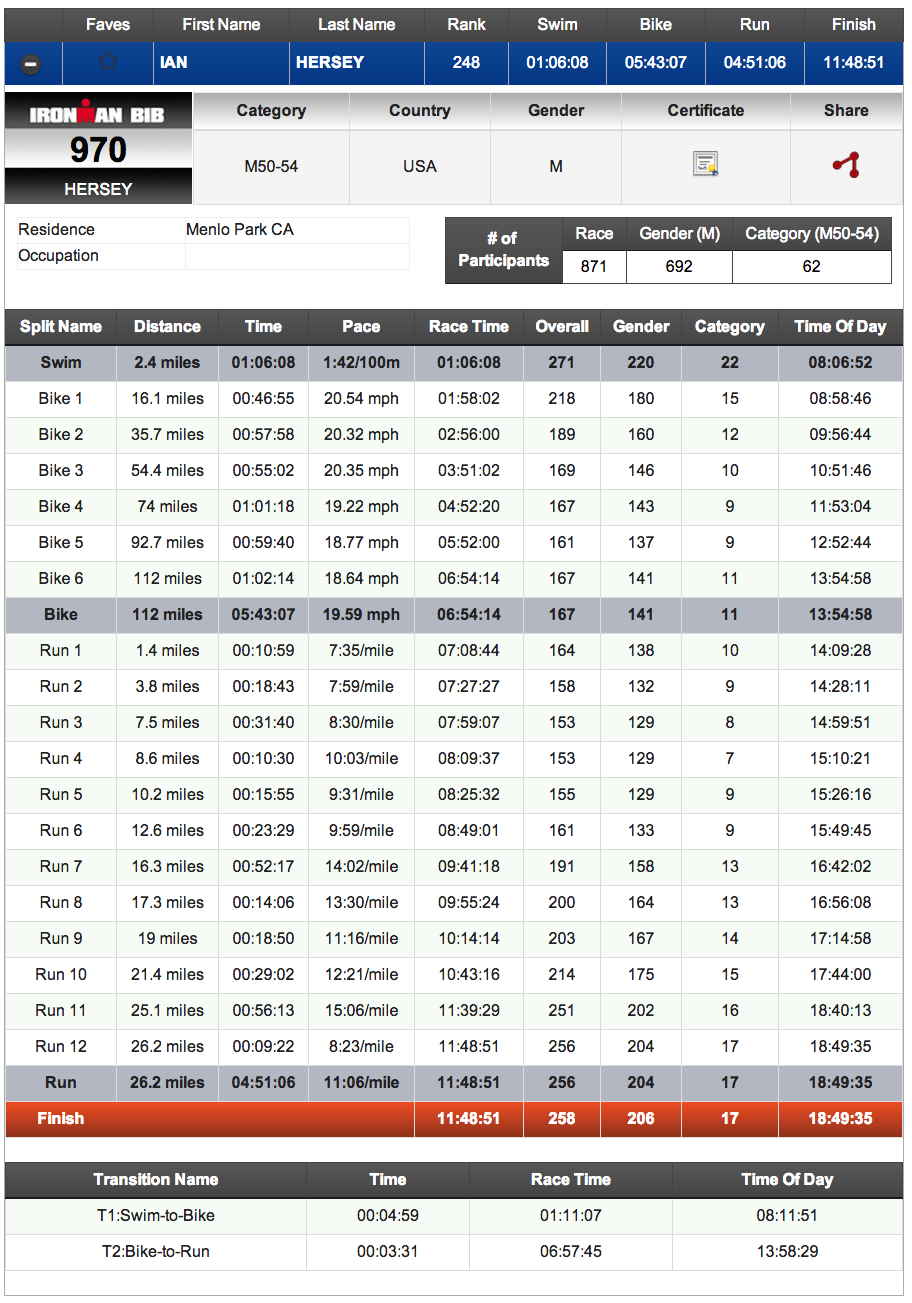
This was my 14th Ironman. Once you’ve done a few and have generally been on an improvement curve, you tend to take it for granted that each race will get better — the times may vary according to conditions, but you expect better each time.
Then you have a day like I had in Cabo: one of my slowest Ironmans and by far my slowest run ever, though to be fair there wasn’t a lot of actual running involved.
My training had been excellent leading up to the race — solid long rides, best power ever on the bike, a decent 1:24 half marathon the day after a longish ride, and even my swimming was improving a little. The one fly in the ointment was a slight hamstring strain I had gotten while running two weeks before the event. Some aggressive ART sessions and a stretch taping by my friend Jen seemed to have resolved the issue. So I had reason to expect a good result. But — like life — sometimes things just don’t work out. The first ominous sign was a flat rear tire when I arrived at the transition area on race morning — that had never happened to me before. Luckily, I was carrying two spare tubes in my tool bag, so I made a quick change. No real drama. It was also a little nip and tuck getting down to the beach through a very narrow corral; my coach Tim (who was also in the race) and I weren’t sure we’d make it down before the gun went off. But it all worked out.
Once the race got underway, the day started off well. Only about 900 competitors started the race, which meant a very nice swim with minimal contact. The Sea of Cortez was pretty calm and a nice 73F or so. I got off well and swam relaxed, focusing on my technique and sighting, and was surprised to see the clock reading 1:05:xx when I exited on the beach. A PR by almost 4 minutes — things were looking good!
The bike course isn’t easy or particularly fast — lots of rolling hills on the corridor road between the two Cabos, and much of the road surface is rough chip seal. There were also a few nasty potholes that were hard to see until you were almost on them (or in them). Luckily, with a field that was pretty small and spread out and a three-loop bike, it was easy to ride right most of the time and also to remember approximately where the hazards were.
I was targeting a bike time of around 5:30 — just over a 20-mph average. The initial climbs put me a little behind, but by the time I had done the first of three loops, I was right on schedule (speed-wise and power-wise) and feeling pretty good. Pretty good, not great.

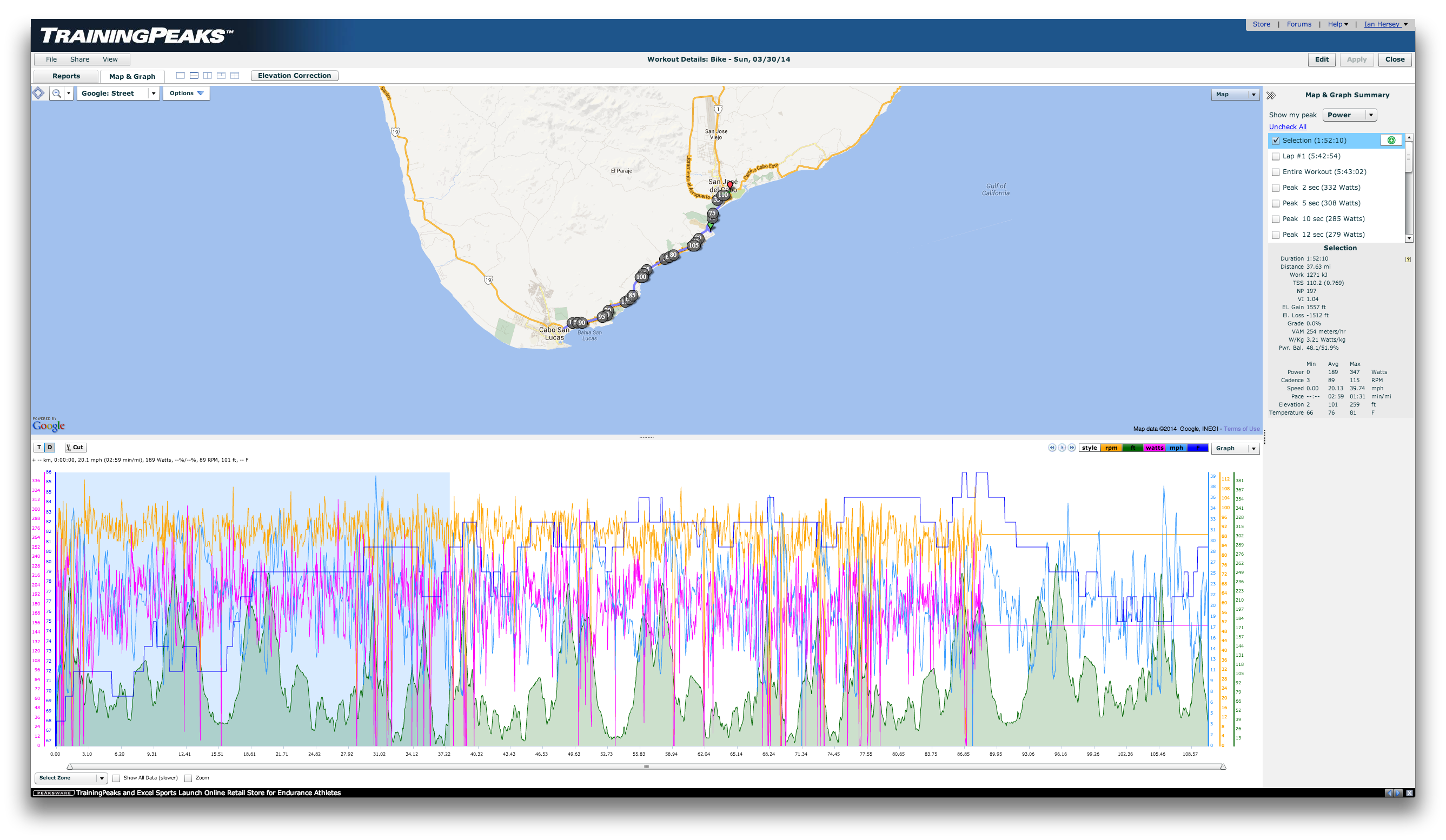
That was as good as it was going to get, though. I had done a 5.5-hour training ride at a Normalized Power (NP) of 217W, and here I was 20W lower but unable to up the ante. For you non-data-geeks, that means that I couldn’t turn over the pedals as hard on race day as I had done pretty easily in training. I’m pretty sure the heat had something to do with that.
Another view (sorry to geek out) is where I had my best power for 30, 60, 90 and 120 minutes. That would be…drum roll…in the first half of the bike:
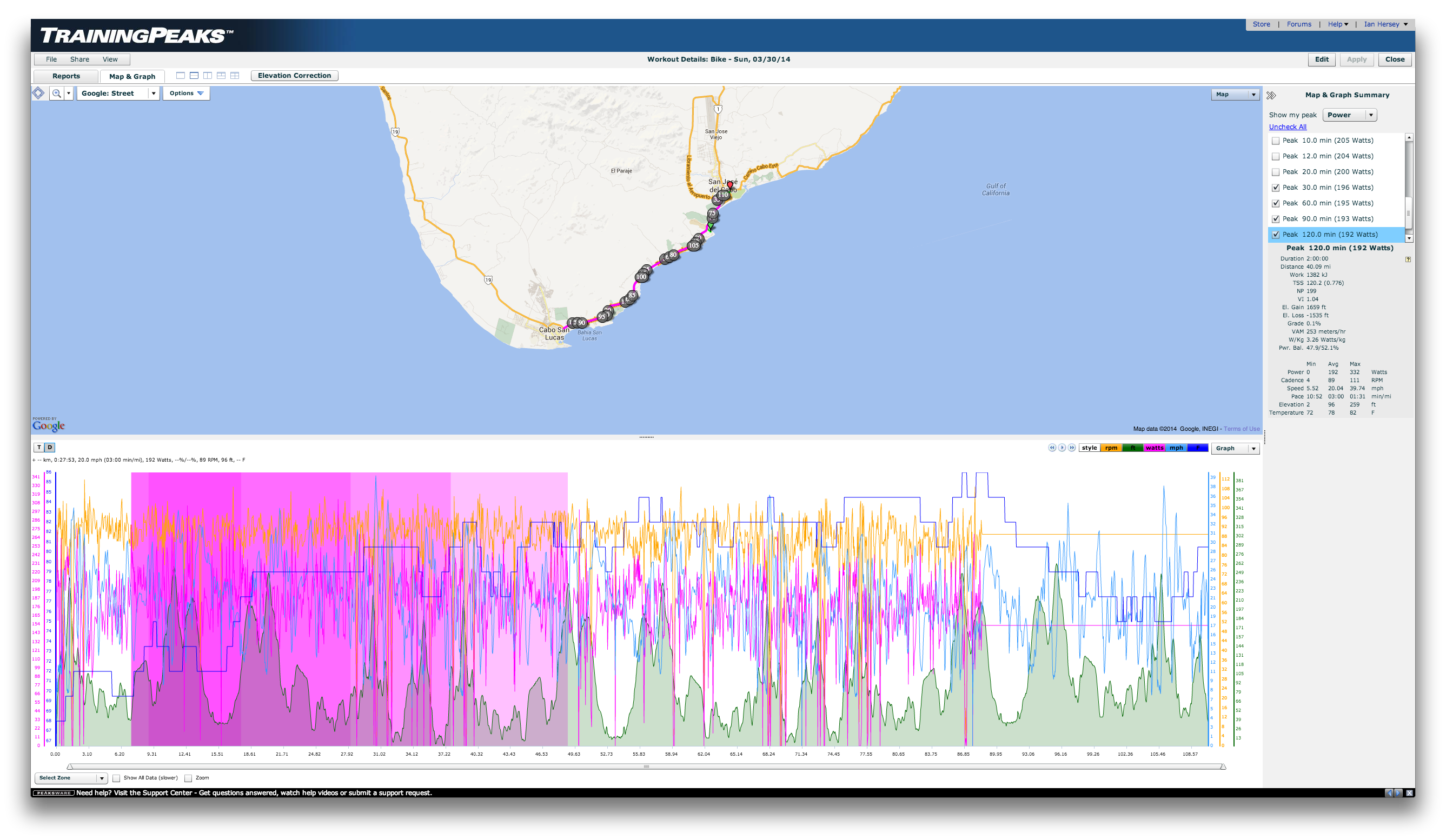
This is not the way you want the day to go — instead, you want your best power late in the ride. I did have a technical glitch, though, where in the last hour+ my bike computer just locked on 153W no matter whether I was pedaling or coasting, climbing or descending, so in essence I could no longer rely on my power meter to guide me. I’m not sure I would have liked the real numbers anyway, as cramps began to set in with about 20 miles to go.
This was looking like trouble. I’m used to cramping in the run, but it doesn’t happen often on the bike. Except when it’s really hot, like that disastrous half Ironman in Las Vegas I did. I’m not sure what happened, as I thought I had stayed on top of my fluids and electrolytes really well. One thing I noticed was that my shoulders were fried from the sun, despite having put on a lot of sunscreen (I’m going to have to go with a sleeved jersey instead of sleeveless tri top next time). Anyway, I found that I could keep the cramps at bay by standing on the pedals out of the saddle, so I decided to, um, go ahead and do that.
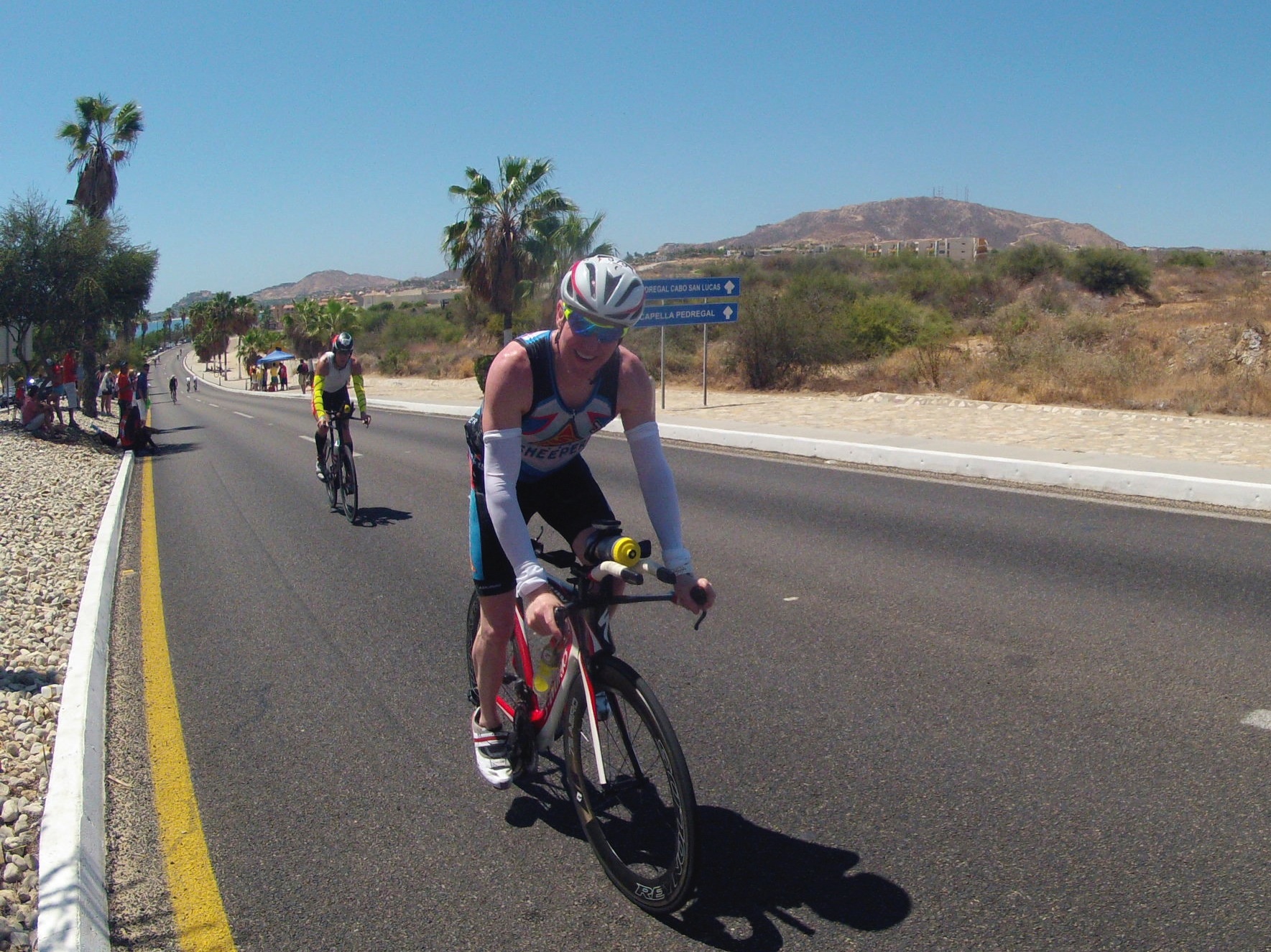
Standing some and getting more electrolyte caps and fluids in seemed to do the trick, and I finished the ride in 5:42 — some fall-off in pace the last lap, but it could have been much worse. “Worse,” as it turned out, was still to come.
The run-in to T2 was a downhill with 4 or 5 nice speed bumps, and soon I was happily dismounting the bike. Grabbed my bag and headed into the changing tent; I made sure to get all sunscreened up, even though a lot of the damage was already done. I actually felt pretty good when I started running, probably partly due to the Hokas I was wearing (shoes that are the opposite of minimalist — big, cushioned soles that make it feel like you’re running on pillows). My Garmin was taking a while to sync, and I went through mile 1 before starting it, so I’m not sure what my split was (probably 7:30-7:40). Saw most of my support crew in the first mile and then again a little while later as we did another short out and back.

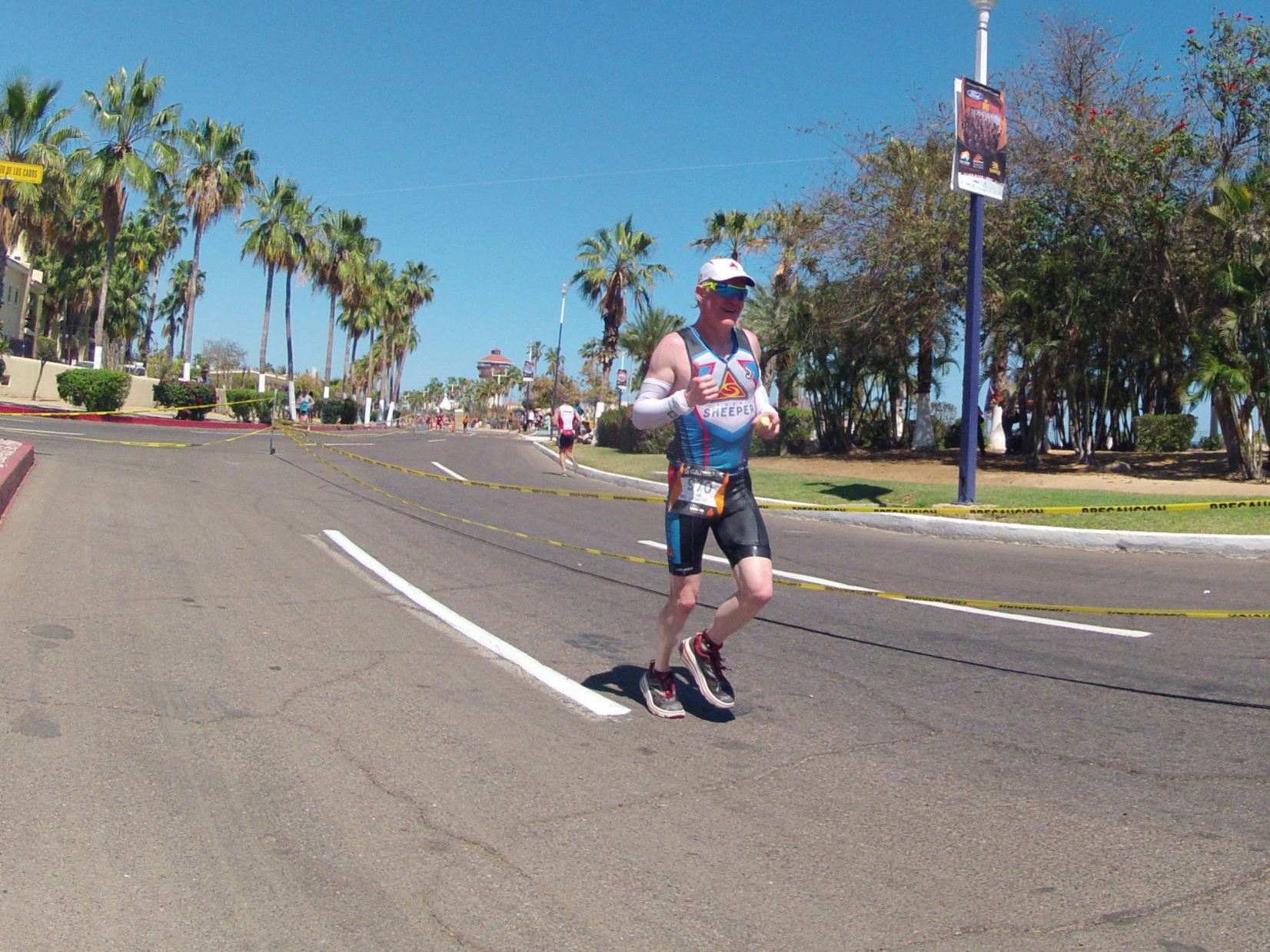
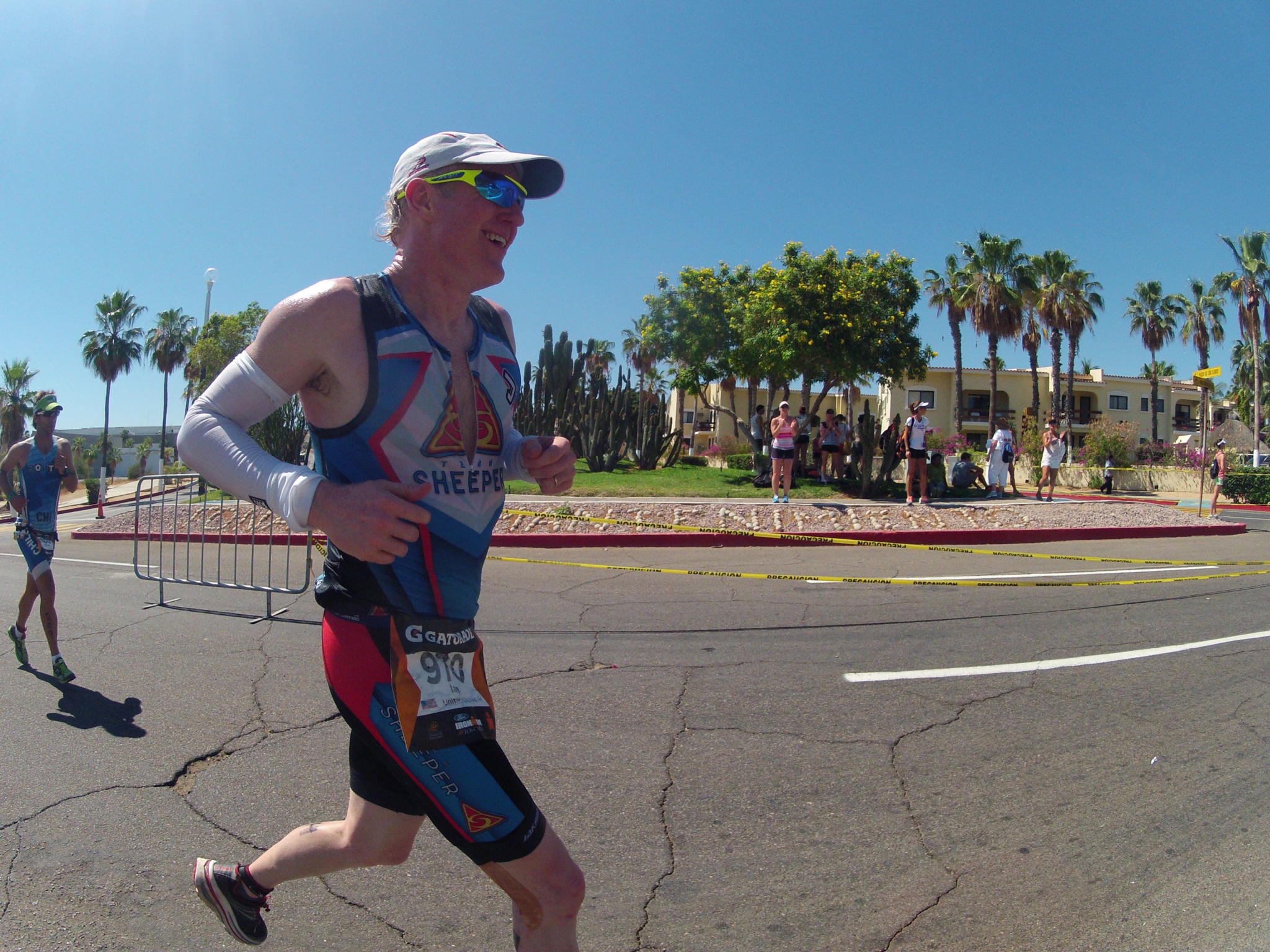
The fun was pretty short-lived, though. My pace really started to slow after 4 miles or so, which is not exactly confidence inspiring, but I made it through the first of three loops by walking the aid stations. By that point, I had moved up from 11th in the age group off the bike to 7th. That was as good as it was going to get.
The cramps hit around mile 9, just after I had passed the finish line for the first time (cruelly, we had to pass right by the finish line twice before finally going down the finish chute on the final lap). Not bad at first, but then accompanied by nausea. I saw my crew again, and Matt asked how I was. “Bonking,” I replied. “I need to get some calories.” “You need to top up on Coke and ice the next few aid stations,” he told me. So I did that, and I made it to the half marathon mark in the high 1:5x range. That’s still sub-4:00 pace, but the trend wasn’t in my favor.
Usually when you have a bad patch in an Ironman, you come good at some point — “it never always gets worse” is a useful mantra to remember. So I kept trying to figure out what I needed in order to keep going, thinking at any point my second wind was coming.
It turned out that what I needed was to walk.
And so I walked, because at least that was forward progress. There was no way I was going to let myself DNF.
When you walk, the miles pass vvvveeerrrryyyyy slooooooooowwwwwwwwwwly.
Every once in awhile, I would break into a trot just to see whether my body’s response had improved.
Um, that would be a “no.”
It’s hard to describe almost a half marathon of walking. It sucked. I felt like a failure. My feet were blistering; my neck and shoulders were sunburned, and I wasn’t having any fun. But dammit, I was going to finish this f****r.
With around a mile to go, my crew were out on the lonely, somewhat pungent section along the estuary. “White Lightning, what are you doing?” asked Matt. “Having a nice sunset stroll,” I answered. My wife Jeanne chased after me, telling me “this is the first time I can keep up with you.” The course doubled back on itself, so on the return — about a half mile to go — I told myself “f*** it” and started to run.
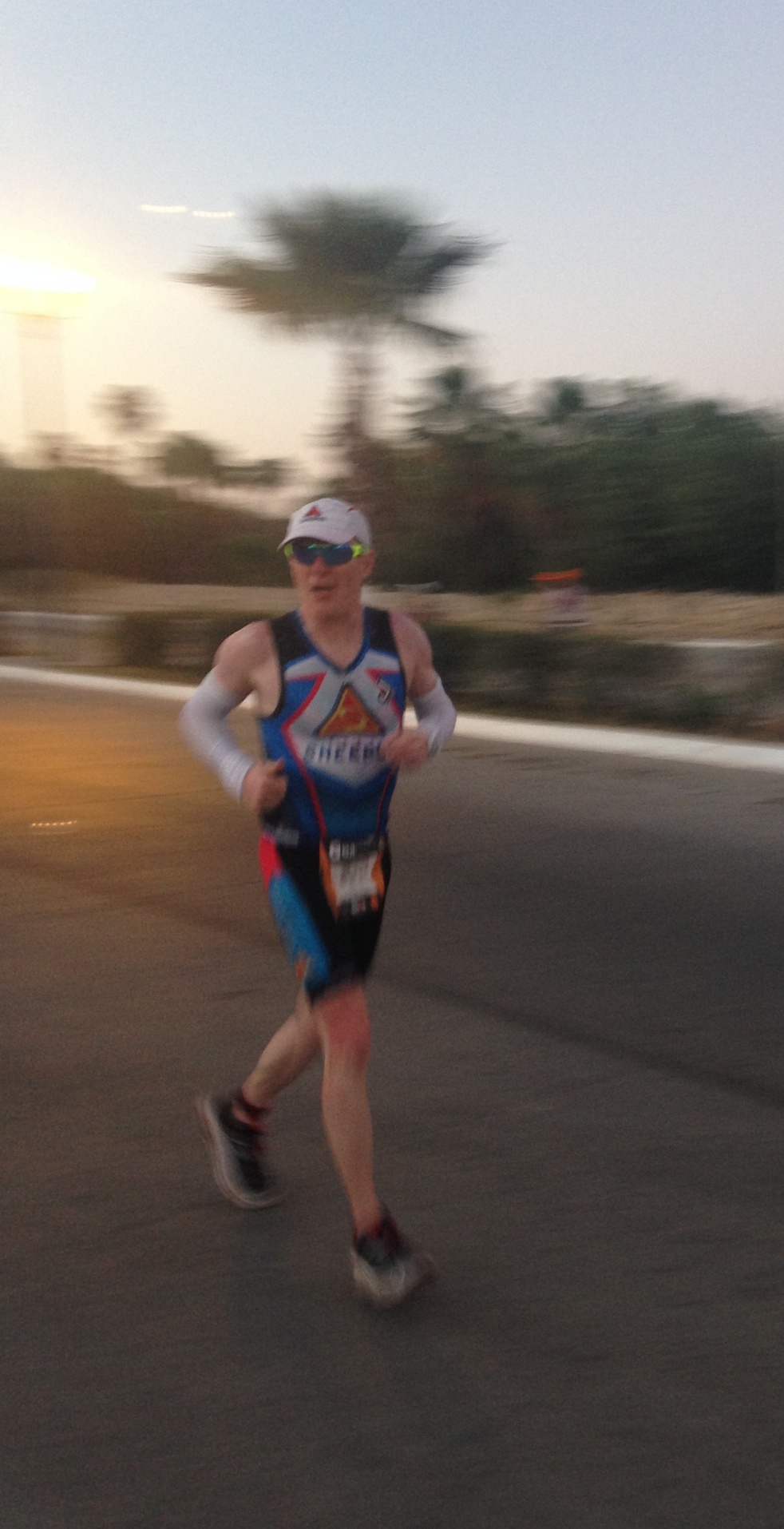
The crew was happier now that I was running. “F***ing Sheeper,” I lamented as I went past. “I could have done a nice 70.3 in Oceanside yesterday, and instead I’m here doing this.”
But, you know, the finish line at an Ironman is magical. It wasn’t pretty. I had been weak. I hadn’t been willing or able to suck it up when it counted. It wasn’t my best time. It wasn’t my worst time. But it was a tangible reminder that you can never take a finish for granted. It was bloody hard work to get through this one, and I’m glad I did.
Now on to some recovery and then some shorter races. 🙂
By the way, I could never have done it without my support crew: my wife Jeanne and my great friends and teammates Mike, Luree, Matt, Jen and Lisa. And of course Tim Sheeper, who always inspires me to reach beyond my comfort zone and have fun doing it. I’ll try to have more fun next time!
For anyone who missed the memo, I’m a big fan of Hawaii. My wife covers the state extensively in her travel writing career, and I often go along and/or drag her to races over there, particularly the Ironman in October and its affiliated half Ironman in late May / early June. So when my friend and coach Tim Sheeper told me his midlife crisis-driven “Aloha Triple” — the three big world championships held in Hawaii (the Ironman, Xterra and Ultraman) — well, I wanted to be part of it.
I was part of it already by virtue of having qualified for this year’s Ironman, and Tim qualified easily by winning his age group in Ironman Coeur d’Alene. At Kona, he had what for him was a so-so race, going 9:45:13 for 11th in the M50-54 age group. At Xterra, he won the M50-54 age group on a borrowed 29er hardtail. So all that was left was this little event called the Ultraman. Here’s where I really got my chance to be part of the Aloha Triple.
See, Ultraman is the opposite of Ironman. Instead of 2000 Type-A racers taking over Kailua-Kona and the Queen K highway for more than a week, Ultraman has roughly 35 competitors, doesn’t close any roads, and has no aid stations. Each athlete is completely supported by his own crew, from a guide kayaker on the swim to a van that acts as a mobile aid station, leapfrogging the rider to hand off food and drinks and anything else the rider needs.
The distances are extreme, and it’s run like a bicycle stage race, where you might win an individual day but still lose overall based on the accumulate time from all three days. The days look like this:
That’s 320 miles total that take you around the entire Big Island, with all sorts of weather conditions: ocean swells, wind, rain, heat, and even cold. The fastest guys spend 7-8 hours per day racing. The only way to describe this race is “epic.”
Tim’s support crew consisted of me, Keith Terada (another Team Sheeper guy who’s also done Kona in the past), Bruce Smith, a swim and triathlon coach who did Ultraman back in 2001 (got 4th overall), and Sierra Sheeper, Tim’s eldest daughter, who was on crutches after a powderpuff football mishap. We bonded very quickly and worked out the division of labor. Keith was the paddler who accompanied Tim in the swim. Bruce drove the support van on Days 1 and 2; Keith drove on Day 3. Bruce and I planned to pace Tim at various points during the run. Sierra mixed nutrition, filled bottles and sorted food. All of us handed Tim foods and bottles, which is easy on the run but not so easy on the bike, especially when Tim is flying by at 25 mph. You basically have to do a full-on sprint while holding a bottle or banana out for him to grab. Sometimes it worked, sometimes it didn’t.
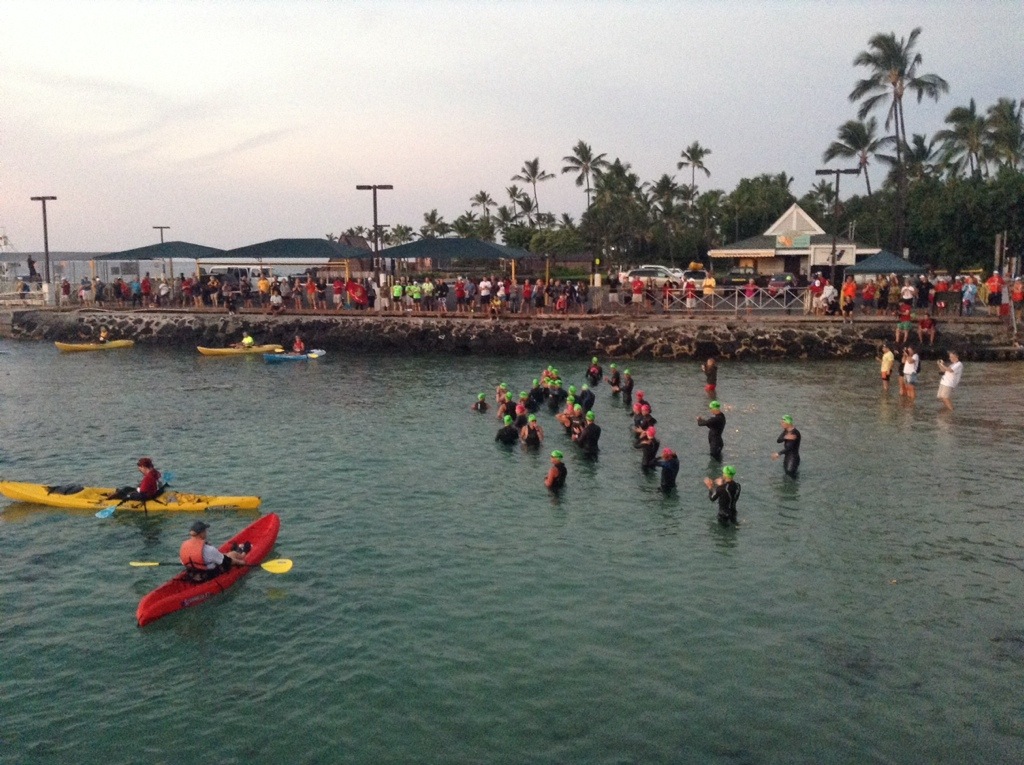
A little less crowed start than at the Ironman
Day 1 was fantastic. Tim came out of the water 2nd, 10 min behind Hillary Biscay, whom Tim coached back when she first started triathlons (she was a collegiate swimmer).
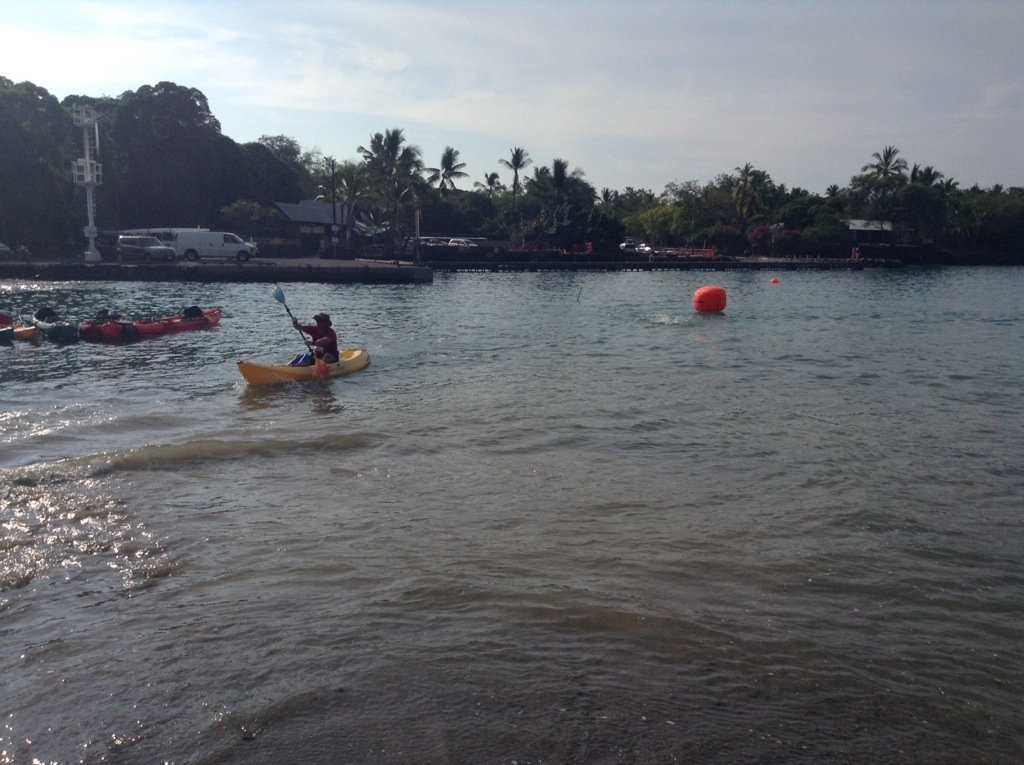
Paddler Keith Terada leads Tim to the swim finish
But Tim passed her about 20M into the 90M bike, so we were on our own after that – we didn’t see another team the rest of the day. The elements were tough: headwinds, crosswinds and pouring rain, plus a final climb of almost 3000 ft up to Volcano and the finish line.
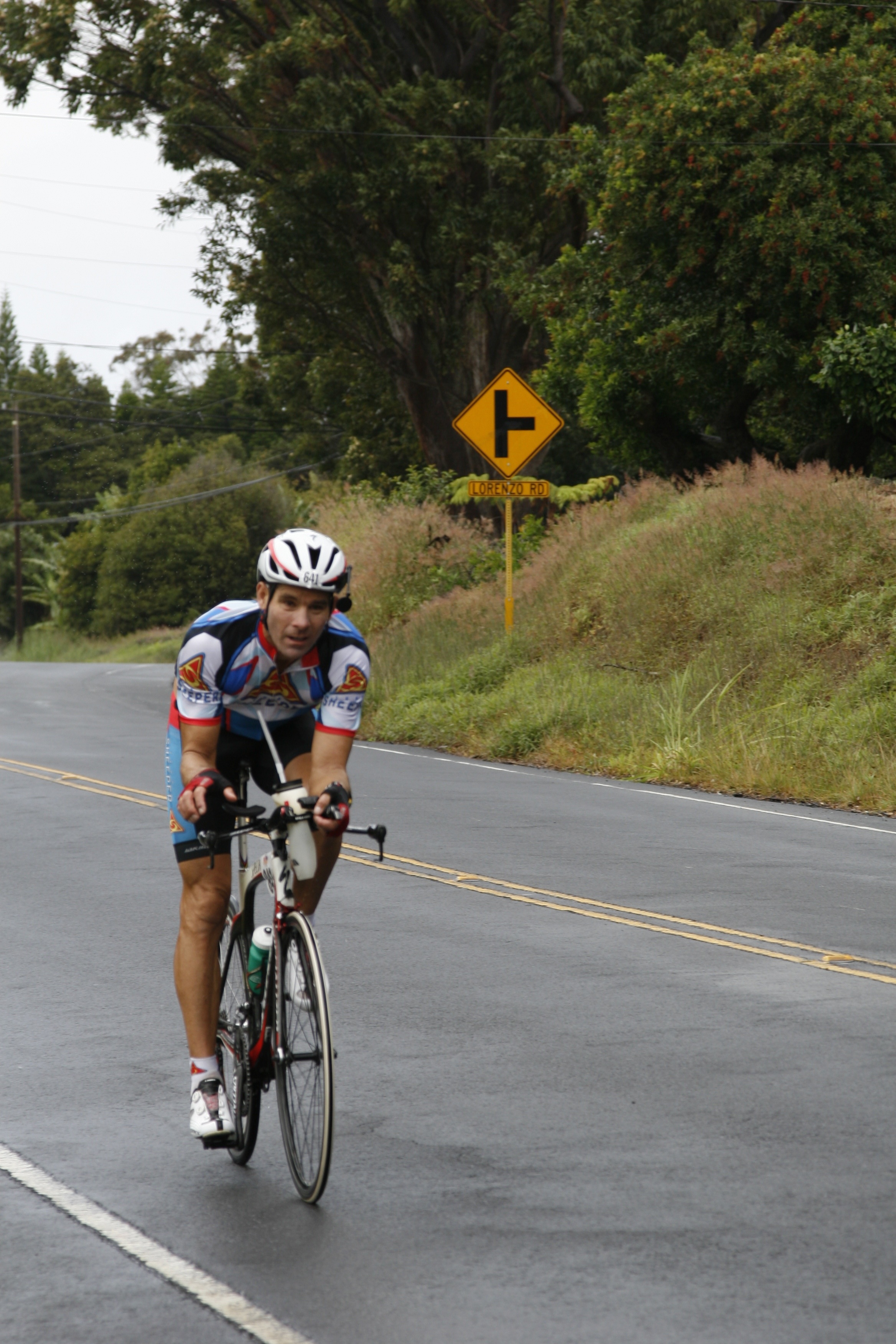
Moving along the Mamalahoa Highway
But he ended the day with a solid lead over his rivals, which put a big target on his back for Day 2.
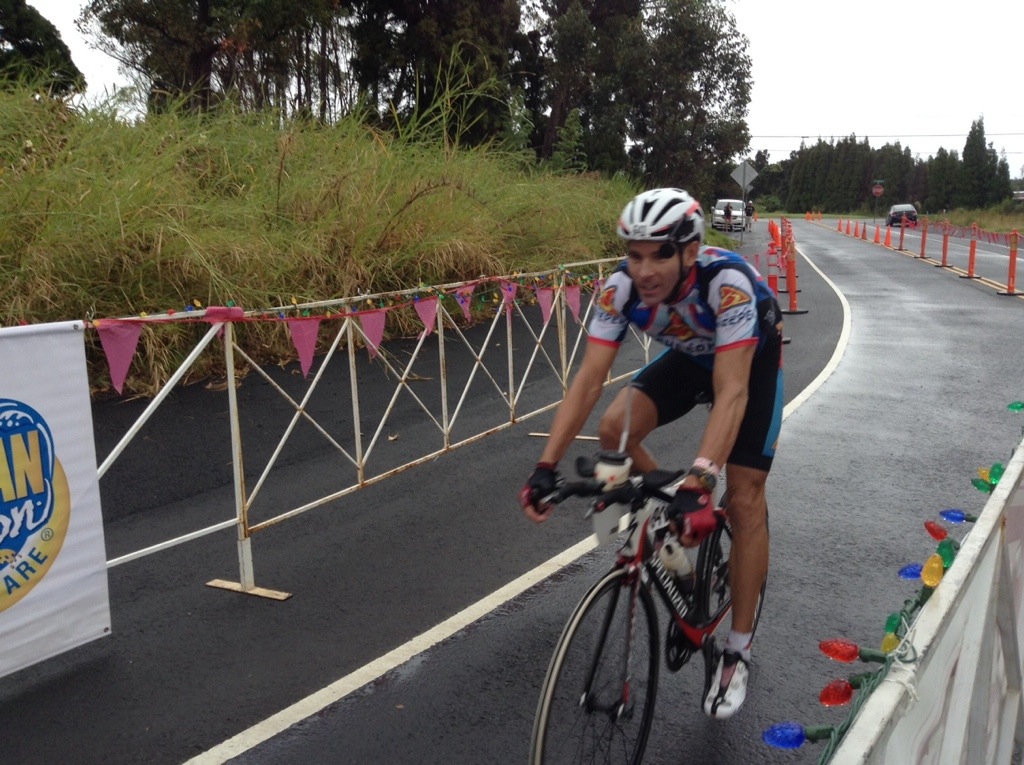
Finish of Day 1 in Volcano
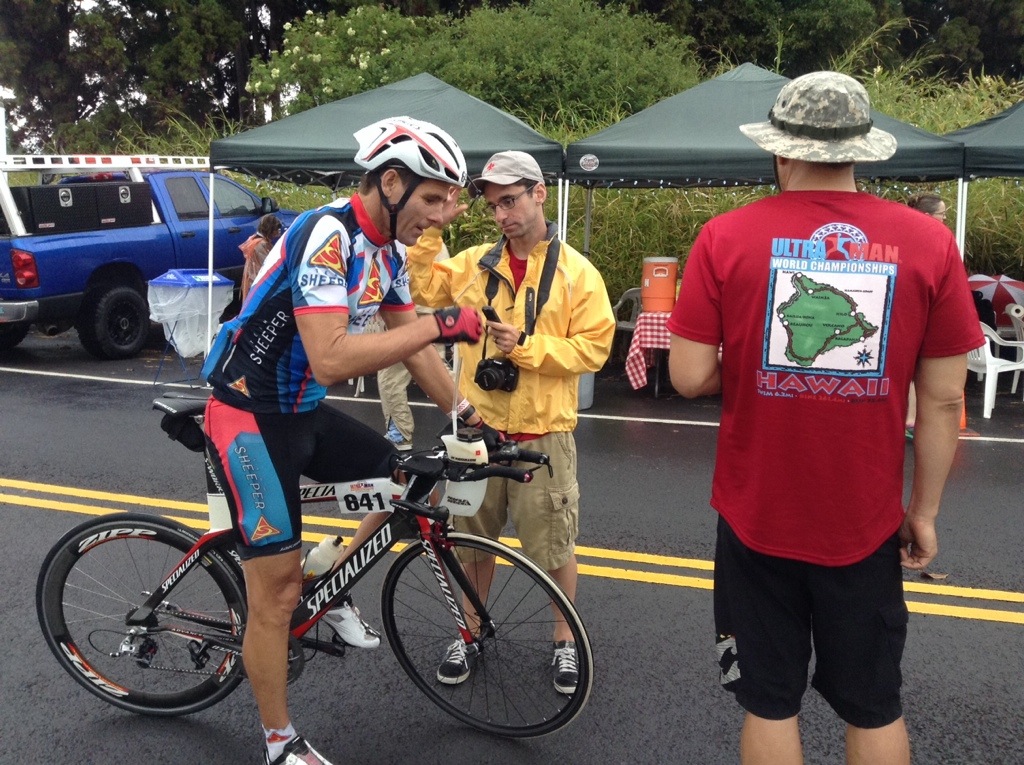
Being interviewed by Jim Gourley for Lava Magazine
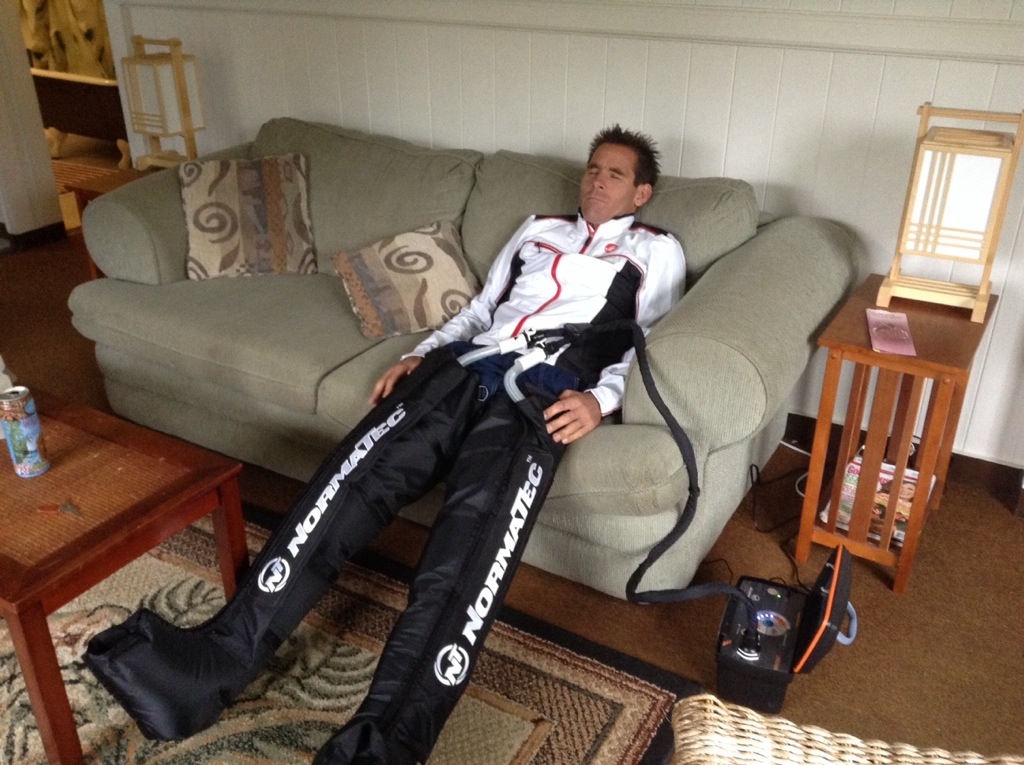
It was love at first puff for Tim and the poofy pants; we used them several times a day
The course on Day 2 is fantastic – you get to see the side of the island that most tourists never go to. But it’s 171 miles, the first 100 or so of which is pretty fast — there’s a big 25M downhill to start, and then tailwinds through Hilo, so Tim hit the Ironman mark (112M) in 4:48 — that’s fast! His rivals were all there and pushing the pace hard.
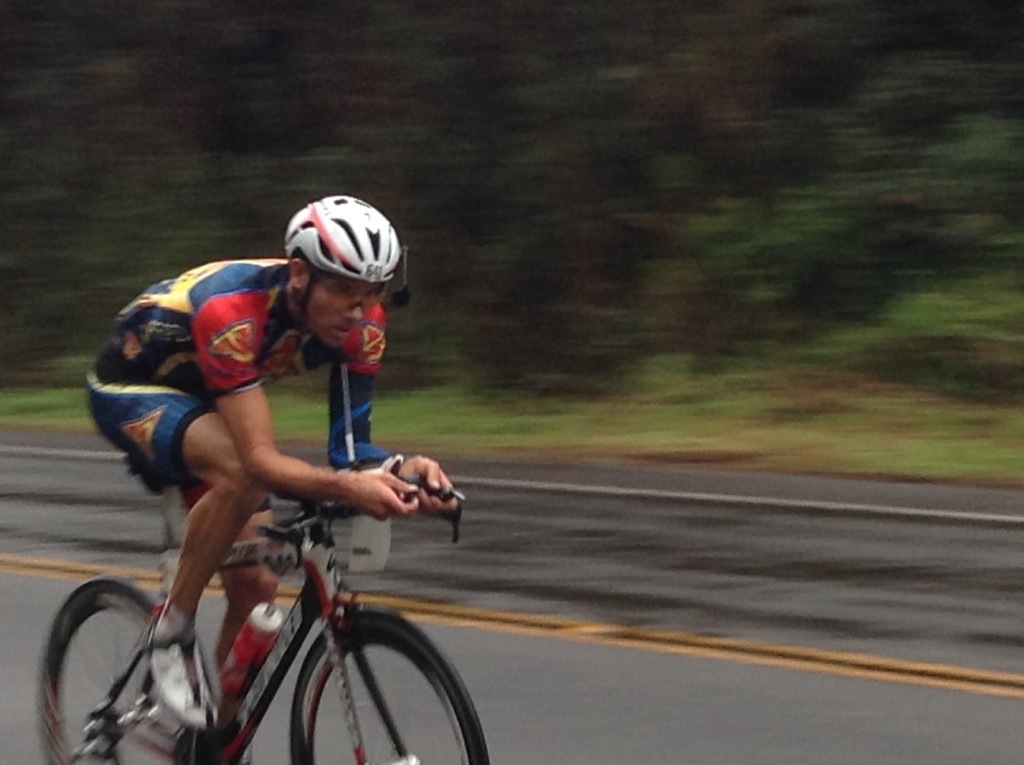
Tim in 2nd place on the stage just after the Red Road and before all of the traffic lights into Hilo
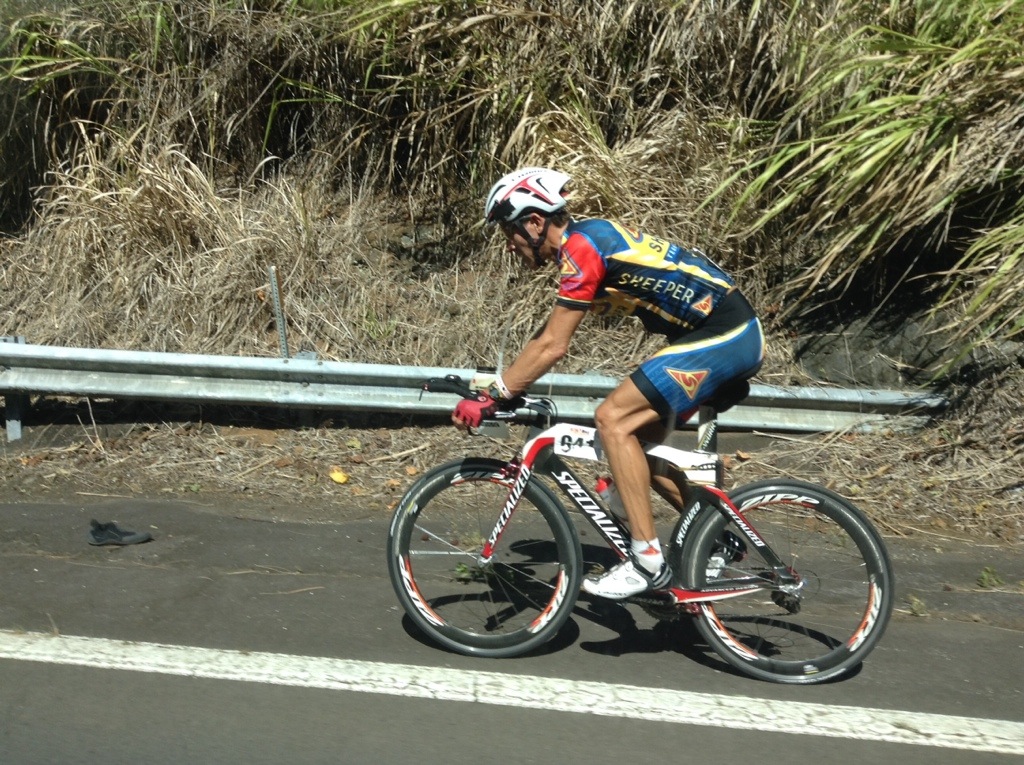
After Hilo and starting to hit some nutrition problems
Tim had his first bad patch and lost some time, but got his second wind in Waimea and was able to recover some of that on the final 6.5M Kohala Mountain Rd climb. So he still led after Day 2, but the lead had narrowed. And the effort had cost him physically — the run was going to be, well, “interesting.”

On the final 6.5-mile climb and feeling strong again
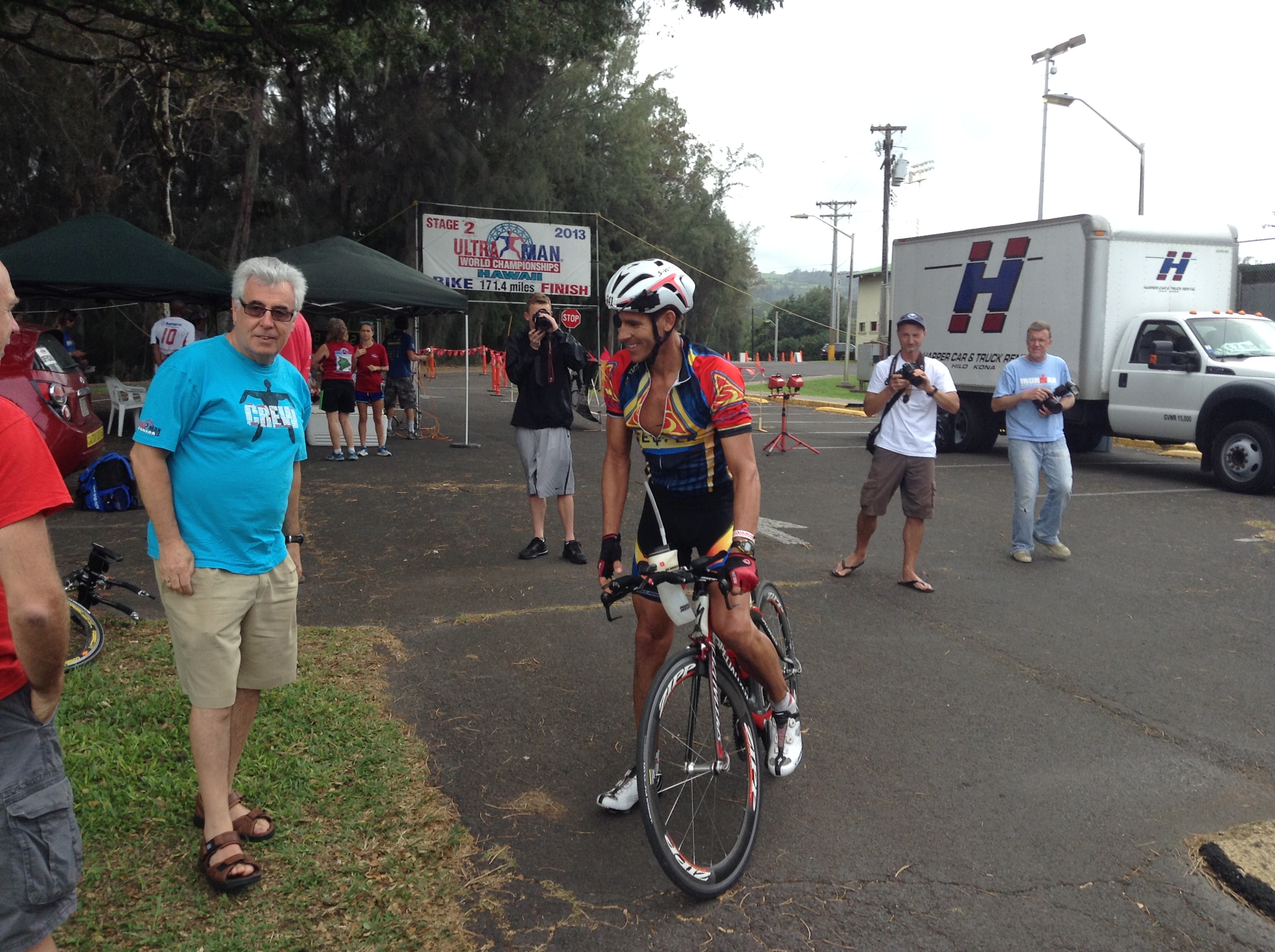
Glad to be done with a harder-than-expected Day 2
Coming into the Day 3 run, bear in mind that Tim didn’t have the kind of lead he’d hoped for after Day 2. His two closest rivals, Alexandre Ribeiro and Miro Kregar, were 16 and 31 minutes back, respectively, but had much better Ultraman running resumes than Tim’s lone 7:24 time from 2007. So, given that, the plan was to run steady and not only make Miro and Alexandre come and take the remaining time off of him but also let them try to destroy one another and see if one or both paid for it in the second half.
Part of the plan worked — Alexandre cracked, for I believe the first time ever in Ultraman. Not that surprising considering how fast those guys went out — we heard some hard breathing when they passed mile 2, and there were still 50.4 to go!

Early in the 52.4-mile run
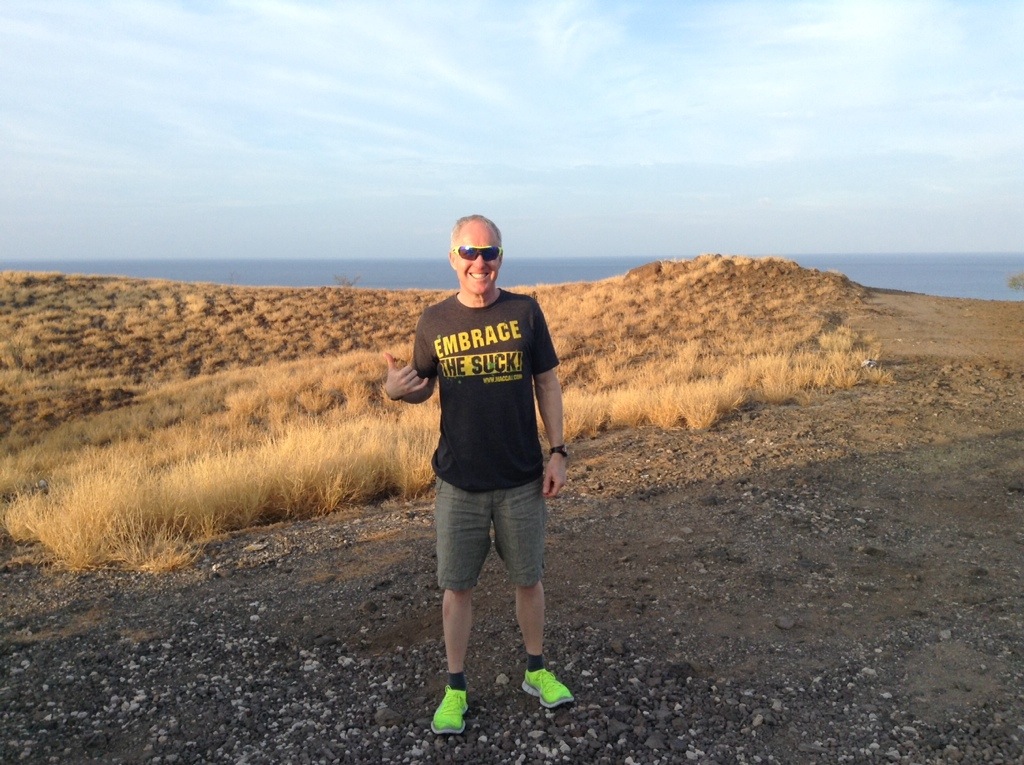
Not much “suck” to embrace at this point
First half marathon in 1:40
The first 13.1M for Tim was 1:40 and change. Things started to get tough at around mile 16 before Kawaihae – he developed a nasty blister on his foot. We sat him down and lanced the blister, put second skin and Aquaphor on it, and changed socks and shoes. That didn’t solve the problem, so we bought duct tape in Kawaihae and put that on.
We started pacing him at Kawaihae for short stints, but on one of mine it became clear that he was going to need a pacer from there on in. So I prepped myself to go as long as I could. He passed the halfway mark in around 3:38 – we then sat him down and lanced the blister again and put more duct tape on. I then became fulltime pacer and water carrier (actually, ice in one bottle and sport drink in the other; shot blocks in the pockets). The goal became to just keep moving, and I had to make sure I didn’t let his walking breaks last very long. We switched from Sprite to Coke at mile 40 but switched back around mile 45 because the Coke wasn’t agreeing with him. It was also getting quite hot out.
Part of the pacing change of plans was that I wasn’t really fully prepared to go for an entire marathon myself — I didn’t pay enough attention to my own nutrition and cramped badly at around my mile 20.5, so at my 21 (47.2 for Tim, I handed pacing duties over to Bruce, and he brought Tim home. The second marathon was not quick — around 4:51 — but it could have been much worse if not for Tim’s grit and determination.
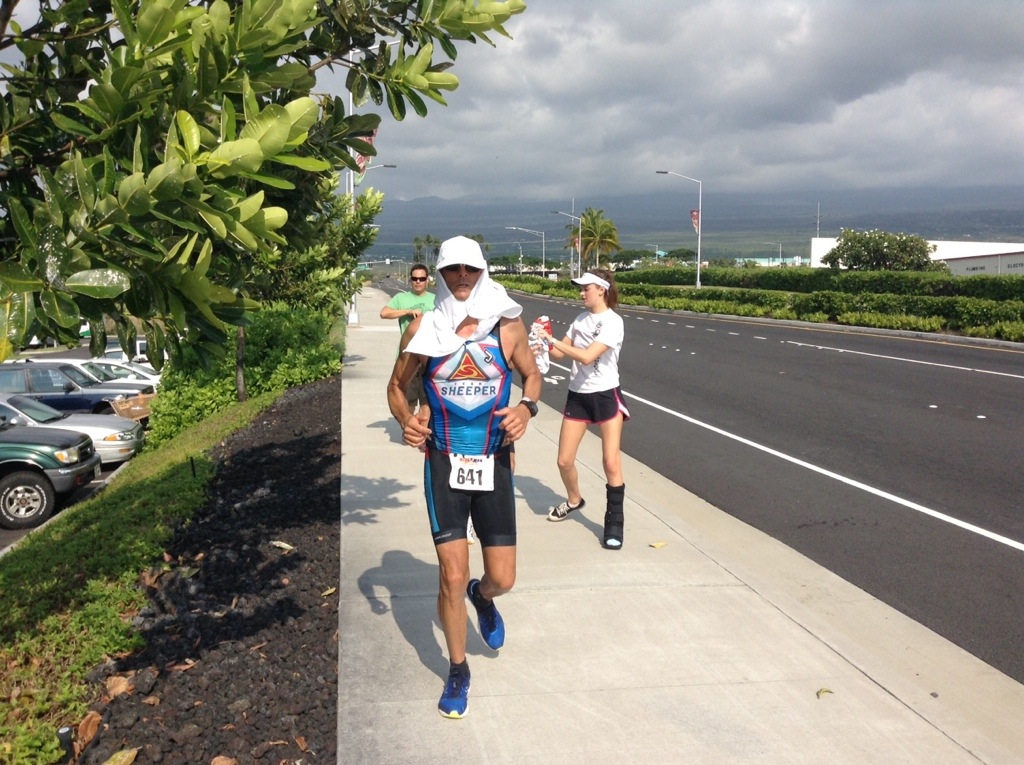
In the last mile!
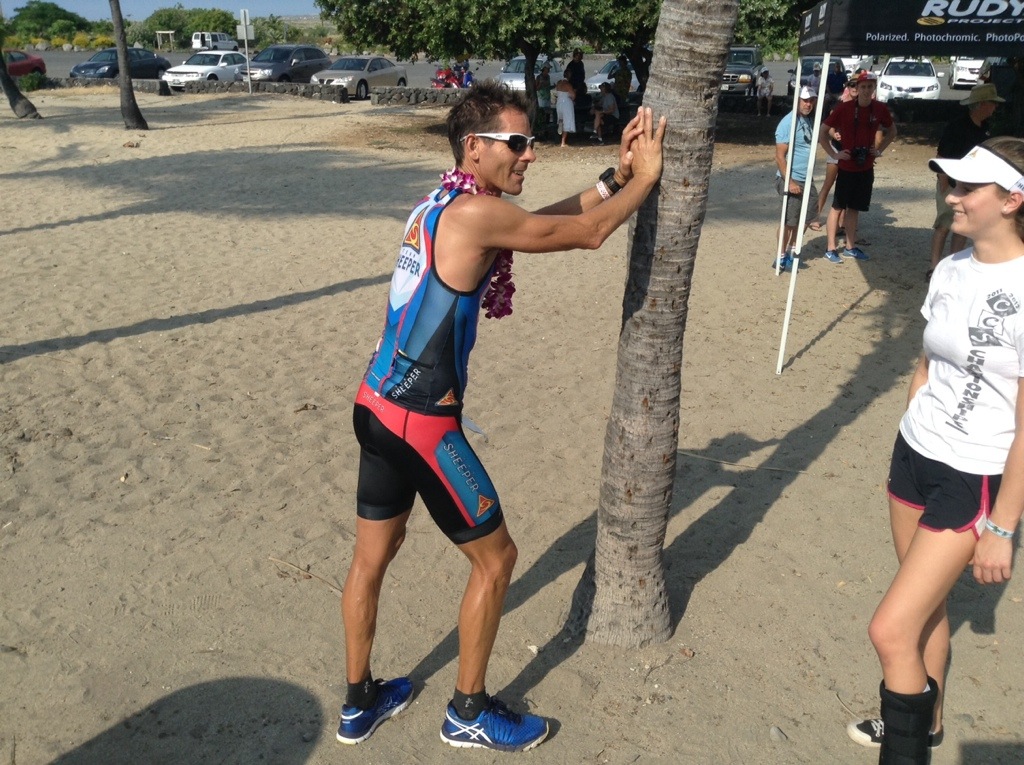
Well, *that* was hard!
It was just a “git ‘er done” day. At no point in the time I paced him did Tim care or even want to know about his place vis-a-vis anyone — he just wanted to get to the finish, and he went to the well to do that. His official time was 8:29:40, and the three-day total was 24:57:12, good for 4th overall. Very impressive ahead of Tim in 3rd was Hillary Biscay, who ran superbly (and quite evenly), and almost reeled in Ribeiro in the overall standings.
Regardless of outcome, what a great experience it was to crew at this race. As much as Tim suffered in this race, I’m almost wishing he’ll give it another go next year — knowing what we know now, we could avoid a few costly mistakes and be back with a really experienced crew. After his first one in 2007, he swore he’d never do the race again, so never say never, I guess. 🙂
This weekend (Fri-Sun) is the Ultraman World Championship on the Big Island. It’s a three-day “stage” triathlon:
This is the opposite of Ironman. Where Ironman is glitz and hoopla, Ultraman is low key and focused on what the Hawaiians call “ohana” — “family”/”community”. The race is small — 40 competitors vs. 2000 or so in Ironman. Like Ironman, though, it has a long history — the first Ultraman was in 1983, only a couple of years after Ironman moved from Oahu to the Big Island.
I’m not doing the event — I’m part of the support crew for this guy:
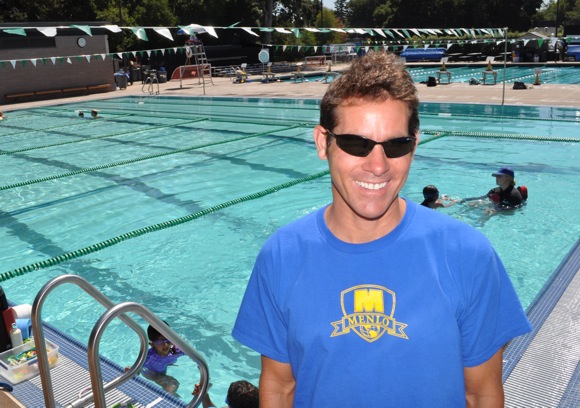
Tim really embodies the spirit of Ultraman. As accomplished as Tim is as an athlete, he is very humble and unassuming. But on race day, the warrior comes out. Even at age 50, he is going to surprise some people this year.
I’ll be shooting out photos and live updates on Twitter (@ihersey). Good luck to all of the participants — should be a fun way to spend the Thanksgiving holiday!
This year’s Ironman World Championship race in Kona was Ironman #13 for me. I came into the race probably the fittest I’ve ever been, at least in the swim and bike. The run was a bit of a question mark due to some persistent hamstring issues I’d had earlier in the year; I did seem to be over them thanks to my miracle worker of an ART specialist, but I didn’t have much of a base — one 20-mile run in a training camp at Tahoe in late August was my one and only run over 12 miles in the past few months. Luckily, running is supposedly my strength.
I got to the Big Island 10 days before the race in order to try to get heat acclimated. The simplest way to describe the protocol is “train 2-3 hours a day in the heat at low-to-moderate intensity.” It worked out pretty well — in particular, I got a lot of afternoon rides in on the Queen K once the wind had picked up, which is pretty much what we athletes would face in the last 30 miles of the actual race. I knew where the climbs were, and I knew to save some watts for this part of the course.
Race week was a blur — lots of stuff to do (registration, expo, bike adjustments), including keeping the muscles loose with some light training. What always surprises me is how many athletes you see out on Ali’i Drive during race week just absolutely hammering their runs and bikes. Not to mention irritating the locals by not stopping at stop signs, weaving in and out of traffic, and generally acting as though they owned the place. Not to single out any particular group, but this behavior seemed particularly acute among the Euros.
Many folks, myself included, seem to walk around town with a look on their faces that showed the weight of apprehension and expectations. In many ways, once you’re on the island, race day can’t come soon enough. I actually slept pretty well — better than I have before many of my races — so I woke up even a few minutes before my alarm clock and thought to myself, “Let’s do this thing!”
Saw a few friends between body marking and the walk to the transition area, at which point I got all my little tasks done pretty quickly. I got in the water after the pros took off, and swam out to the far left of the start where there were fewer swimmers and I could get a nice, uncrowded warmup. As the start approached, more swimmers started showing up near me, so I had to jockey for position a little bit, putting myself almost at the very far left and maybe three rows back.
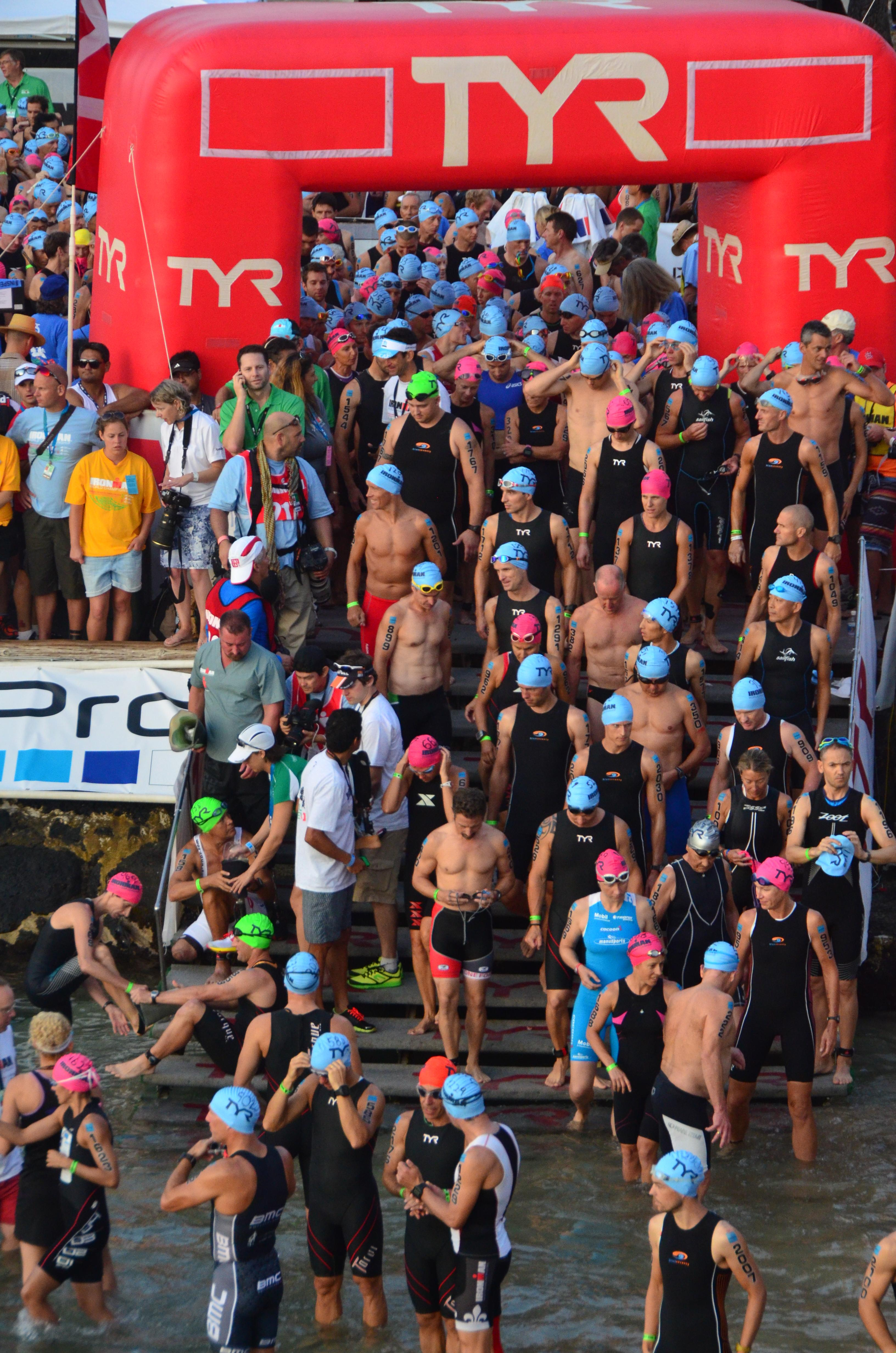
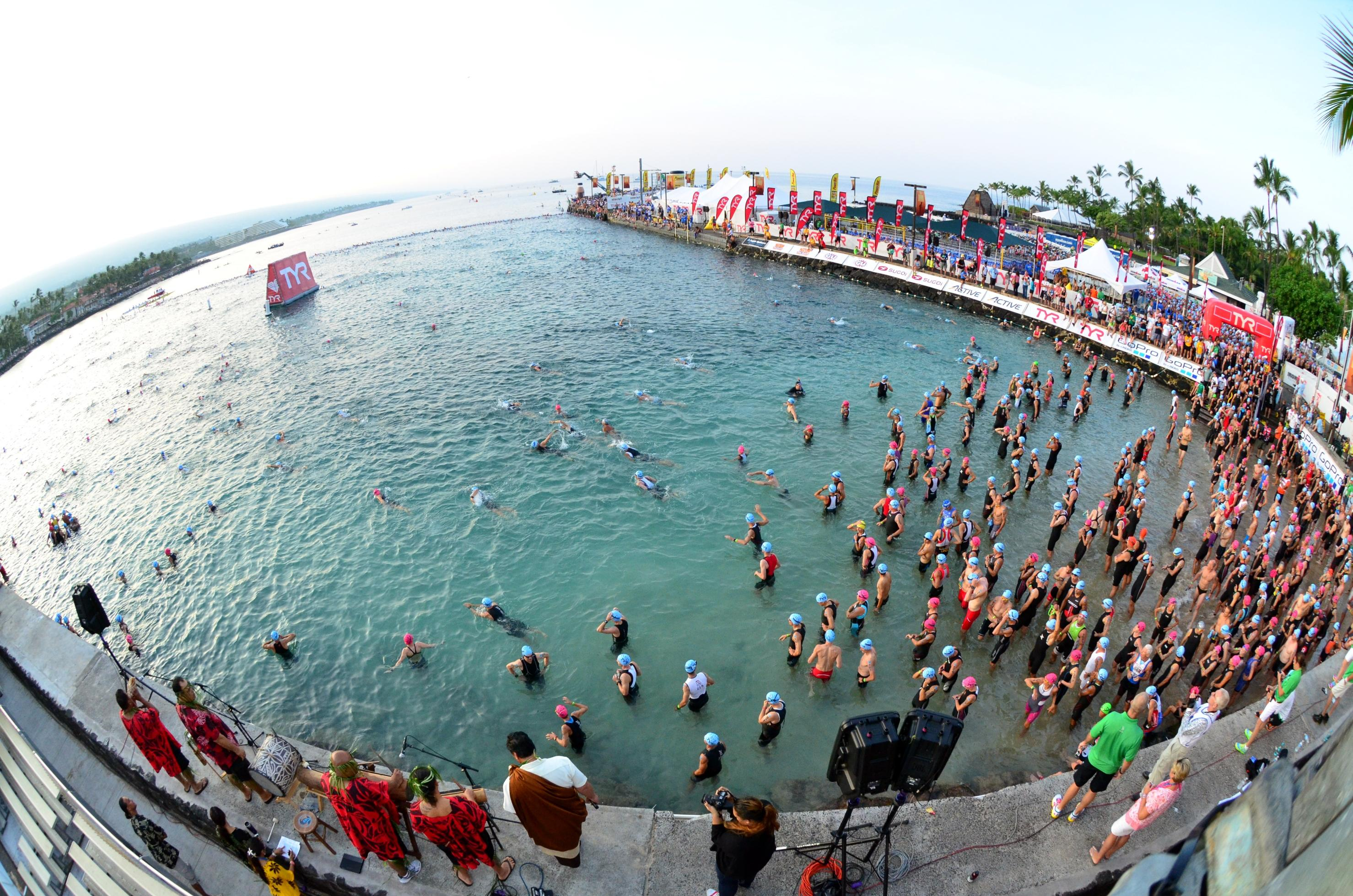
Athletes enter the water
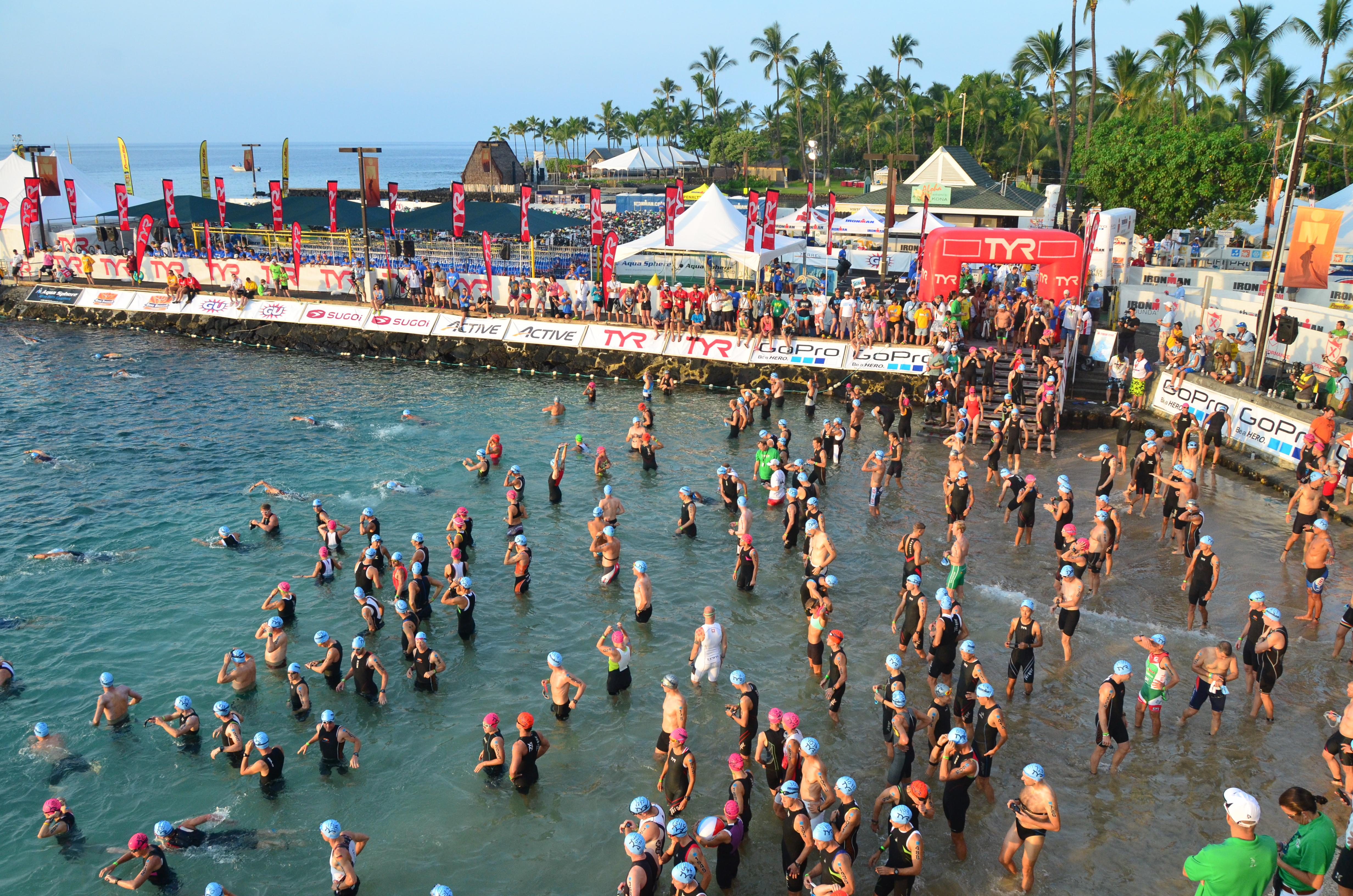
Athletes enter the water
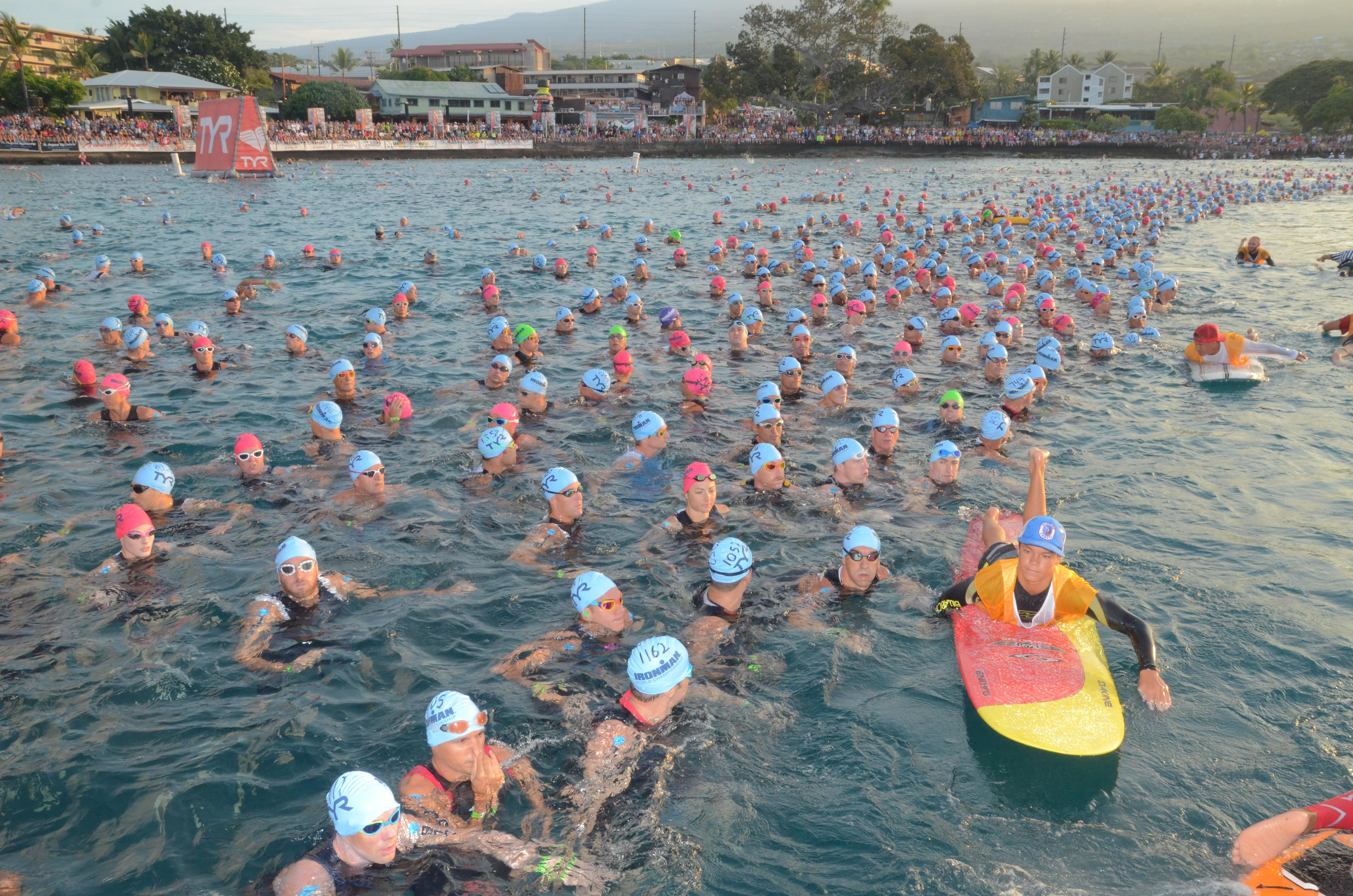
The calm before the storm

And…we’re off!
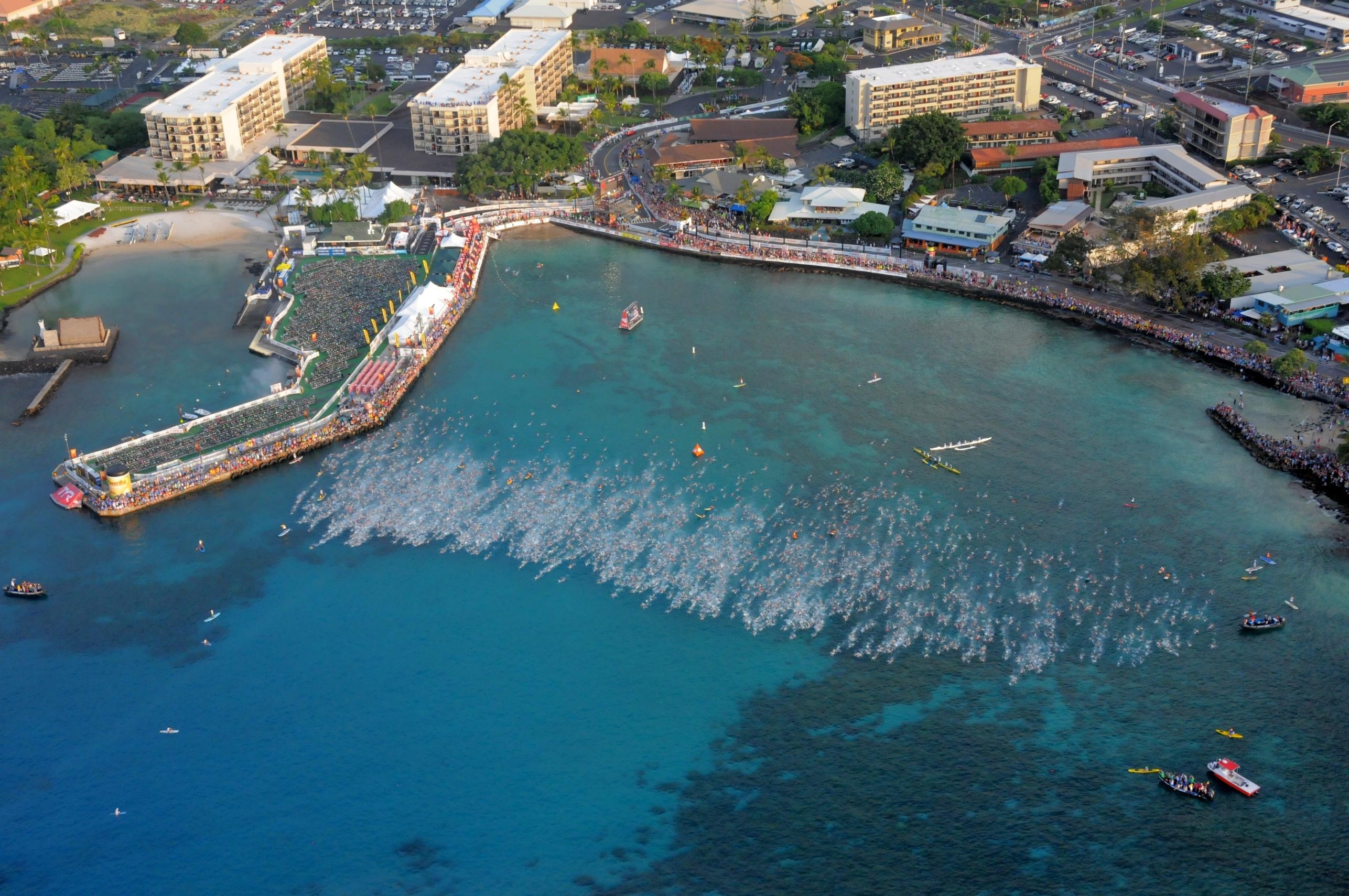
Aerial view of 1800 athletes
The cannon went off, and the race suddenly got very real — I was in the Ironman World Championship! Unlike in the two other times I did this race, I seemed to have seeded myself exactly right, as I was very quickly in clear water and not getting a ton of contact with other swimmers. I found some feet to get on and just tried to keep focusing on having an efficient stroke. I reached the turnaround boat, glanced at my watch and saw 32 minutes, so I seemed to be on a good swim.
There’s often a slight current against the athletes on the way back to the pier, though, but once I was on the way back the field was spread out enough where I could swim very close to the buoys without bumping into people; the only hazards were the occasional paddleboarder volunteers who had actually drifted into the course and were yelling at swimmers to stay left — they were actually in the line between the buoys and were causing swimmers to bunch up needlessly.
You can see the pier for quite some time before you actually get to the swim exit; I entered what I thought was the final stretch at 1:10 and change, but by the time I got to the stairs my swim time was 1:16. Oh well — still an 8-minute Kona PR, and what’s more, it didn’t cost me as much energy as my previous swims had. My technique work had paid off.
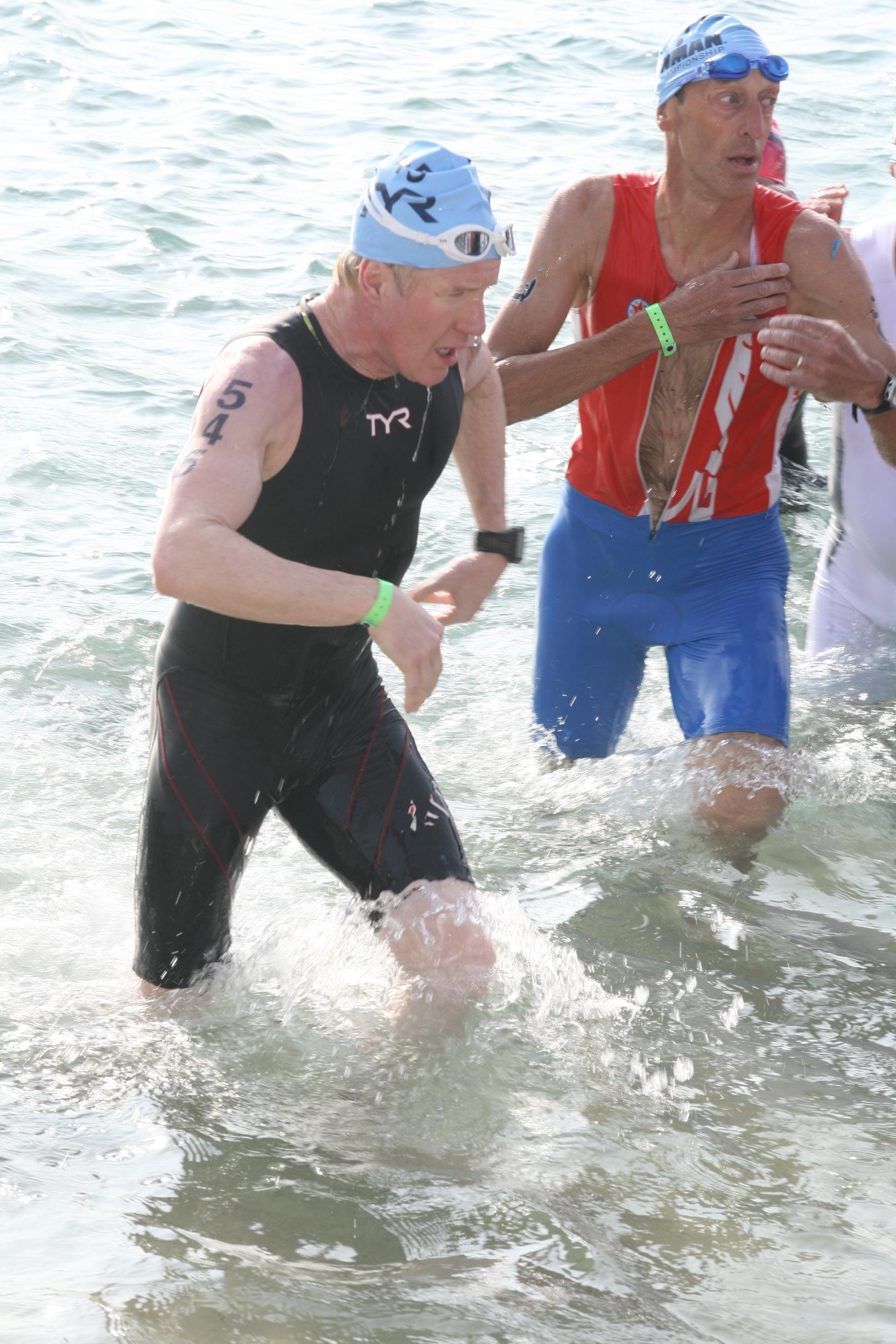
The day just gets better from here
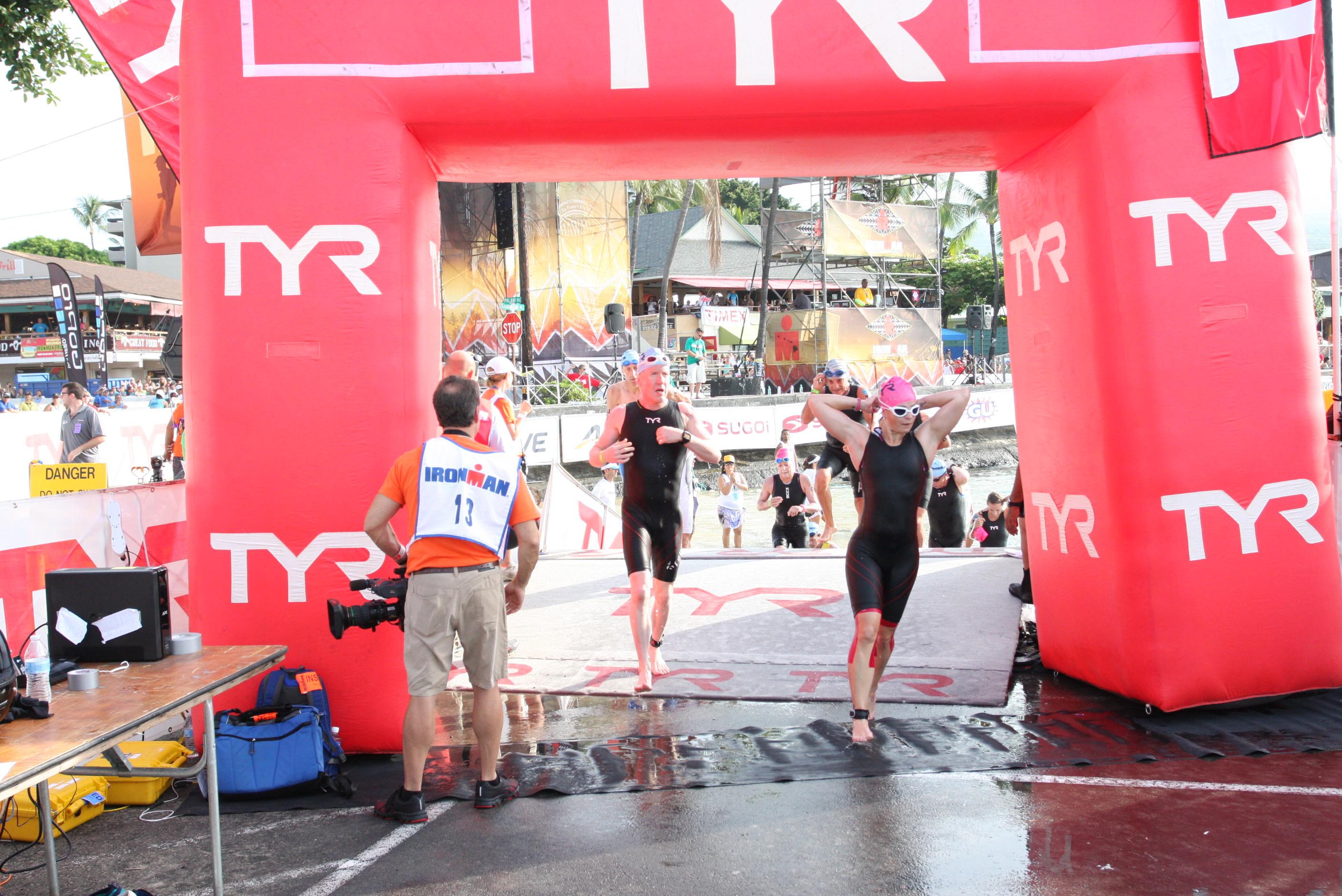
Now the fun starts!
The only casualty from the swim at all was some chafing on my pecs from the swim skin rubbing against salty ocean water, and I would definitely feel the sting of that later in the day — splash some Coke or sport drink on a fresh abrasion and let me know how it feels. 🙂
I had a pretty good transition for me — 4:32, ok considering the long run around the pier and taking the time to put on arm coolers and a bike jersey. The main reason for both was to avoid a blistering sunburn; with my fair skin and the intense Hawaiian sun, I can’t put on enough sunscreen to last for the duration of the Ironman bike. The regular bike jersey also gave me some pockets I would turn out to need later. Anyway, soon I was off and riding, feeling good.
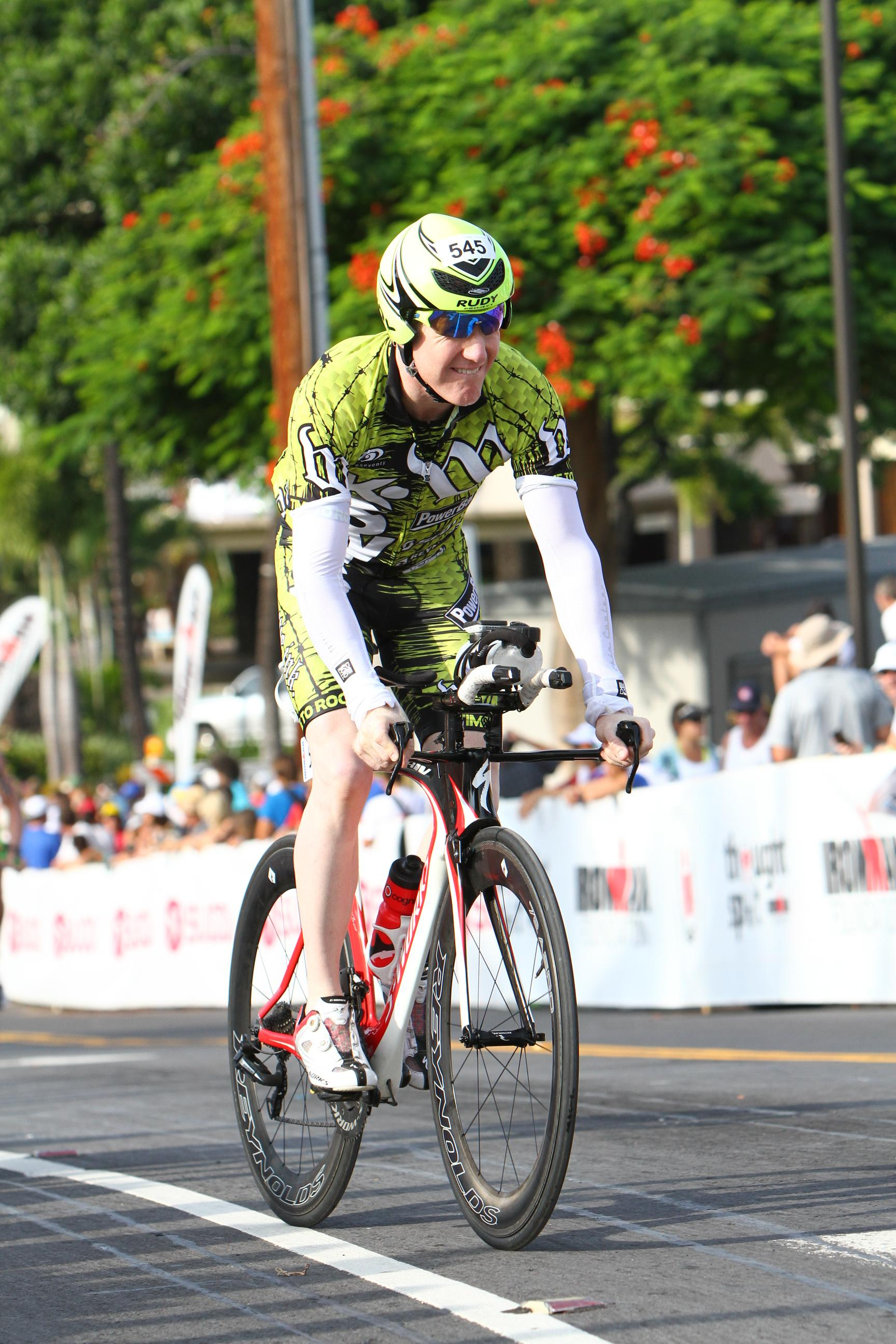
Out of transition and straight uphill
The first part of the ride was fast; it wasn’t very hot out and we had a nice tailwind. Being a slow swimmer by Kona standards relative to my bike and run, I was passing more people than were passing me, but I had to do some small surges to avoid being in a drafting position.
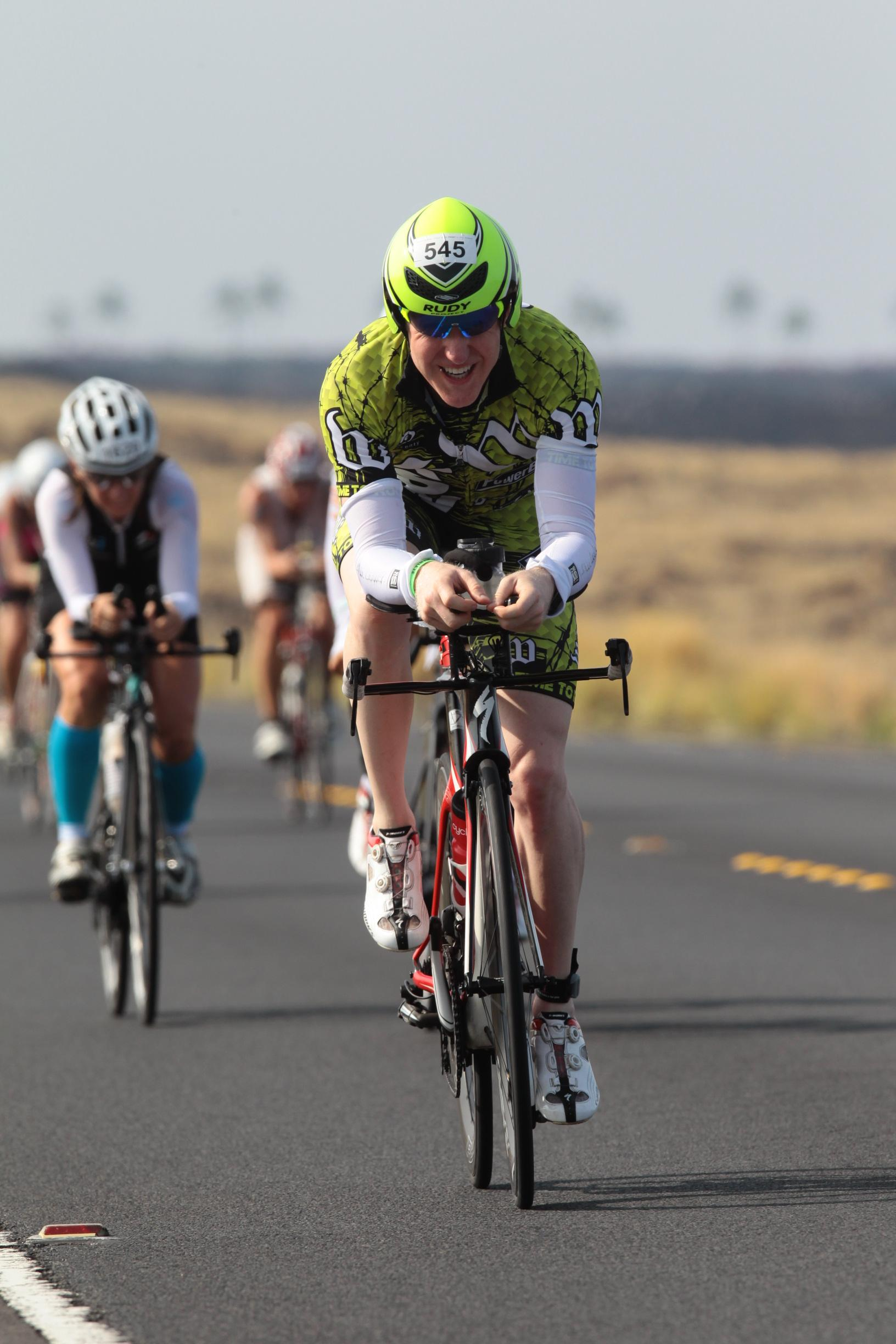
Early on the Queen K
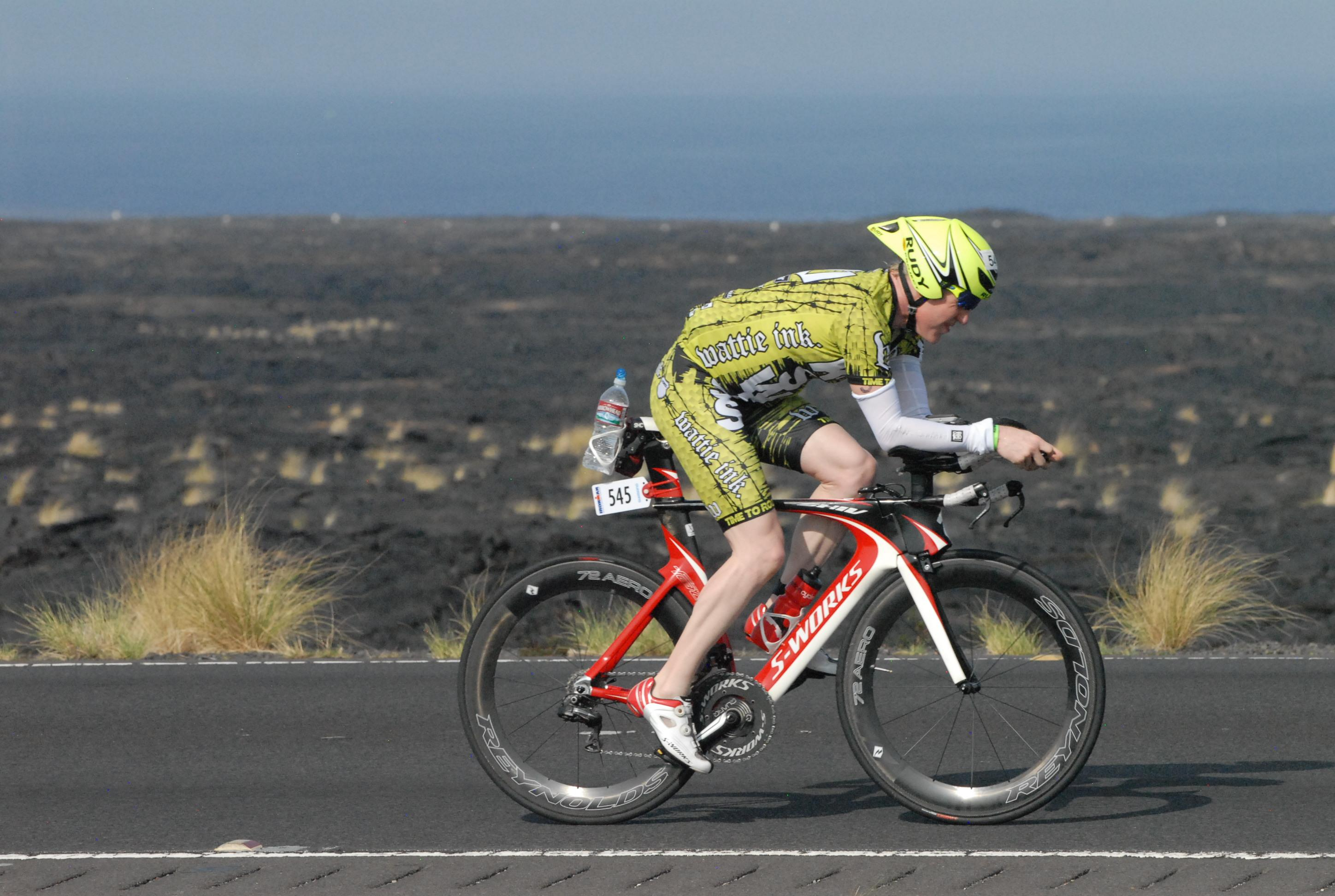
“Critique my position,” as they say on Slowtwitch
I was riding well within my planned power output and feeling good, but around mile 35 (near Puako), disaster struck. A guy I was passing suddenly moved left (without looking) into me. I had a guy coming up on my left so had nowhere to go. I called out to the guy, but he was already touching me; then his front wheel hit my bike, and he went down, which then took my rear wheel out from under me. The next thing I knew, I was sliding on the pavement on my right leg. F**k!
The good news was that I could tell I wasn’t hurt badly — just some road rash on my right leg, hip and a little on my right elbow, plus my shorts and arm cooler were ripped. Then I looked to see how the other guy was, and what he wasn’t was at all apologetic. In fact, he tried to blame it on me: “why didn’t you tell me you were there?” First off, I did, and second, why didn’t you look before moving left? Anyway, there was no time to get into an argument — I had an Ironman to finish. Now came the bike inspection:
I had to wait for a break in the line of cyclists to retrieve my tool bag and bottle holder, and then just as I was getting my rear wheel off, the Bike Works support van pulled up. They were apparently on their way to help someone else, but they saw me first, so they did the tire change and also had a floor pump so that I didn’t have to waste a CO2 cartridge. I put the tool bag in one of my jersey pockets and left them with the now-useless bottle cage, then one of them gave me a nice “pro” push start to get going again. All told, my Garmin says I lost 8 minutes; the Ironmanlive tracker shows I lost more than 150 places in that section of the bike.
I took stock of my situation; I still had a good time going, but now that I was down one bottle cage, I was going to have to approach the aid stations differently, Up until then, I had been taking up to two bottles at each station, but since my front one was a fixed, refillable Speedfil, I could only take one spare bottle each time, but that in my downtube holder, then if I was lucky I could grab another bottle and add to the Speedfil. That mostly worked, unless I missed catching a water bottle in the first pass, which happened occasionally.
After the turn to Kawaihae, I saw the leader (I’m guessing Starykowicz) on his way back (hey, the male pros did start 30 minutes before me), followed by the chasers. Later on, on the rollers toward the turn for Mahukona, I saw a pack of at least 50 guys — this must be the front of the age groupers, I thought to myself. Then came Packs 2 and 3. Ironically, I had draft marshalls near me, and here you had these massive packs going the other way. Hard to say if they were intentionally cheating, but it definitely didn’t look legal, which was disappointing. Short of having more drafting marshalls out there, it’s not clear what Ironman can do to cut down on what seems like blatant cheating.
The good news was that I was almost to the turnaround at Hawi before I even realized it — there were none of the usual winds, either headwind or crosswind. I did pull over briefly after the turnaround to adjust my front quick release; it felt as though my front wheel might have been a little askew after the crash. That cost me another minute, but since there was some fast downhill coming up, I thought better safe than sorry.
The return trip from Hawi is where the work usually begins, and this year was no exception. The wind started picking up on the rollers to Kawaihae, and then we worked the biggest climb of the day — the short-but-steep slog back up to the Queen K.
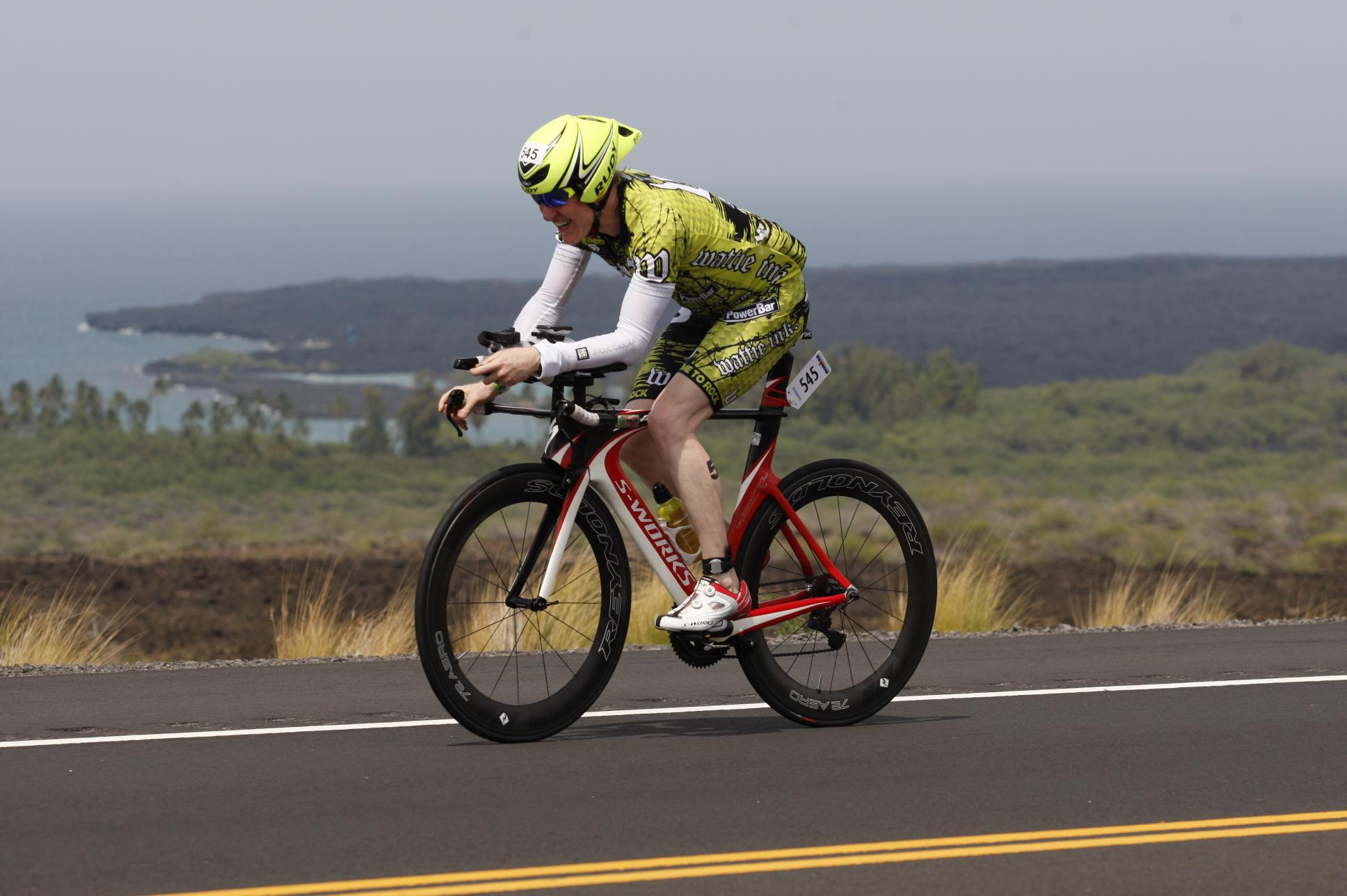
There’s a really nice beach park down there.
Once on the Queen K, you’re on the home stretch, but it’s a long home stretch, and the headwinds kick up in the afternoon, which on this day made this the toughest part of the day. A look at my TrainingPeaks file confirms this from a numerical perspective — my Peak 30, 60 and 90 values were all on this stretch:
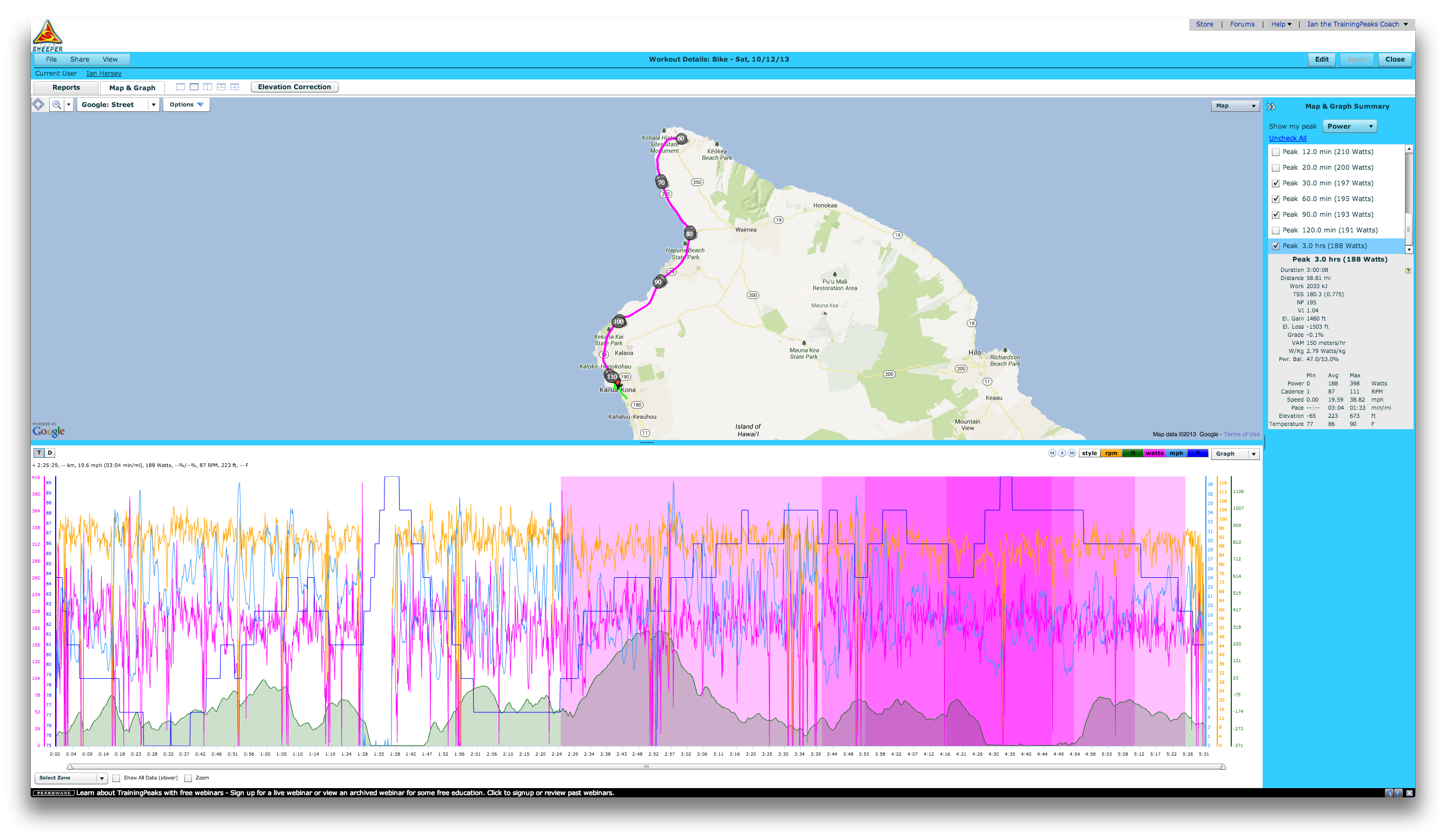
You’ll also note from my CP 180 that I negative-split the ride from a power perspective. So sometimes I do actually practice what I preach. My VI (Variability Index) was also quite even at 1.04. Moreover, the Queen K section (the last 35 miles) is where I picked up over 200 places, so my “save some watts for the Queen K” strategy worked out pretty well.
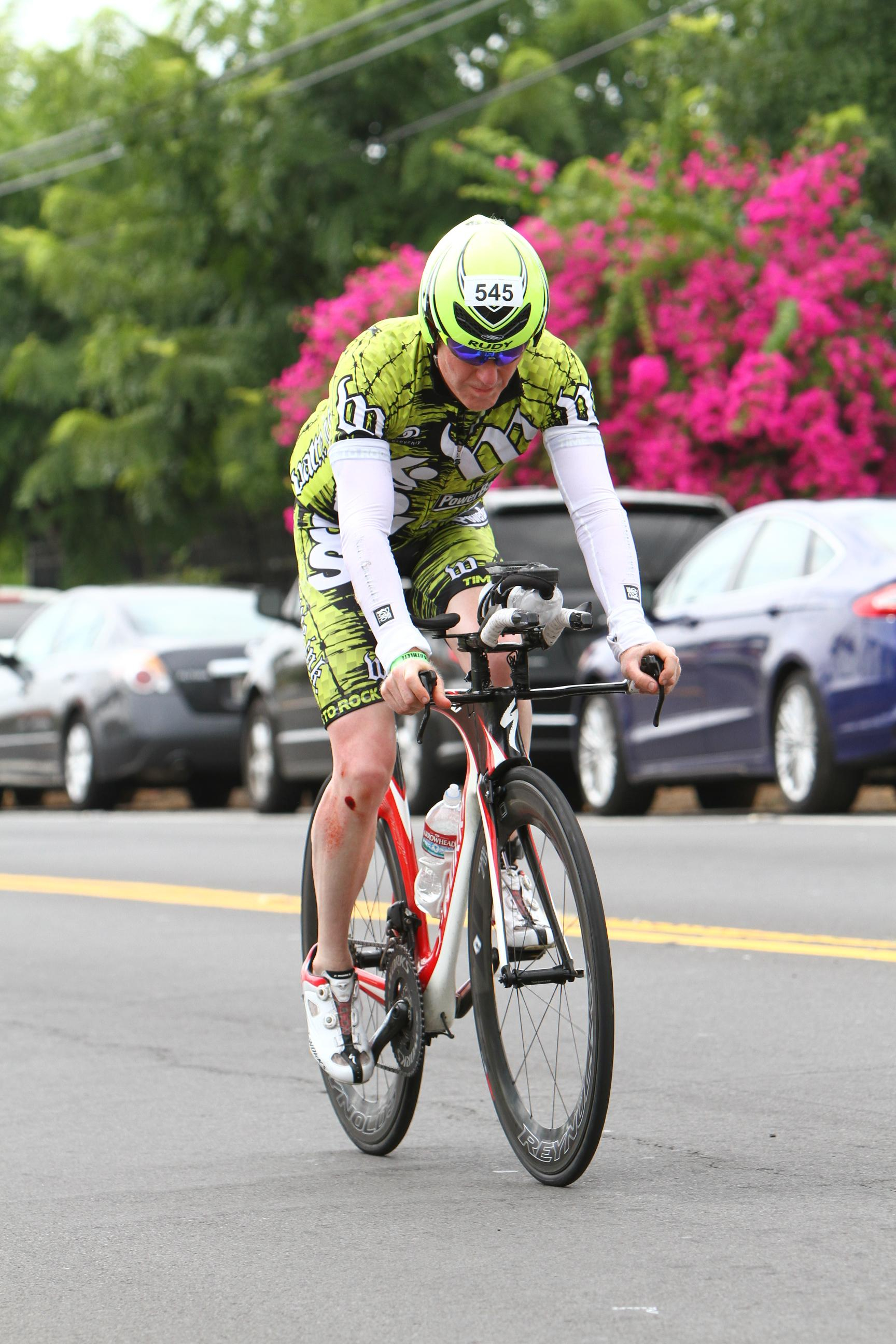
Approaching the bike finish with bonus war wounds
My bike time was 5:31, which was over 20 minutes faster than I’d ever ridden in Kona, so I was pretty happy with that considering the 9 minutes I’d lost in total to the crash. What I wasn’t sure of was how well my hydration had gone since losing the rear bottle cage, but I figured I would find out sooner or later on the run.
I got out on the run course at 6:57 into the race — earlier than in any Ironman I’d ever done except for two of my three Ironman Arizona races. So despite everything, this was going to be a quick day if I could put together a decent run. Initial signs were good; sub 7:30 pace felt awesome for quite a few miles.
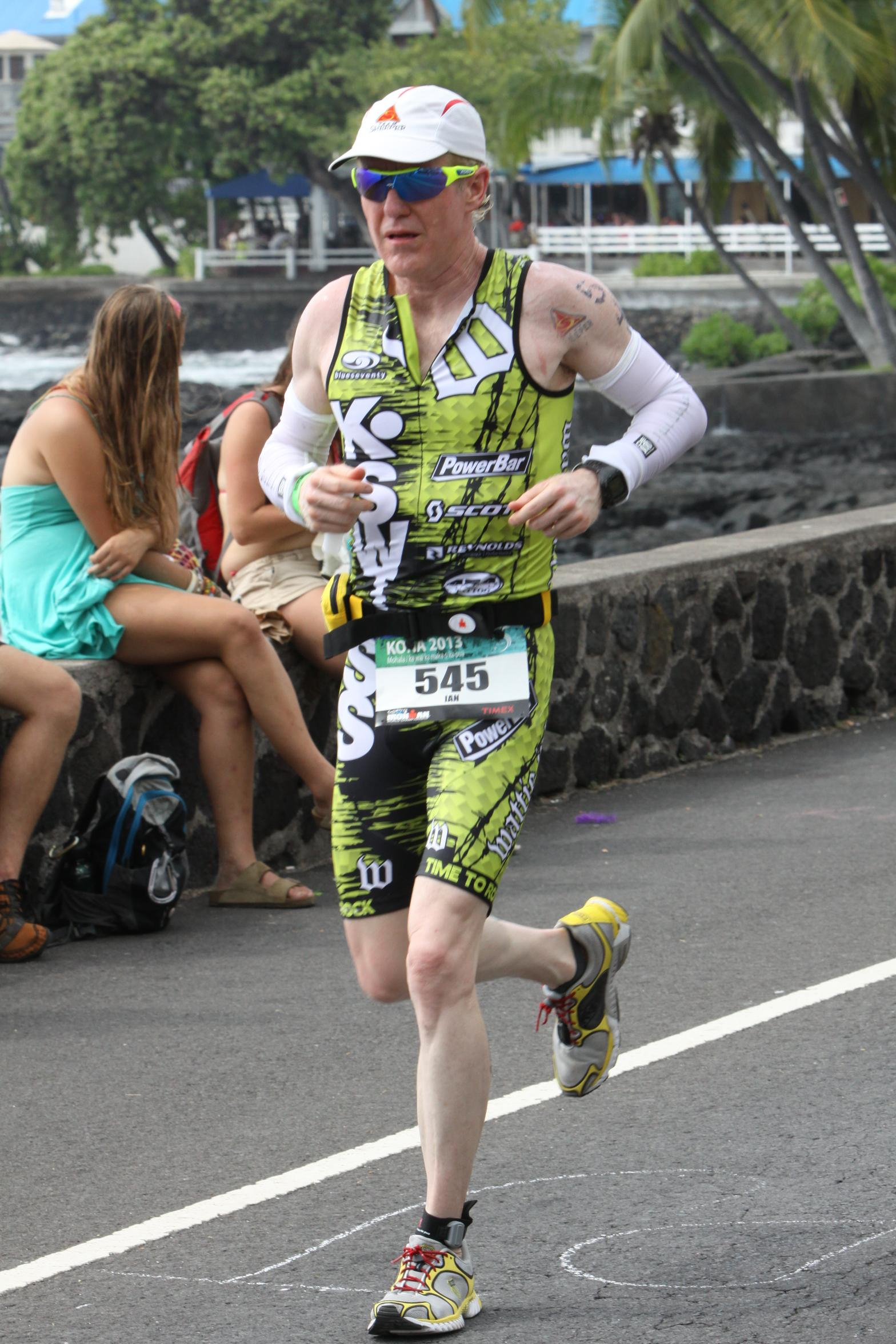
Mile 2 of the run – oh, to be able to run sub 7:30 pace all day…
But early enthusiasm often leads to mid-race problems. I had a great first 10 miles, then caught my struggling teammate Matt around mile 11, but I started having my own struggles after the halfway point, which I reached in 1:43. Repeating a theme from countless previous races, it was hamstring cramps — the kind that stop you dead in your tracks. I thought my fluid intake had been pretty good, but Houston, we had a problem.
Rather than focus on the negative, I tried to figure out what I needed (“fluids”) and how best to get enough of them in (walk the aid stations and take whatever it is they were offering). The cramps were pretty stubborn; I had to walk a good section of the Energy Lab, and even the running part was none too quick.
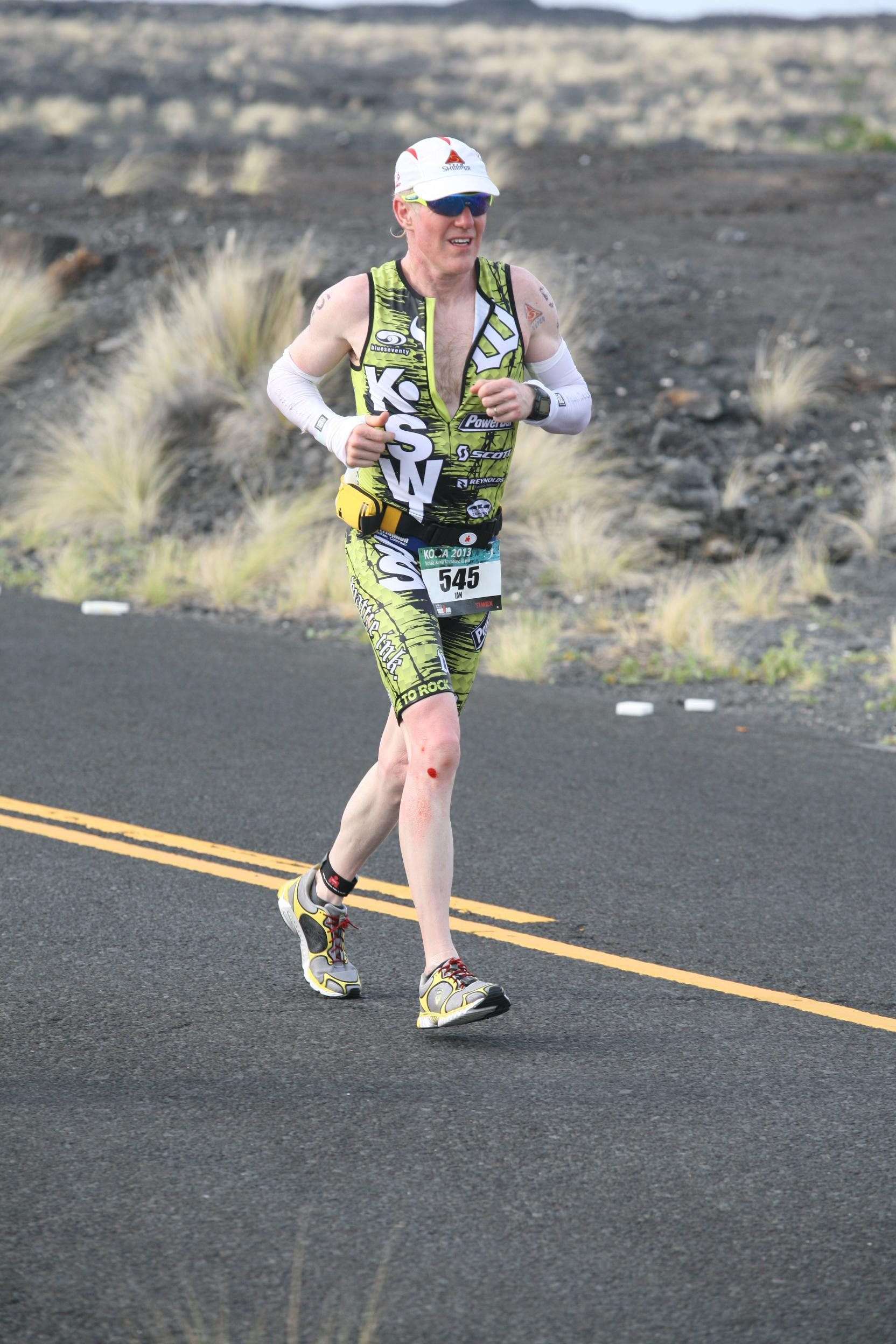
Noticeably more labored stride, if you can even call it a stride
Eventually, the fluid intake did take effect, and I was able to keep myself on the verge of cramping instead of actually cramping for the rest of the run. I did pick up a number of places in the 7 miles from the Energy Lab back into town even though I felt as though I was struggling. At this point, I figured that if I could keep going, I could break 10:50, so that became my revised goal.
Underpromise and overdeliver — it’s not just a business cliche. It turns out I was able to pick up my pace a little, so I kicked it in down to Ali’i Drive and ended up finishing right behind the legendary Ken Glah, in 10:43:41.
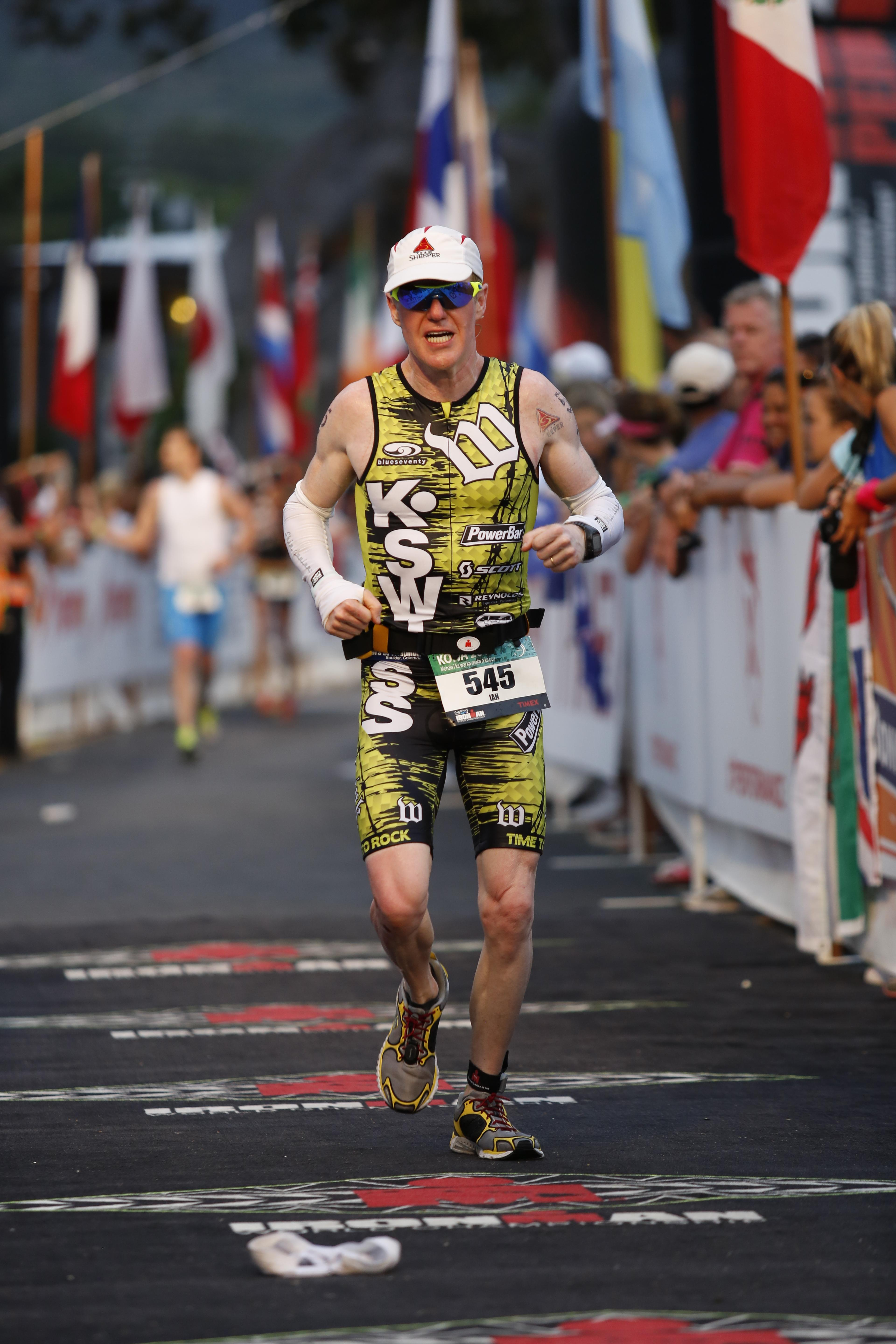
Approaching the finish
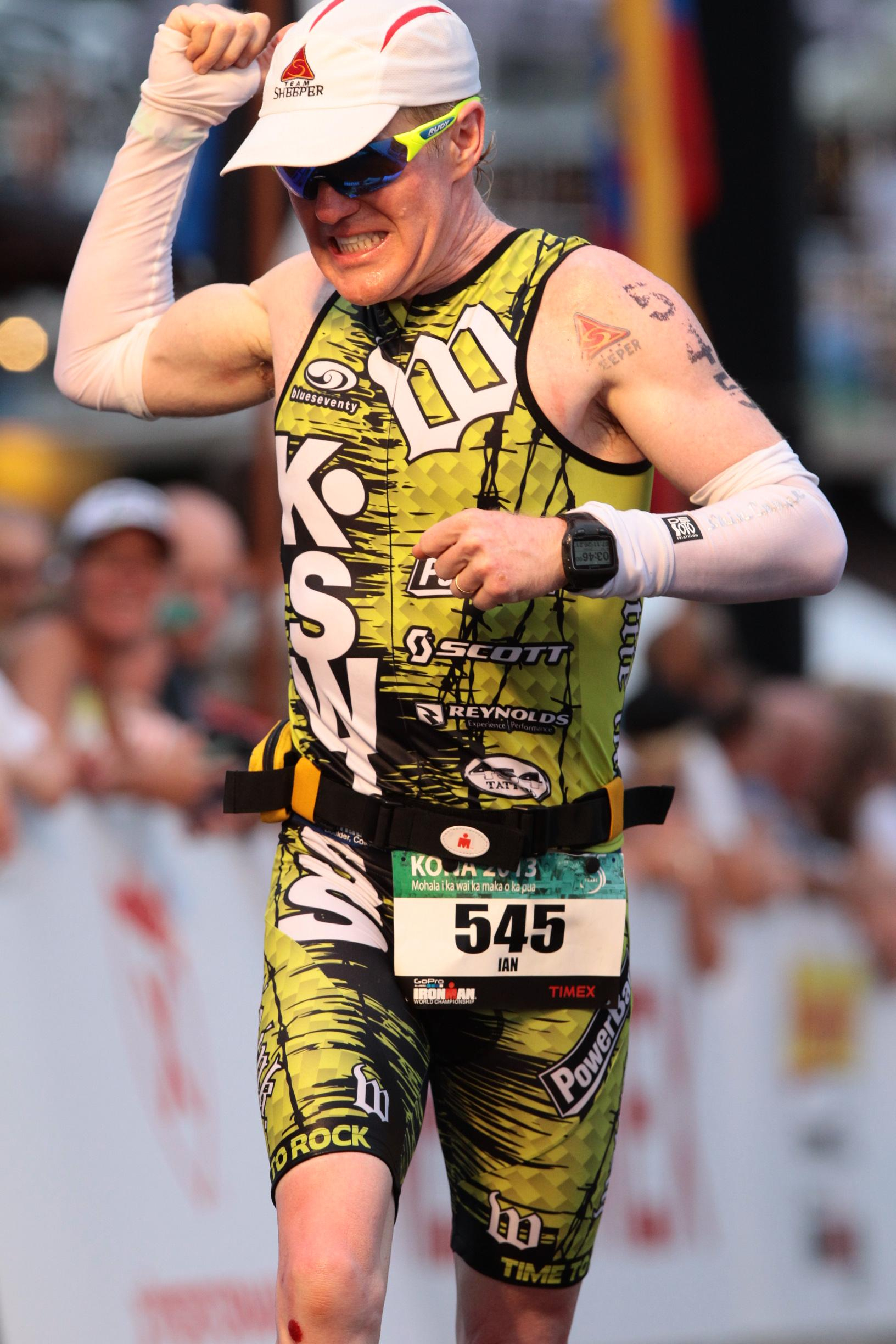
Which way to the gun show?
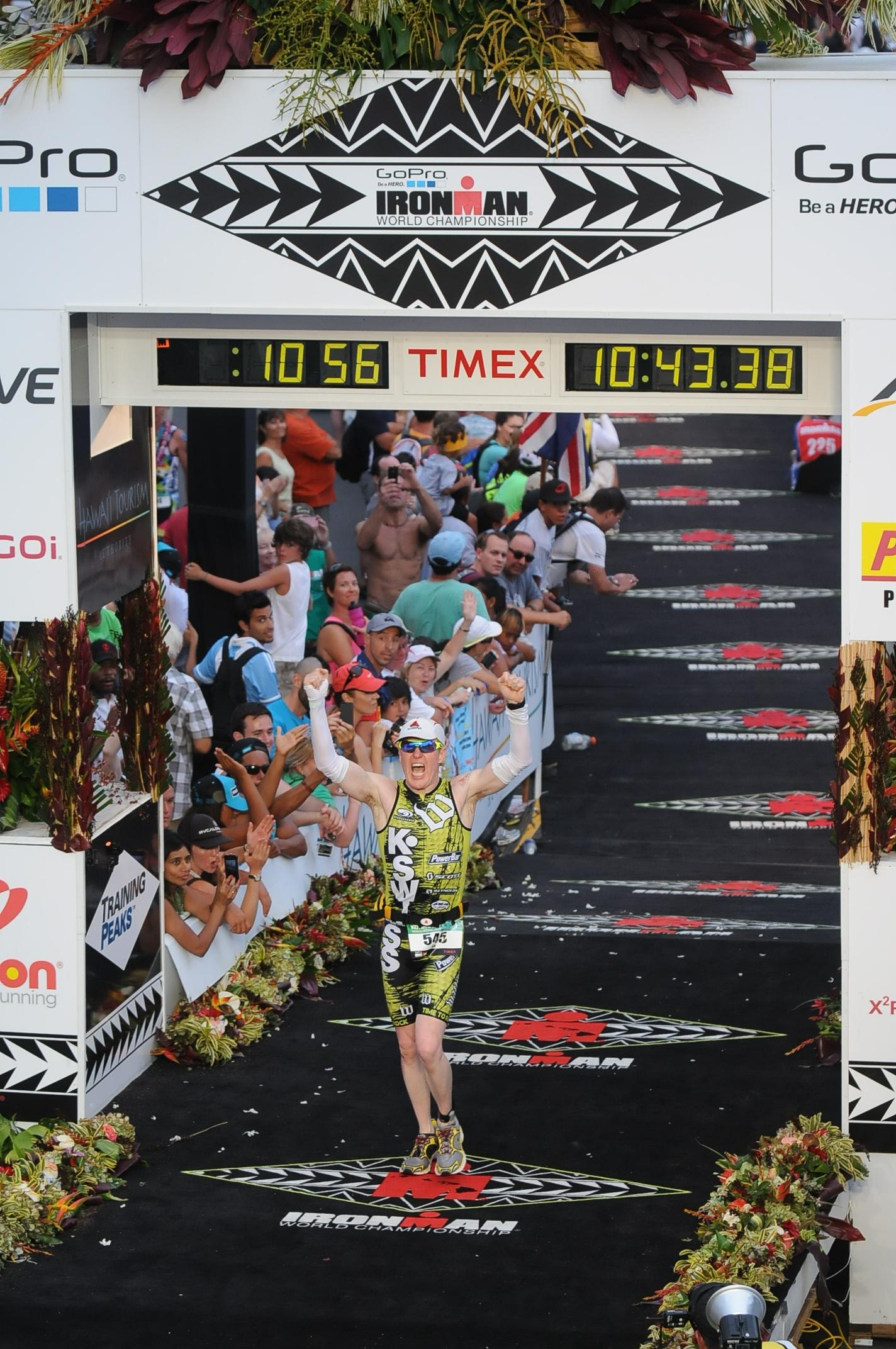
A 32-minute PR warrants the risk of an “excessive celebration” penalty
Aftermath: chafed, bloody, blistered and tired. But ready to take this one on again in the future and do better.

The tale of the tape

Margarita time!
By some measures, I should be disappointed in my Hawaii 70.3 (“Honu”) result — I got 9th in the M50-54 age group as opposed to 7th last year, I failed to break five hours, and my body betrayed me in the run, which is supposed to be my best event:
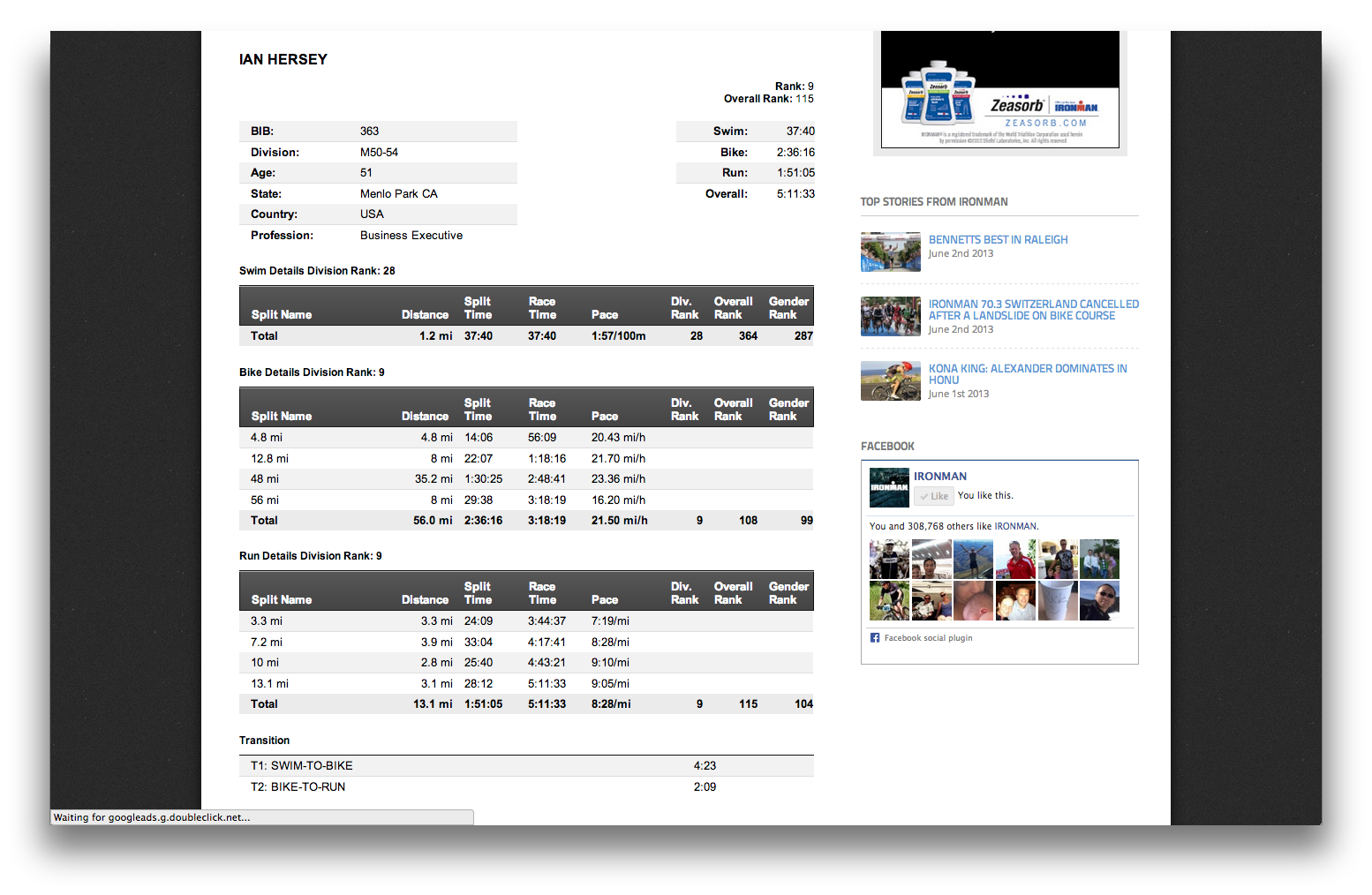
But I like to take an analytical approach to my racing. Let’s compare some numbers:
2012 Top Male:
| Name | Swim | Bike | Run | Finish |
|---|---|---|---|---|
| Armstrong, Lance | 00:23:22 | 02:01:46 | 01:22:29 | 03:50:55 |
2013 Top Male:
| Name | Swim | Bike | Run | Finish |
|---|---|---|---|---|
| Alexander, Craig | 00:25:11 | 02:13:59 | 01:23:08 | 04:05:43 |
Now, Alexander is not the cyclist that Lance is, but he is a much better runner, and is a three-time winner of the full Hawaii Ironman to boot. So a winning time almost 15 minutes slower than last year is perhaps an indication that the conditions were more difficult this year.
Let’s compare the same athletes year over year:
| Name | Year | Swim | Bike | Run | Finish |
|---|---|---|---|---|---|
| Wee, Bree | 2012 | 00:27:01 | 02:29:10 | 01:32:51 | 04:32:45 |
| WEE, Bree | 2013 | 00:28:29 | 02:30:31 | 01:48:08 | 04:51:05 |
| Beckmann, Holger | 2012 | 00:32:01 | 02:33:22 | 01:33:48 | 04:44:48 |
| BECKMANN, Holger | 2013 | 00:40:41 | 02:38:19 | 01:38:56 | 05:05:46 |
| Doi, Keish | 2012 | 00:34:52 | 02:37:38 | 01:31:37 | 04:48:58 |
| DOI, Keish | 2013 | 00:36:43 | 02:35:39 | 01:42:30 | 05:00:07 |
| Hersey, Ian | 2012 | 00:38:37 | 02:40:27 | 01:47:22 | 05:13:30 |
| HERSEY, Ian | 2013 | 00:37:40 | 02:36:16 | 01:51:05 | 05:11:33 |
This isn’t a complete analysis of everyone who competed in both years of course, but it does look at a female pro and a couple of top older male age groupers, and then at me. A couple of things emerge from the numbers:
It’s not clear to me exactly why the swim was slower, but they did reverse the direction of the course this year, which might have been a factor. I was faster this year than last, but I’ve been swimming a lot faster in workouts this year, so should have been several minutes faster. For the run, it’s crystal clear why it was slower: it was HOT! Last year’s race had some very strong winds, which kept the temperature down.
My own run performance came down to the fact that my run training has been next to nothing since mid April when I strained my hamstring, forcing me out of my planned Big Sur Marathon and making the prospects of even getting through the Honu run iffy at best. Fortunately, the hamstring healed after four weeks, but the damage was done to my run fitness. But that isn’t an excuse — I came with great overall fitness and confidence, and was ready to race.
The swim started well — I placed myself on the right side of the field and swam un-punched and un-kicked for the entire time. The change that the race organizers made to start the age group women seven minutes after the age group men really helped. Fewer bodies, fewer arms and legs. It also made a big difference on the bike, because in years past I’d have to pass a lot of women who were fast in the water but clogging up the bike course (no offense intended — I know I could also solve the problem by “swimming faster”). The only tough part of the swim was after the final turn buoy, heading back to shore — that’s where the wind was coming from, and the chop was noticeable. The sun was also right in our faces, so it was difficult to see where the swim finish actually was.
Once out, though, I noted the time (a little disappointed, but you don’t dwell on a minute or two in such a long race) and headed up the ramp for T1. Though I needed help from a volunteer first to get my swimskin unzipped – the zipper was stuck. She had trouble as well, but eventually got it to unzip. I sprinted up the hill and found my bike, and made one of my faster transitions, other than fumbling with the shoes I already had in the pedals (the course goes sharply uphill right out of transition, so it’s tricky to jump on the bike without your shoes already on your feet — something to practice). Once off and going, I started passing guys (and a few really fast female swimmers) pretty quickly. The wind was going pretty fiercely and was mainly a crosswind, which requires a bit of nerve to ignore and just stay down in the aerobars in.
I was holding around 210-220 watts for the first hour, and averaged about 22 mph. Then the climb to Hawi came, which involves not only a long uphill with a few steepish parts but also a pretty good headwind. At some point near the turnaround, a fellow Wattie Ink guy passed me, but I caught him on the ensuing descent, which was blissfully free of the dreaded crosswinds this year, which meant I could cruise pretty easily in the aerobars at 30+ mph, regaining a lot of the average speed I had lost on the uphill. The Wattie guy and I were exchanging positions every so often, as I would push the uphills a little harder than he did. He turned out to be a younger guy named Dillon, whose dad John was also a racing Wattie (John passed me in the run — it would become a theme).
On the section back to Kawaihae and the Queen K, I continued picking off people, including a few female pros and one or two female age groupers who were swimming and riding like pros :-), but I stopped myself short of really hammering — that’s what makes the power meter such a great tool if you know how to use it. I knew I was on my way to a good bike split, however, and sure enough I ended up notching a four-minute PR for the course. I also noticed very few bikes in the transition area, especially anywhere near my number, which meant I was doing pretty well in the age group (turns out I was 9th off the bike). But now I was venturing into the unknown — the longest run I would have done since February or March.
It started off well enough, though immediately I could tell that it was substantially hotter than last year. The key was to keep my hydration and electrolytes going, as cramping in the heat is pretty much my standard MO. I had to reset my Garmin because my Auto Multisport mode apparently didn’t have transitions included, so the watch had stopped recording. I use the Garmin for pacing — mainly to hold myself back early on. The first mile was still a 7:0x, but it felt easy enough. That would change pretty quickly once I hit the sections on the golf course, where the spongy grass sucked all speed from the legs. Somewhere in mile 4, the first little leg cramp happened, but I took care of it pretty quickly with some water and an electrolyte cap. I had taken roughly 6-7 of those on the bike, and in hindsight that probably wasn’t enough.
Saw a few Wattie teammates out on course: first, the young Dillon that I’d been playing leapfrog on the bike with passed me in mile 3, and I didn’t think there was any way he was coming back to me. Then, by surprise, his dad John passed me in mile 4 and introduced himself. I kept John in sight for a while, and even re-passed him in mile 7 (after having my first solid set of leg cramps, which stopped me dead in my tracks). When I went past him, I joked that my teammates call me “a tenacious bastard.” Just before mile 9, as we headed out on the long, desolate out-and-back section of road, I cramped hard. I tried walking backwards, sideways — anything to use different muscles and work out the cramps. John went past me at this point and told me I’d need some of that tenacity — he was spot on.
Finally the cramps got worked out and I resumed running, until an even worse set happened 20 yards before the next aid station. It was so bad that I had to ask the volunteers to bring the water to me — I couldn’t move. I took my time, took a couple of electrolyte caps, and gradually I could start moving again. It was odd: for a few minutes I could run 7:20 pace, then all of a sudden I was stopped dead in my tracks, then the cramps subsided and I could run again. That’s pretty much how it went for the rest of the race. The last quarter mile I was determined to keep running no matter what, and almost every muscle in both legs was twitching, ready to lock up. But I finally made it over the finish line, and a PR is a PR, no matter how ugly parts of it were.
I met a few other Watties in the finishers area — here’s me with Mickey McDonald from Bend, OR, who crushed the bike with a 2:29 split:

My Team Sheeper buddies Mike and Steve finished together, also having tough runs laden with cramping, so I wasn’t alone in my suffering. 🙂 Here’s the happy crew:
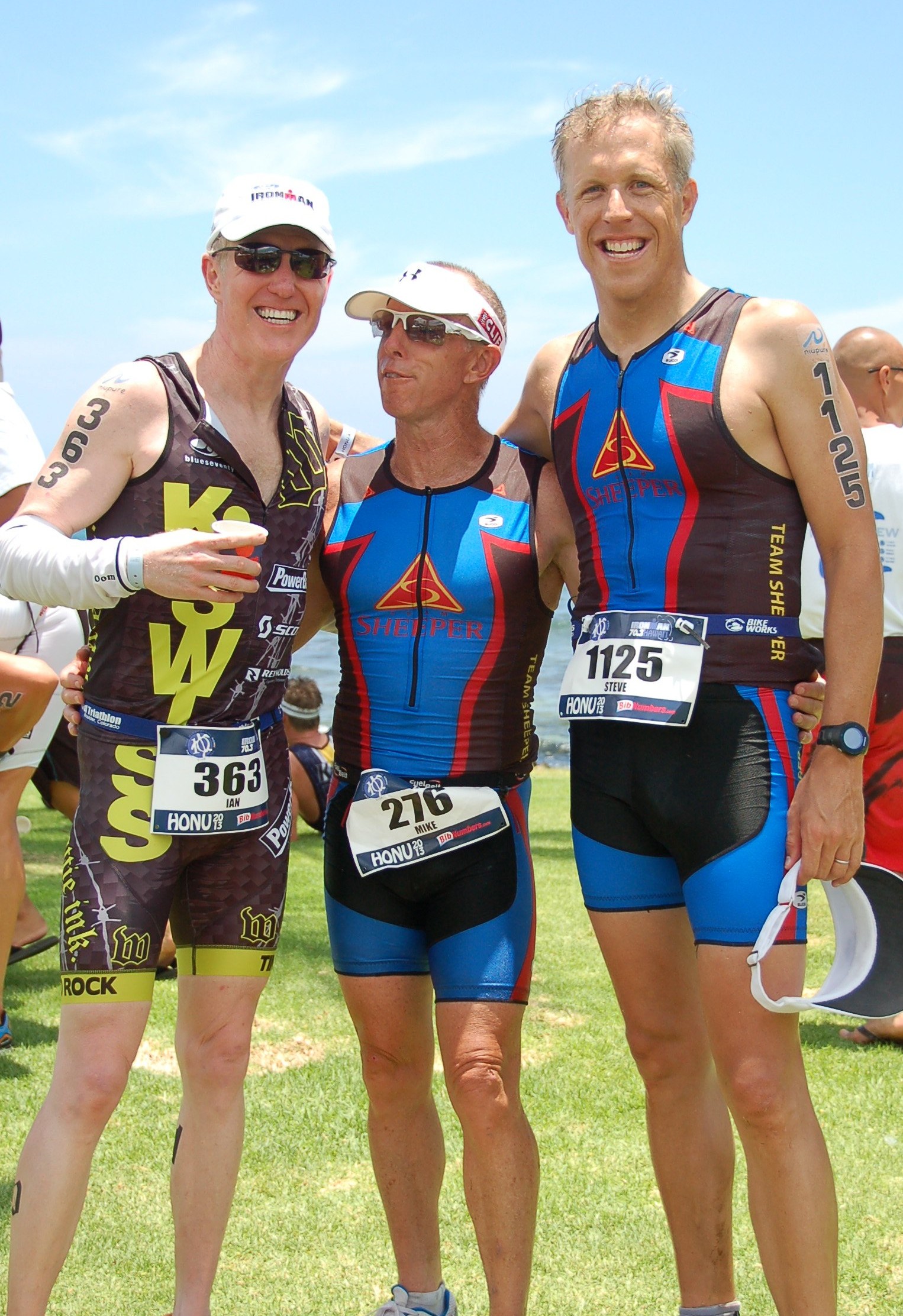
Now it’s on to my Kona prep — if nothing else, I learned from this race how far I still have to go to get my run fitness and my hydration up to the task of double the distance and more than double the suffering. Bring it on!
A big thanks to all of my sponsors: TrainingPeaks, which I use religiously; Wattie Ink, which represents a great set of product sponsors and athletes (and has a very cool-looking kit); and, last but not least, Team Sheeper, the greatest combination of training program, training partners and friends a guy could ask for.
My wife’s a travel writer and covers Hawaii extensively, and one of the considerable perks I enjoy by virtue of being married to her is the ability to tag along on some of her work trips. And so it was that I found myself on Maui last weekend during the Maui Oceanfront Marathon festival of races. There were quite an array of races all happening on the same day: a marathon, a half marathon, a 15K, a 10K and a 5K. The half and 10K were on an out-and-back course starting and finishing in Lahaina, and the rest were point-to-point affairs, requiring a shuttle bus to get to the start. All races finished in the same place in Lahaina town. We were staying up in Napili, right next to the Kapalua resort, which made my choice of the half work pretty well logistically.
Not that I had bothered to bone up too much on the logistics – this was strictly a “fun race,” an early season test of running fitness. I was hoping to go under 1:25, or just slightly faster than 6:30 pace. We’d had a nice dinner at Merriman’s Kapalua the night before, complete with wine pairings, which I heartily recommend — other than perhaps the night before a half marathon. 🙂 Woke up to some slight GI distress, which I won’t go into detail on, but I wasn’t feeling that race ready.
Got to the start line at 6:25 a.m. in plenty of time for a 6:45 a.m. start. However, it turns out that the start was at 6:30 a.m. (did I mention I hadn’t paid too much attention to the logistics?), so I jumped in near the front of the field and figured I’d do my warmup in the first mile. The horn sounded and we were off.
I was running pretty relaxed, and in the first mile I was probably in about 10th place overall. I knew that there was at least one other race going on at the same time — a 10K — but I wasn’t sure if there was a 5K as well. So you really couldn’t tell who was in which race. Plus it was pretty dark out at that hour — I ran with my sunglasses in my hand until there was enough daylight to put them on.
I started reeling in runners after mile 1, which I passed in a somewhat leisurely 6:35. The first female was my first passee, then I came up on a group of three guys running together. I went past them and surged as I did, just to discourage anyone from sitting on my wheel. One older guy in a “Yukon” singlet did sit on, then surged past me, which I thought was an interesting move, so I tucked in for a little while. Mile 2 was 6:19, so the surging had definitely picked the pace up. I was trying to stay relaxed, though — there was still a long way to go.
“Yukon”‘s breathing was pretty labored, and I could sense him slowing, so I surged past him again, this time for good. Next up ahead were three other runners, and I was starting to close in on them. I hit mile 3 in 6:27 (there was a bit of uphill in that mile), and all of a sudden, the three runners 20 yards a head of me turned at the 5K cone. I thought I was supposed to go on for another 3.5 miles to another turnaround for the half, but the road ahead of me looked closed — there were red cones lined up on the shoulder. So I second-guessed myself and thought that maybe it was a two-lap out-and-back course or something, so I turned back around to follow the others.
I had lost some ground to them during my hesitation, but started reeling them in much more quickly. Mile 4 came in 6:22, right at the point I passed a guy in a Laguna Niguel singlet; then all I could see were two guys together right up ahead of me. I went past them pretty quickly, and now there were only runners coming the other way on their way out. One woman high-fived me and said I was in the lead. That didn’t seem quite right, but I was just focused on staying relaxed and dealing with occasional rumblings from my gut — nothing severe, but I was a little worried about them in the second half of the race.
I hit mile 5 in 6:25, so I was still on goal pace, and behind me I could hear someone coming up on me. It was one of the last guys I had passed, and he looked as though he was making his finishing surge in the 10K. He pulled even with me, and I looked at him and gave him a “good job” nod before letting him go — I still had 7+ miles to go.
Or so I thought. As I came up to the start/finish line, it appeared that there was only a finish chute, not a place to turn around and go back out, and furthermore I was being announced as the 2nd-place finisher! The official time was 40:24 — not the 10K time I would have liked on my permanent record, but oh well.
At least I got to get first dibs on the free post-race massage. 🙂
Lesson for the day: if you can’t be bothered to read the race instructions closely, don’t get bummed out when things go awry. Besides, as one of my friends pointed out, “you’re still on Maui after all.”
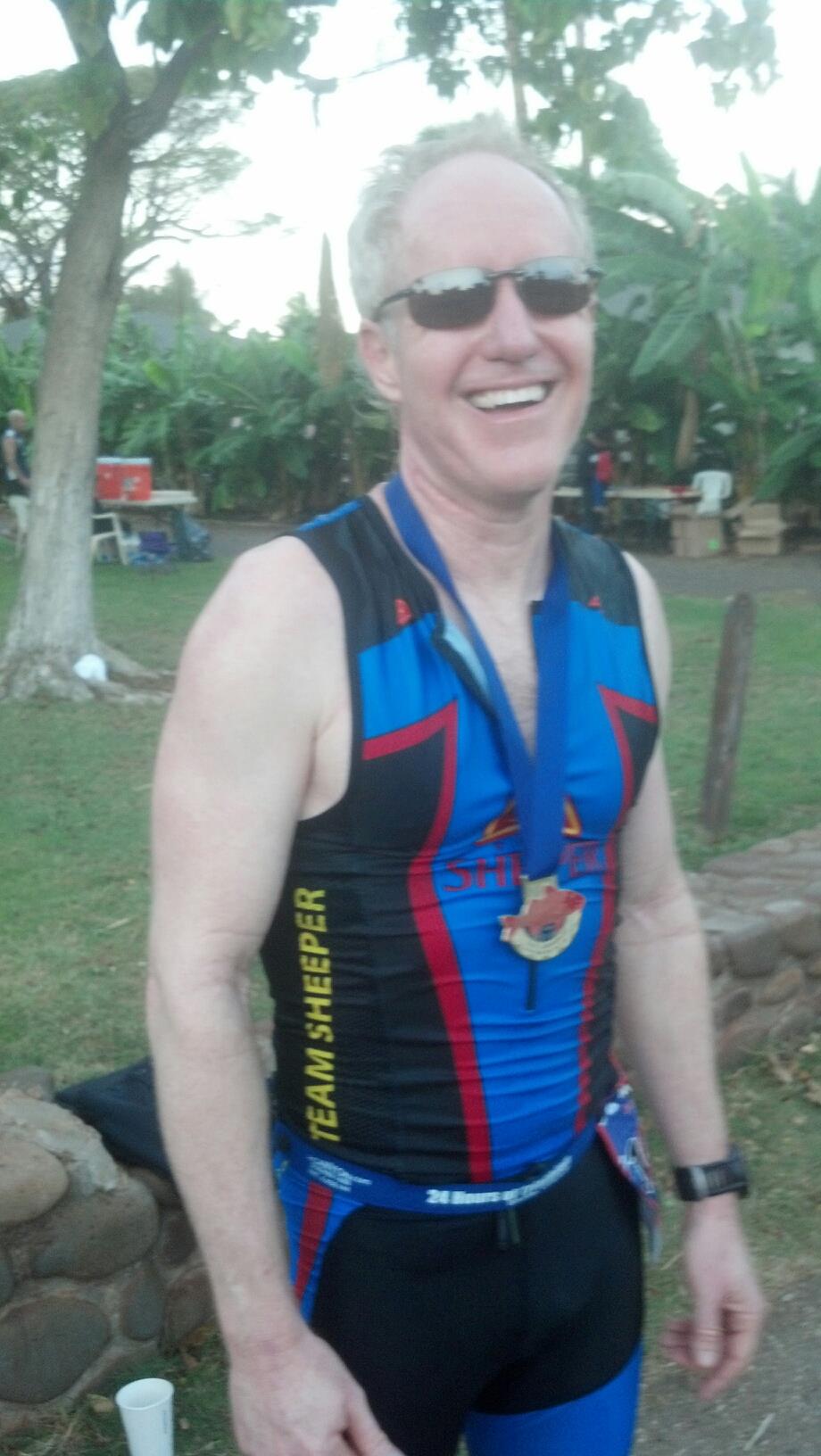
It’s all good

Not even sure where to begin, other than this was the most fantastic, and in many ways unexpected, Ironman race I’ve ever had: 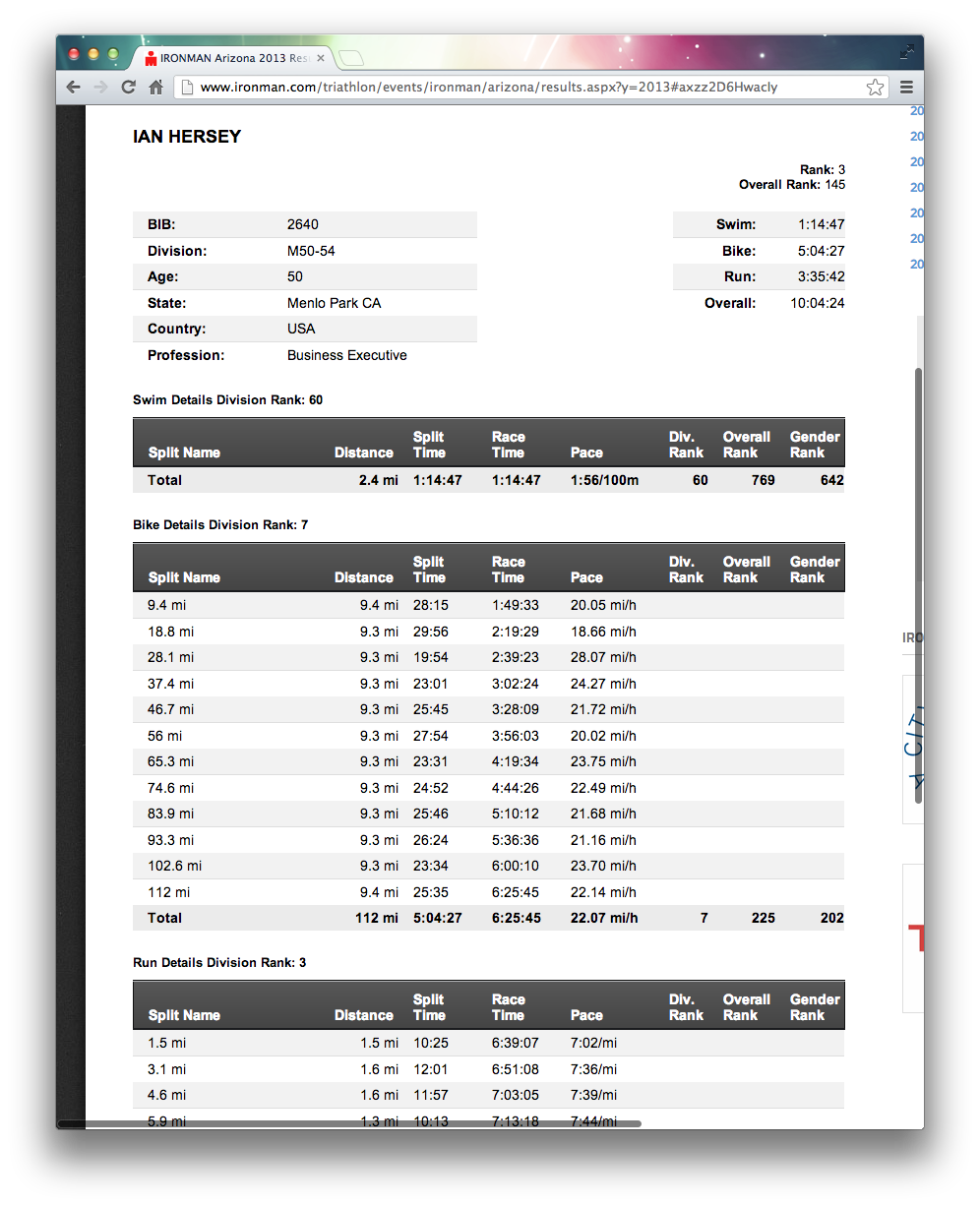 Sometimes numbers don’t tell the story, but in the case of my race, they do:
To say that I’m stoked is an understatement. This was a breakthrough race for me – all the training I did the past few years, especially the bike emphasis I had this entire year, paid off big time: I’m finally “one of those fast guys” in Ironman that I never really believed I would become.
Oh, and did I mention I qualified for Kona?
So here’s how it went:
Pre-Race
My training was really solid once I recovered from Ironman St. George back in May. I got a course PR at the 70.3 Hawaii race and started adding long flat rides in the summer, starting with just over 90 miles and then going to the full 112. This was done with my crew: Mikey was a constant, and on most rides we were also joined by our teammates Eric and Derrick — the Team Sheeper IMAZ crew. Derrick, Mike and I also did a three-day Palo Alto-Santa Barbara tour along the coast, which was not only an incredible experience (picture-perfect weather), but showed me that I had both power and the endurance to hold it. My last 112-mile flat ride in the South Bay was at an average power of 205 watts, which still allowed me to run well afterwards. This was about 10 watts higher than I held in my last IMAZ in 2010, where I went 5:22 on the bike, so I felt as though I had a 5:10 in me. My race plan was to do about a 1:10 swim, 5:10 bike, and (and this was the big longshot) 3:25 run. With transitions included, this would put me in the 9:5x range. Factoring in a more likely 3:3x run, it was going to be close to make it under 10 hours, but anything under 10:26 would be a PR.
I felt really good on race week and was raring to go. The only mental demons I had to overcome were the weight of my own expectations — being fit is one thing, but executing on race day is another — and the nightmare scenarios going through my mind about the swim start. In my experience, IMAZ has been a rough swim, and this year wasn’t going to be helped by having almost 3000 athletes in the water at the same time. Still, race morning inevitably came, and Mikey and I headed into the water together to try and watch one another’s backs for as much of the swim as we could.
Swim
I lined up as far to the left as I could; I like having an escape route, if only for peace of mind. The paddleboarders were trying to get a bunch of us to move right, but there was no way that was going to happen — too crowded. So they let us be, and soon the gun sounded. I was a couple of rows back from the line, but got off surprisingly well in terms of very little physical contact. I lost sight of Mikey immediately, though — when you’re a middle-of-the-pack swimmer, you’re surrounded pretty quickly, so it’s every man for himself. My strategy was to keep to the left as much as the paddleboarders allowed, and that kept me in pretty clear water, though of course I didn’t have fast feet to swim behind either. But I will take that over constant pummeling any day — for me, the point of the swim is to get through it without expending a ton of energy. The only scrums came at the turn buoys, but people weren’t out to kill one another, so it was as good as it was going to be when you have tons of people cutting the tangents and trying to swim in the same space.
The way out to the buoys seemed to be faster than the return — I kept seeing the Mill Ave Bridge, but didn’t seem to be getting closer to it very quickly. I finally reached the stairs and took at peek at my watch. Ugh, five minutes slower than plan, but probably what I deserved. Grade: B-
T1
IMAZ has wetsuit strippers, so I was down on the carpet quickly while the peeler did his work. I noticed my legs were a little crampy — I had been getting a few twinges towards the end of the swim. Wetsuit now off, I ran down to the bag area, got my bag and sat down on some grass outside the changing tent. Shoes on, sleeves on, helmet, sunglasses and race belt. Found my bike and headed out, and I got to the mount line right behind Mikey. Grade: B
Bike
I was very quickly in the groove on the bike. My power didn’t feel that great at first, but my speed was good and I was passing a lot of riders very quickly. I tried to get some fluids and a salt tablet in me once I got past the first series of turns and bunches of riders — the swim depletes you more than you think. I spent the better part of the first loop getting past lone fast swimmers and one or two packs — I’d call them “drafting packs,” but I don’t believe most people were intentionally drafting. It’s just hard to avoid bunching up when you have that many athletes on the course at the same time. The uphill on Beeline Highway also had a headwind on the first loop, so that made it a little easier to get past people; I just increased the power from around 210 watts to 240, and that put me past the packs. The ensuing downhill/tailwind did wonders for my average speed and let my legs relax a little — I was still pedaling but without as much tension in the legs. I noticed that my average speed was north of 22 mph, a first for me. It was my first inkling that this was going to be a faster ride than I had planned. I completed the first loop in 1:40:58, and headed back out.
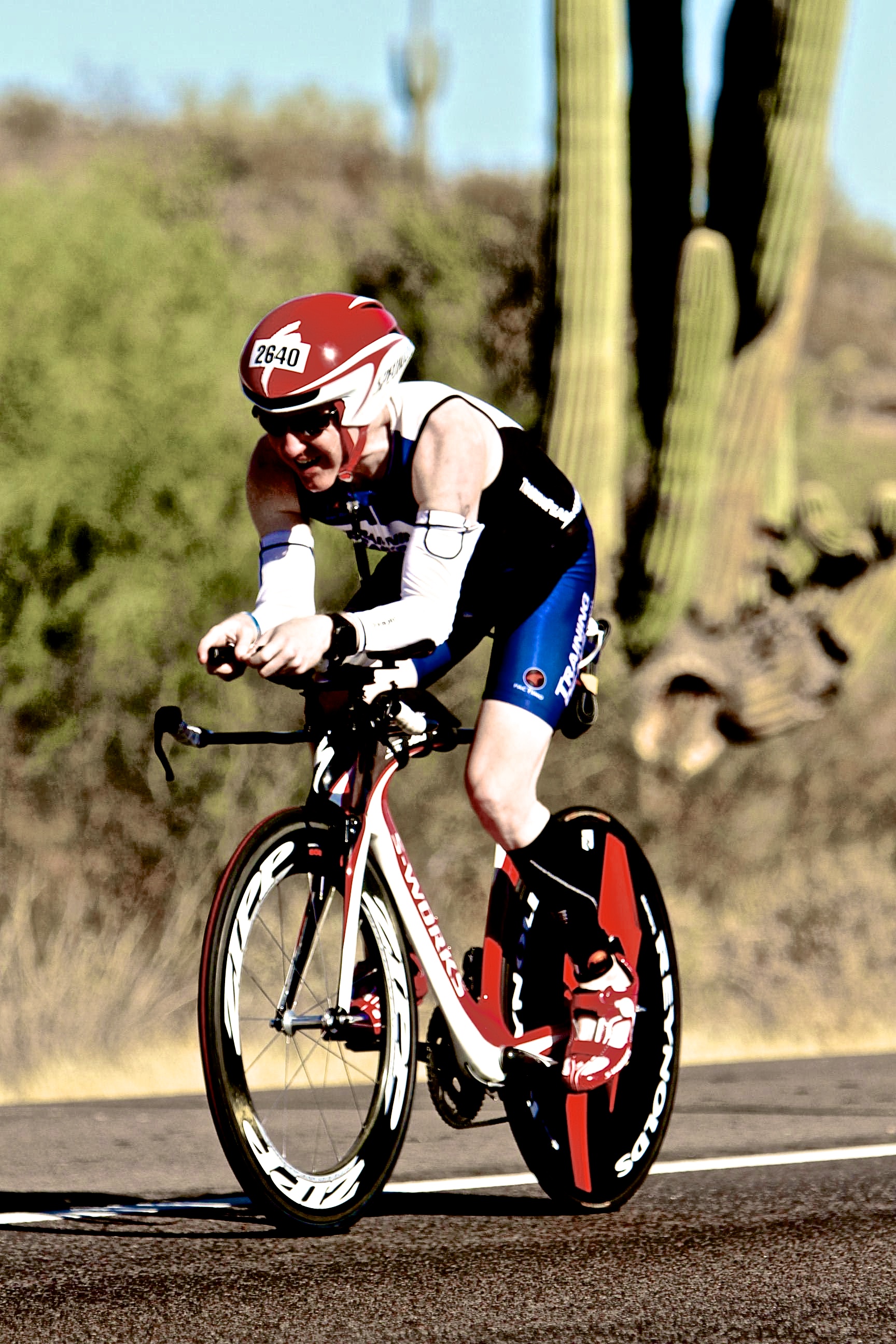
This time, there were many fewer cyclists on the road, other than the ones I would catch later on in the loop that were a lap behind. I stopped to get my “special needs bag” around mile 60 — it had a bottle of my custom Infinit drink mix in it. On this loop, the wind had shifted to be somewhat of a headwind on the downhill back into town, but again my average speed hovered at 22.3 mph or so. There were a few riders I was trading the occasional place with, not in any organized fashion or anything. I remember being near a guy in Purplepatch kit near the end of the loop, which I reached in 1:41:43 (pretty much the same time as loop 1 if you count my stop for my special needs bag), and I rode away from him as I started the third and final loop.
Remember how you have a plan, and then stuff happens? At the next aid station, disaster struck — I missed several water bottles, and a well-meaning volunteer placed the water bottle at exactly the wrong place, and my thumb bent backwards very painfully. I thought for a few minutes I had broken it (I later realized it was just strained), but the immediate effect was a loss of concentration and of use of the hand. I couldn’t squeeze the bottle with it for awhile, so I switched to my left hand in order to get fluids in me. Near the top of the climb, I decided to get some calories in me, but the painful hand was making it difficult. At this point, the familiar figure of my teammate Mimi went by me, saying something that I couldn’t understand. I followed her into the turnaround, and on the ensuing downhill after the aid station, I re-passed her and turned on the gas. It’s funny how teammates have that effect on you more than random competitors you don’t know, but it was a needed kick in the pants. 🙂
I was setting all sorts of personal bests along the way — 100 miles in just under 4:31, 110 miles in under 5 hours — and I was still feeling great as I rolled into T2 in 5:04:27 with a last loop of 1:41:02 (I know the numbers don’t add up, but I must have started my bike computer a little after I got on the bike). Anyway, here’s a screenshot of the TrainingPeaks file:
 Grade: A+
T2
I executed a pretty good dismount thanks to my easy-in-easy-out Specialized bike shoes. My first barefoot strides off of the bike were gingerly, but I hurried to my bag and into the changing tent, dumped the contents, put socks and shoes on, and grabbed my visor and container of salt caplets. Volunteers applied sunscreen to my shoulders and neck, and I decided a quick visit to the port-a-potty was in order. I entered the run course the soonest I had ever done so: less than 6 hours, 30 minutes into the race. That meant if I could run a 3:30 flat or faster, I would go sub 10. Grade: A-
Run
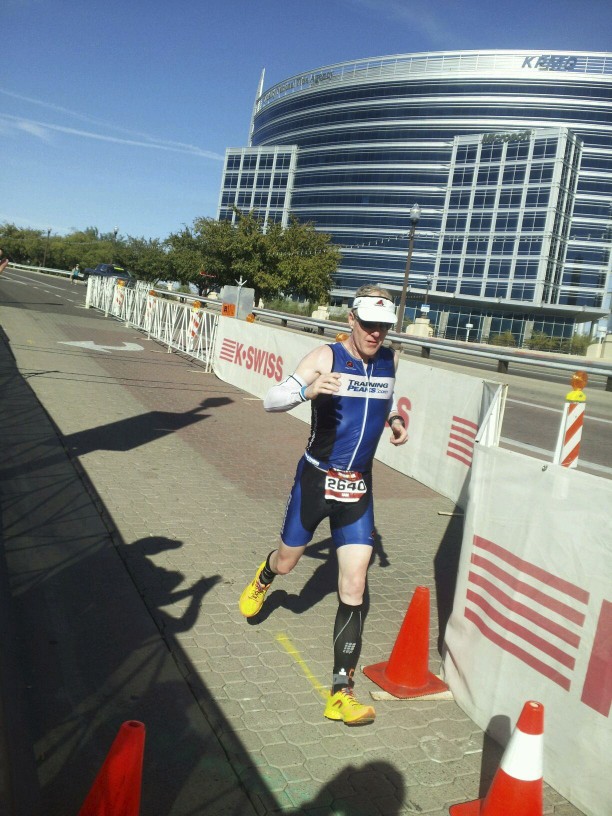
I felt awesome at the beginning of the run and went out in a 7:02 first mile. “Too fast,” I told myself, so I settled in to a 7:30 pace. Coming down a slight grade towards an aid station, my hamstring cramped, so I walked the aid station, got a salt caplet and some fluids in, and started running again. I was able to hold a nice pace for quite a while, seeing my support crew Greg and Alexa coming down off the Mill Ave Bridge after mile 3. The photo they took makes me look (a) fast and (b) as though there’s no one else around. It is true that the number of runners around me was the smallest I had ever experienced in a race; I guess that’s what a quick bike split will do for you.
 I held around 7:30 pace for quite a while (I hit mile 8 in under 1:01) but gradually my pace slowed into the 8s. Hit the half marathon right at 1:41 and needed a 1:49 second half to just dip under 10 hours (if the math I was doing in my head was correct).
I couldn’t do it — I was running on the edge of cramping for quite a while, so couldn’t stride out like I wanted to. It was survival mode. I continued to take sports drink, water, sponges and Coke at pretty much every aid station, which kept me going. I knew, though, that I no longer had the leg speed to go under 10, but I knew that my time would be good if I could just hold it together.
I had no idea what place I was in or anything — in fact, I had no idea the entire race. I was just trying to execute my plan; the placing was up to the other competitors. 🙂 In the final mile, a guy came up on my left and asked how close we were to 10. I said it was close, but only if you have a lot left. He took off in what passed for a surge at that point (neither of us was moving that fast), and I looked at my watch and saw 9:57:xx. But there was still some ground to cover.
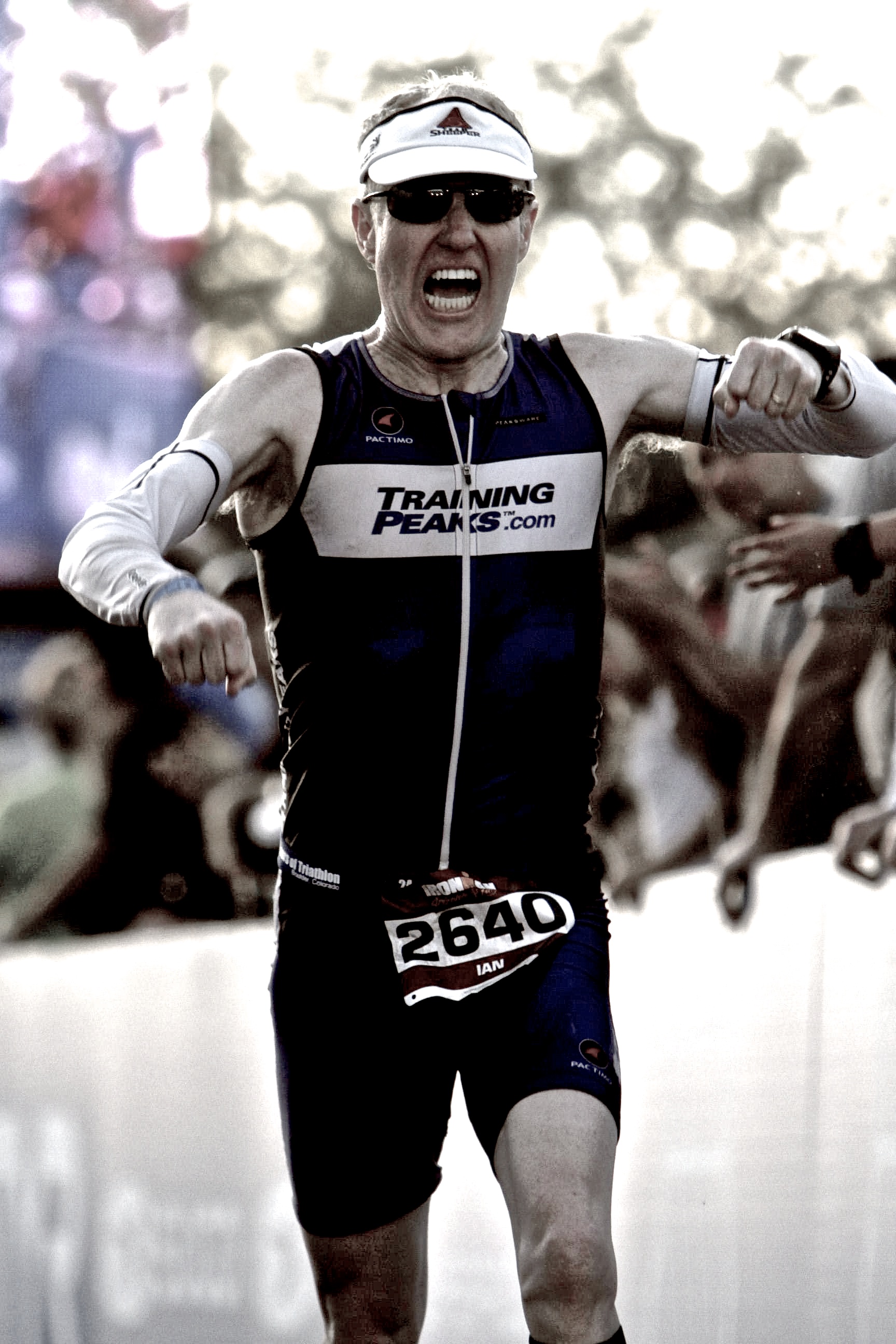
Finally I saw the blessed sight of the left hand turn towards the finish, which leads you out through what looks like a Hollywood backlot and onto a main road (where I spotted Greg and Alexa), then finally a left into the last 100 yards of finishing chute. I was absolutely ecstatic — I did some exaggerated arm movements as I hurried down the chute, high-fiving a few kids and putting an exclamation on a race that had gone almost perfectly. 10:04:24 was a new Ironman PR by over 22 minutes, and my run split of 3:35:42 was my 2nd-fastest Ironman marathon. Grade: A
Aftermath
After I got my medal and space blanket, I reunited with Greg and Alexa, who told me I had gotten 3rd in the age group. I was speechless. I had never made the podium before — frankly, it had never crossed my mind that that would be a by-product of that kind of finish time. I just never saw myself as “one of those podium guys” in an event as competitive as an Ironman.
Then people started asking me via text and Facebook about whether I got a Kona slot, and I thought I probably had but couldn’t confirm for sure. We did have to wait until the next morning to confirm it by going down to the registration area — that’s where I saw the magic list with numbers of slots per age group. Quick scan to M50-54: 3! Kona, baby!
I don’t know if I can ever duplicate this performance or experience. I’m certainly going to try, though. 🙂
No day like this ever happens on your own. There are so many to thank, but first and foremost my incredible support crew of Greg and Alexa, who got me through both St. George and Arizona this year. Also my “Garage of Pain” training buddy Mikey, who got into incredible shape this year and deserved a much better day in Tempe. To our long-ride cohorts Mimi, Derrick and Eric, I guess we know the route to Hollister better than anyone now. There are also some incredibly strong Team Sheeper teammates who inspire me to try to be as good as them (I’m not): Lennard, Jess, Vaagn, I’m coming for you. 🙂 Pierre and Wingman, bury the Lance hatchet and join me on a ride again — I miss you guys. Tim Sheeper, thank you for reminding me to be a warrior. TrainingPeaks, thanks for the software you make and for believing in me to represent you for another year. And finally, Jeanne, who puts up with this strange endurance sports lifestyle I have and is the one I’m most happy to share any meager success with.
Image Gallery


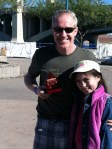

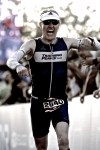

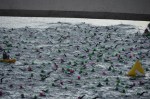
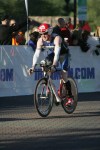



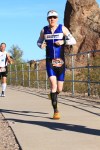
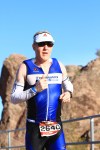
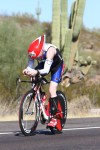
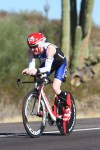

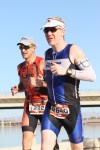
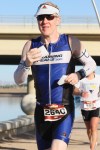
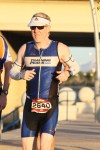
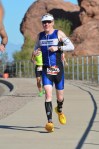




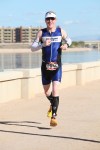
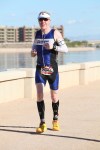
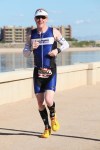
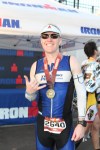


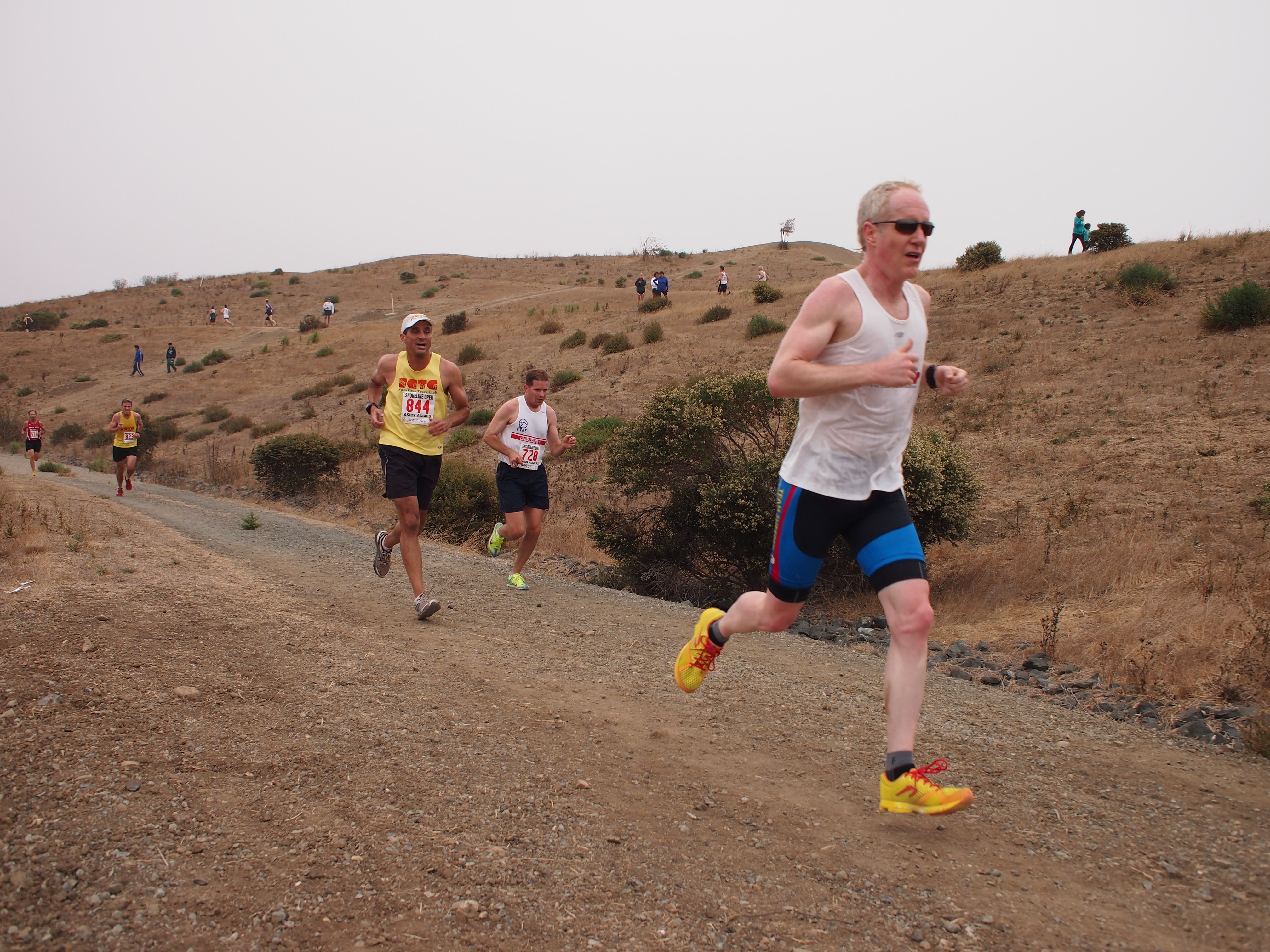
I wasn’t planning to race today, but I got pressed into service yesterday afternoon by my San Francisco-based running team, who needed another runner in order to field a full masters team at today’s Shoreline cross country race. Too bad I found that out after yesterday’s short-but-hard bike/run combo, which included a spirited climb up Page Mill Rd, a trail run off the bike in Skyline Ridge, and then a speedy return via Skyline and Hwy 84, dodging Pumpkin Festival traffic on the twisty descent. All of this was followed by an Ironman-watching party at a friend’s, in which several glasses of anti-oxidant-rich fluid (i.e., a nice claret) were consumed.
Anyway, sometimes you gotta play hurt. I made my way down to the parking lot sandwiched between Shoreline Amphitheater and some Google buildings for a hilly, multi-loop 4-miler. It’s one of my favorites of the XC Grand Prix series, mostly because it’s not very XC like: packed dirt and gravel fireroads with some pavement thrown in. Forget the XC spikes. I felt none too spry during the warmup, met up with my teammates shortly before the start, and we were off.
XC races are notorious for starting hard off the line, and this one was no exception. However, since I have no top end any more, I held back and tried to negative-split the race. That meant I was near the back of the pack in the first 400m, but gradually started reeling geezers in. The first uphill came at about .5 miles, and was the first of three such loops. The good thing was that I thought the race was 5 miles (the old course I ran several years ago was), so I was pleasantly surprised when I realized the suffering would end sooner. Mile 1 was 6:20 – I used to run half marathons faster than that. 🙂 Oh well, kept the rhythm going and started picking off a few more guys, and then pretty much maintained position. Miles 2 and 3 were 6:18 and 6:16, so I was doing a decent job of running negative splits.
At least I’m not DFL
Down to the final downhill, and the two guys in front of me started their kick, and that’s when I realized how little speedwork I’ve been doing for the past few years of Ironman training – I had no answer. Final mile (or .98, according to my Garmin) was 6:02. So I just slotted under 25 minutes for the 4 miles and was the 5th runner (and scorer) for the team. Went for an easy hour cooldown run with some teammates and headed out for a nice brunch, just as the sun came out and we warmed up into the 70s.
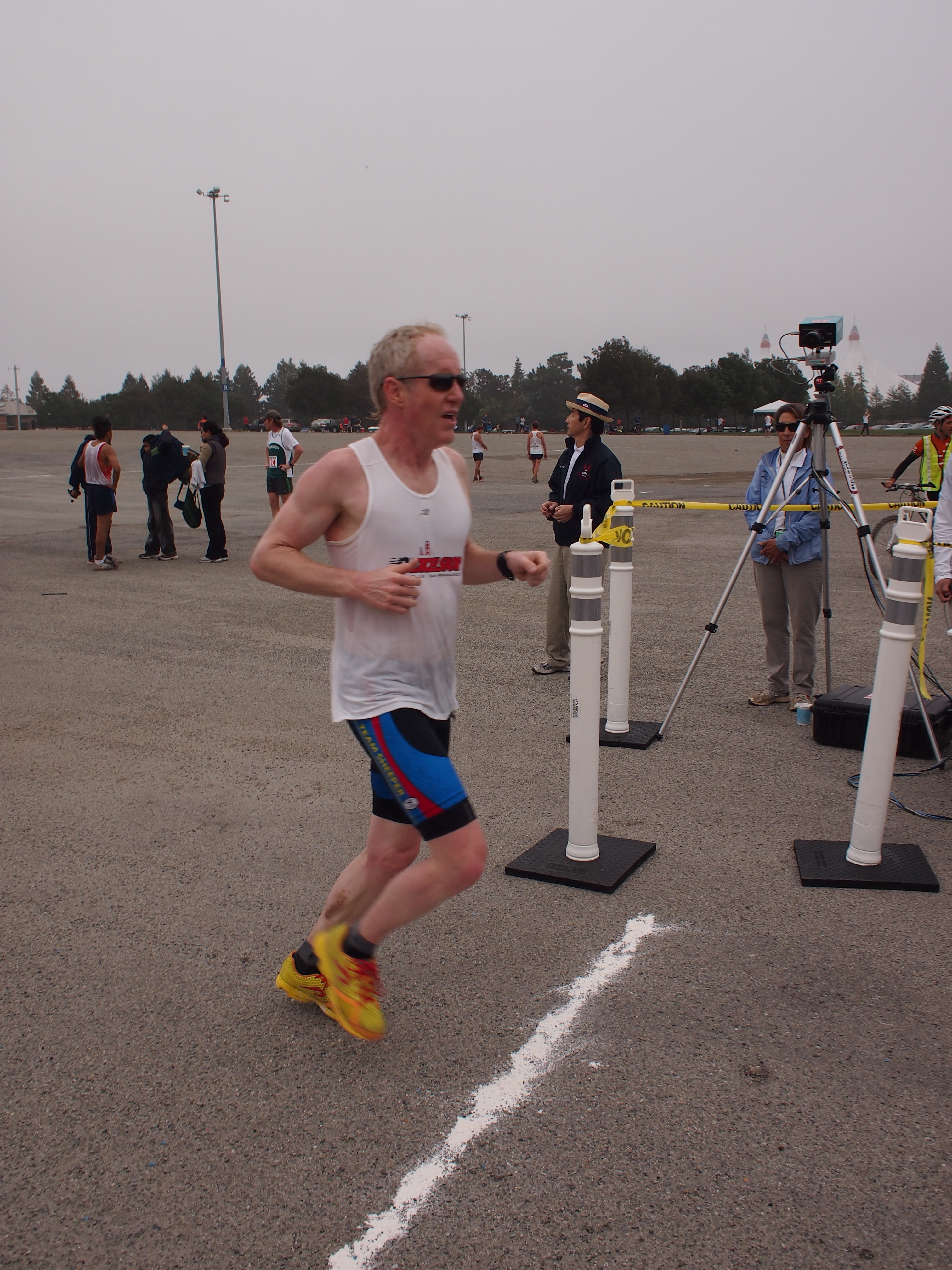
Sauntering across the line
Life is good.
For my fellow data geeks, my TrainingPeaks file: http://www.trainingpeaks.com/av/JZXYMLK6JJK7QYNUYEPSFMJWEA
Very late with this little recap, but life and work get in the way of race reports sometimes. 🙂
Since I left Vegas on a disappointing note, I didn’t know what to expect six days later at Malibu, other than half the distance and much cooler temperatures. I was in the 6th of many waves, which started 5 minutes apart, and there was a pretty substantial surf break to get through. Luckily, it was a wetsuit swim, my favorite kind, and the water was a cool 65F. I almost got crushed by an incoming wave on the way out to the first buoy, but I dove under it just in time and kept moving forward. Sighting was pretty tricky due to the swells, and the swim became an obstacle course once I started catching slower swimmers from the prior waves.
I made it back safely to shore for the swim exit, alternatively looking for a wave to ride in and making sure I didn’t get smashed by one I had failed to catch, and saw a 24:xx on my watch, which is a good time for me for 1500m (a minute or two faster than normal). (My TrainingPeaks file here.)
Got out of T1 pretty quickly and mounted my bike to begin the 1.5M exit from the Zuma Beach parking lot. This involves a series of speed bumps, which you don’t want to go over at full speed but can avoid by staying to the far right.
Unfortunately, the far right was crowded with slower cyclists, and I didn’t see the first one until too late, so I hit it hard, which launched both my fluid bottles off of my bike. Not an auspicious beginning to the ride, and what’s more I couldn’t risk going out for 25 miles without any fluids whatsoever, so I turned around and went back to retrieve them. Easier said than done when cyclists are coming in droves. I lost about 2 minutes in this process, but headed out with renewed focus and a little bit of anger.
I was moving very well, and in fact I almost couldn’t believe my speed and power numbers. The good thing about shorter races is that you can take a few risks in terms of going hard; even if you blow up, you can still finish. Go too hard in an Ironman or half (like I did in Vegas), and you will pay the price. So I let it ride, and I was passing scores of riders as though I had been shot out of a cannon.
I made it to the turnaround and had to wait behind a slow rider in the 500m-long “no passing” zone (the Pacific Coast Highway was narrow at that point, so for safety the organizers had a short stretch where you weren’t supposed to pass other riders; “short” unless you happen to be behind someone really slow), but once free to fly I put the pedal to the metal again.
On the return trip through the Zuma Beach parking lot, I managed to avoid the speed bumps, and hit the dismount line with a split of 1:05 for the 25 miles, which is a PR for me in an Olympic-distance ride, despite the time lost with the speed bump incident. Moreover, I felt great and ready to run. (My TrainingPeaks file here.)
My only thoughts for the run were to hold a consistent pace and to reel in all the 50+ guys I could see. With all of the earlier waves, though, there were a lot of guys on the course, and it’s not always easy to spot the geezers. I was running consistent 6:35 pace, and I did manage to pick off a few, making sure I passed with authority when I made the pass. In the end, I crossed the line just a few ticks over 2:15, with about a 40:30 10K split. (TrainingPeaks file here.)
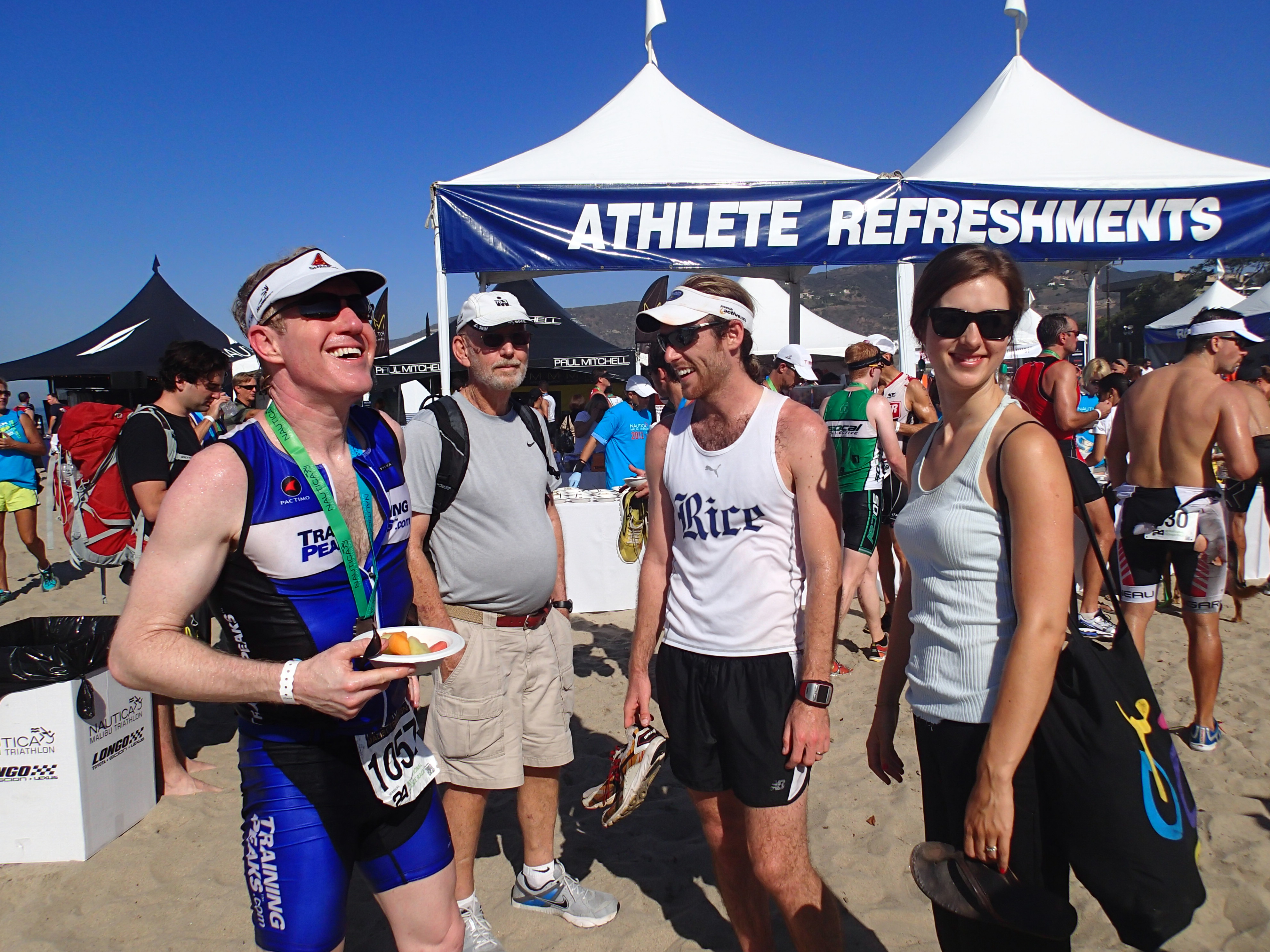
Ahh, redemption is sweet!
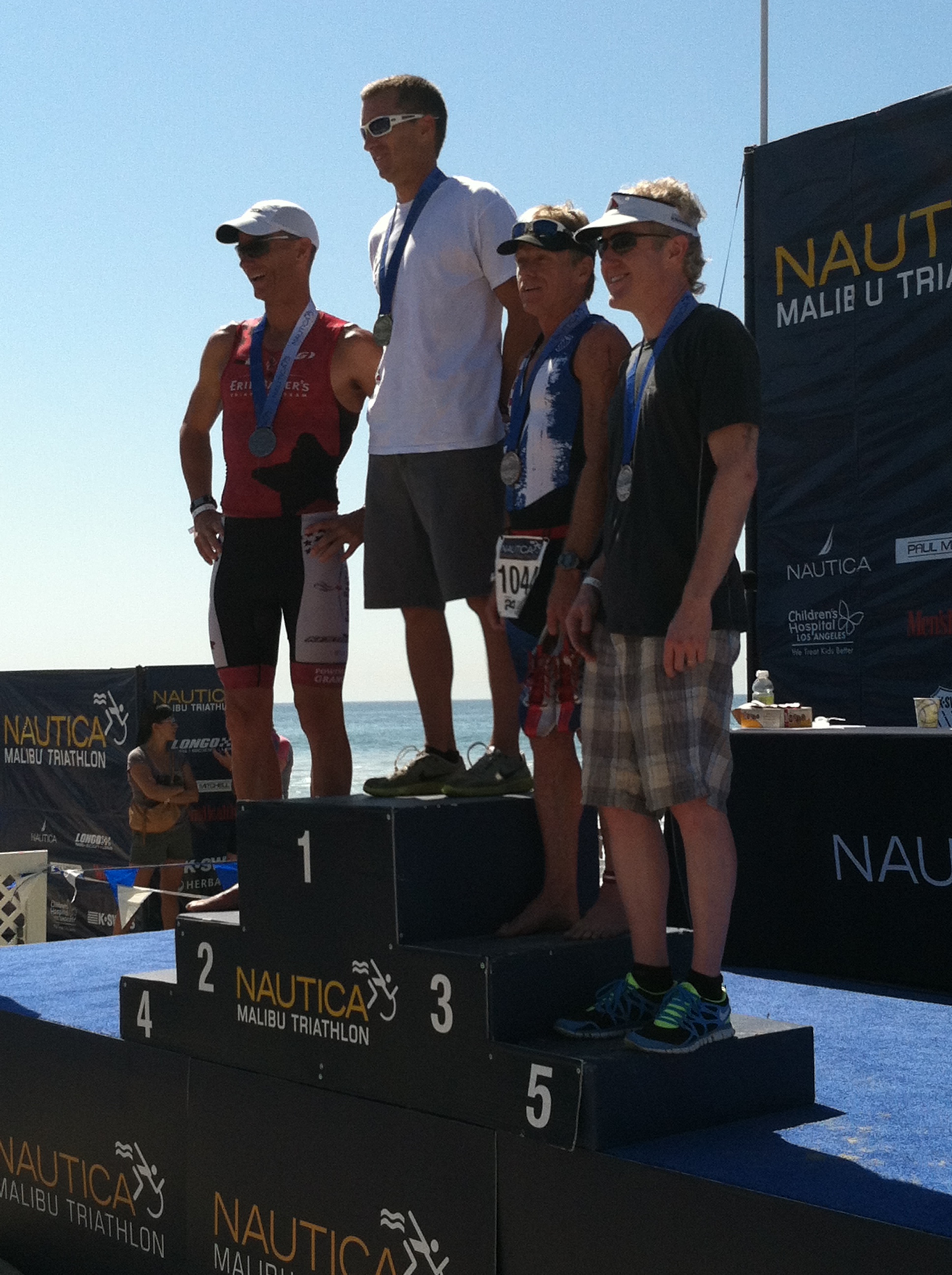
That was good enough for 5th in the M50-54 age group, which got me on the podium. Awesome! It sure made up for Vegas in a big way!
 spinning