Shoreline XC 4M

I wasn’t planning to race today, but I got pressed into service yesterday afternoon by my San Francisco-based running team, who needed another runner in order to field a full masters team at today’s Shoreline cross country race. Too bad I found that out after yesterday’s short-but-hard bike/run combo, which included a spirited climb up Page Mill Rd, a trail run off the bike in Skyline Ridge, and then a speedy return via Skyline and Hwy 84, dodging Pumpkin Festival traffic on the twisty descent. All of this was followed by an Ironman-watching party at a friend’s, in which several glasses of anti-oxidant-rich fluid (i.e., a nice claret) were consumed.

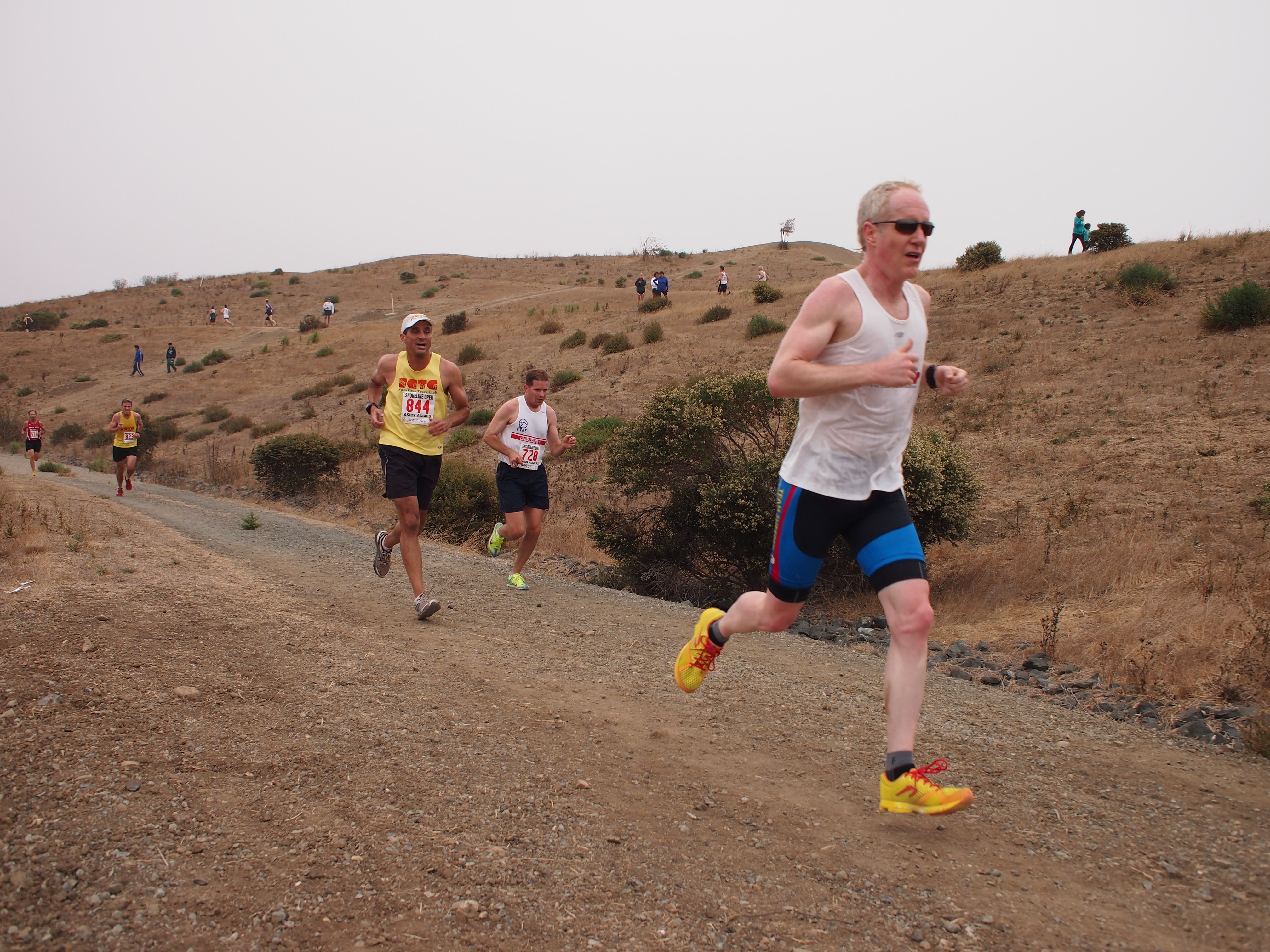
Anyway, sometimes you gotta play hurt. I made my way down to the parking lot sandwiched between Shoreline Amphitheater and some Google buildings for a hilly, multi-loop 4-miler. It’s one of my favorites of the XC Grand Prix series, mostly because it’s not very XC like: packed dirt and gravel fireroads with some pavement thrown in. Forget the XC spikes. I felt none too spry during the warmup, met up with my teammates shortly before the start, and we were off.

XC races are notorious for starting hard off the line, and this one was no exception. However, since I have no top end any more, I held back and tried to negative-split the race. That meant I was near the back of the pack in the first 400m, but gradually started reeling geezers in. The first uphill came at about .5 miles, and was the first of three such loops. The good thing was that I thought the race was 5 miles (the old course I ran several years ago was), so I was pleasantly surprised when I realized the suffering would end sooner. Mile 1 was 6:20 – I used to run half marathons faster than that. 🙂 Oh well, kept the rhythm going and started picking off a few more guys, and then pretty much maintained position. Miles 2 and 3 were 6:18 and 6:16, so I was doing a decent job of running negative splits.

At least I’m not DFL


Down to the final downhill, and the two guys in front of me started their kick, and that’s when I realized how little speedwork I’ve been doing for the past few years of Ironman training – I had no answer. Final mile (or .98, according to my Garmin) was 6:02. So I just slotted under 25 minutes for the 4 miles and was the 5th runner (and scorer) for the team. Went for an easy hour cooldown run with some teammates and headed out for a nice brunch, just as the sun came out and we warmed up into the 70s.

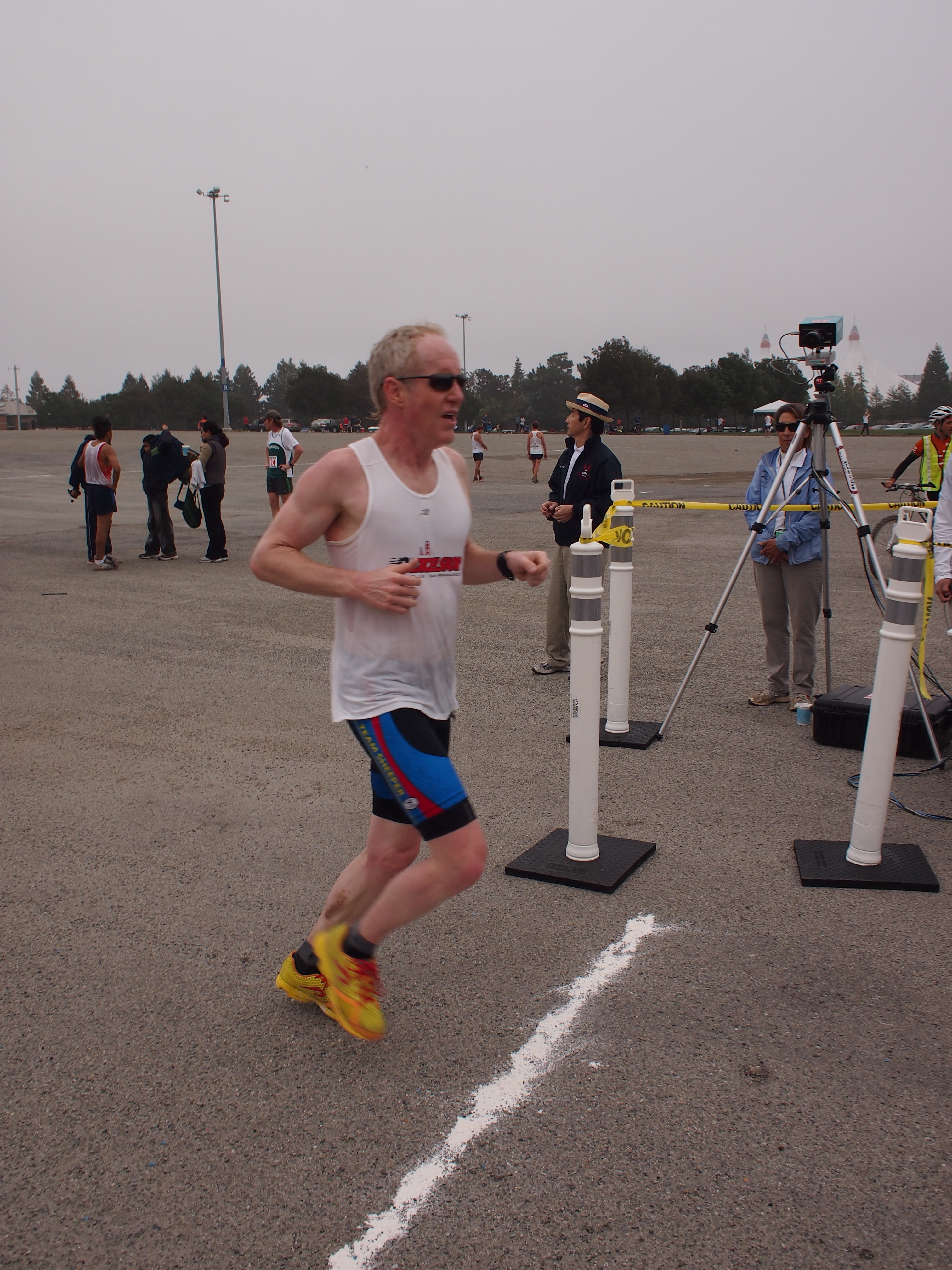
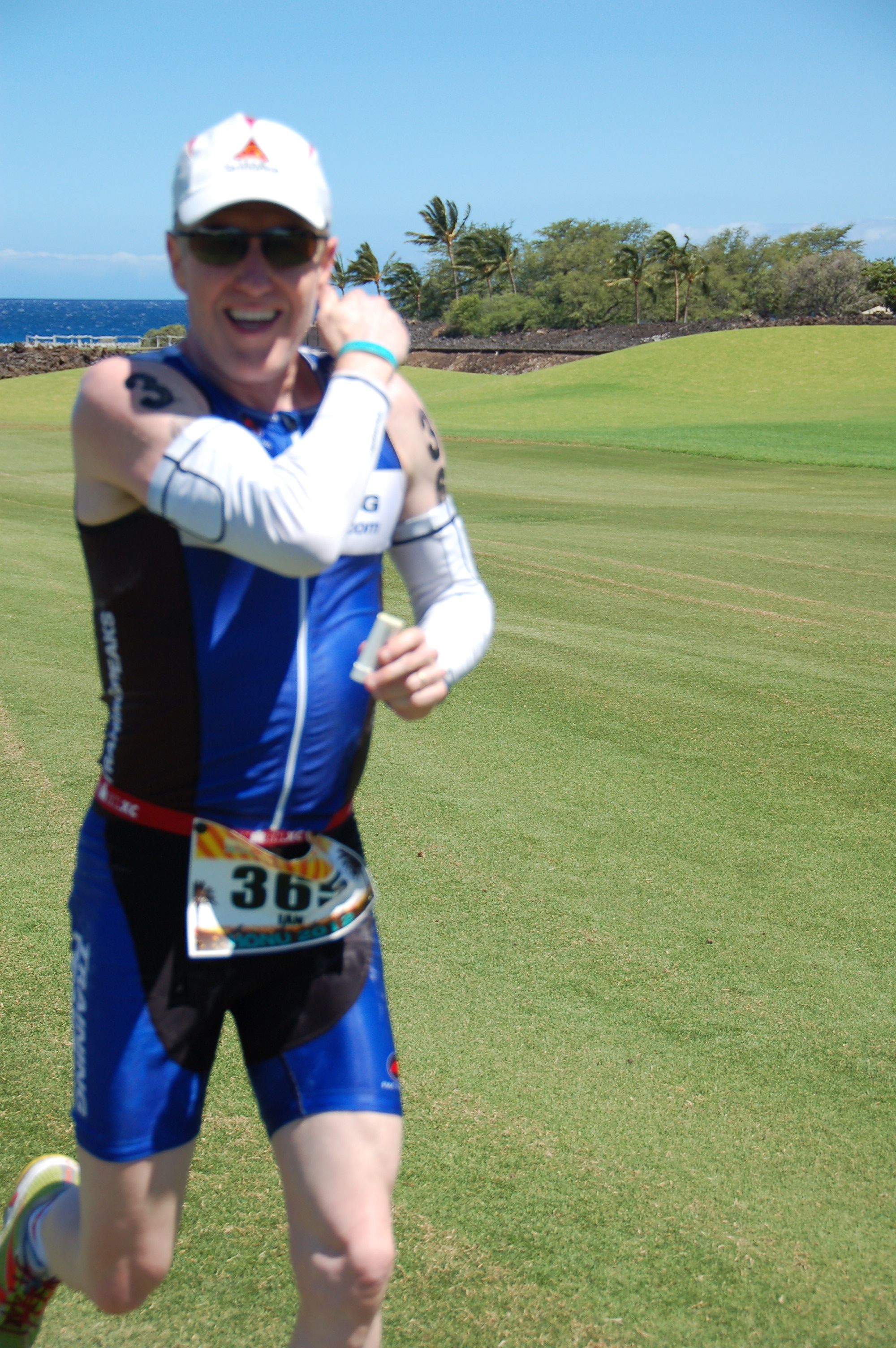
Sauntering across the line


Life is good.

For my fellow data geeks, my TrainingPeaks file: http://www.trainingpeaks.com/av/JZXYMLK6JJK7QYNUYEPSFMJWEA

Malibu International Distance Triathlon: Redemption

Very late with this little recap, but life and work get in the way of race reports sometimes. 🙂

Since I left Vegas on a disappointing note, I didn’t know what to expect six days later at Malibu, other than half the distance and much cooler temperatures. I was in the 6th of many waves, which started 5 minutes apart, and there was a pretty substantial surf break to get through. Luckily, it was a wetsuit swim, my favorite kind, and the water was a cool 65F. I almost got crushed by an incoming wave on the way out to the first buoy, but I dove under it just in time and kept moving forward. Sighting was pretty tricky due to the swells, and the swim became an obstacle course once I started catching slower swimmers from the prior waves.

I made it back safely to shore for the swim exit, alternatively looking for a wave to ride in and making sure I didn’t get smashed by one I had failed to catch, and saw a 24:xx on my watch, which is a good time for me for 1500m (a minute or two faster than normal). (My TrainingPeaks file here.)

Got out of T1 pretty quickly and mounted my bike to begin the 1.5M exit from the Zuma Beach parking lot. This involves a series of speed bumps, which you don’t want to go over at full speed but can avoid by staying to the far right.

Unfortunately, the far right was crowded with slower cyclists, and I didn’t see the first one until too late, so I hit it hard, which launched both my fluid bottles off of my bike. Not an auspicious beginning to the ride, and what’s more I couldn’t risk going out for 25 miles without any fluids whatsoever, so I turned around and went back to retrieve them. Easier said than done when cyclists are coming in droves. I lost about 2 minutes in this process, but headed out with renewed focus and a little bit of anger.

I was moving very well, and in fact I almost couldn’t believe my speed and power numbers. The good thing about shorter races is that you can take a few risks in terms of going hard; even if you blow up, you can still finish. Go too hard in an Ironman or half (like I did in Vegas), and you will pay the price. So I let it ride, and I was passing scores of riders as though I had been shot out of a cannon.

I made it to the turnaround and had to wait behind a slow rider in the 500m-long “no passing” zone (the Pacific Coast Highway was narrow at that point, so for safety the organizers had a short stretch where you weren’t supposed to pass other riders; “short” unless you happen to be behind someone really slow), but once free to fly I put the pedal to the metal again.

On the return trip through the Zuma Beach parking lot, I managed to avoid the speed bumps, and hit the dismount line with a split of 1:05 for the 25 miles, which is a PR for me in an Olympic-distance ride, despite the time lost with the speed bump incident. Moreover, I felt great and ready to run. (My TrainingPeaks file here.)

My only thoughts for the run were to hold a consistent pace and to reel in all the 50+ guys I could see. With all of the earlier waves, though, there were a lot of guys on the course, and it’s not always easy to spot the geezers. I was  running consistent 6:35 pace, and I did manage to pick off a few, making sure I passed with authority when I made the pass. In the end, I crossed the line just a few ticks over 2:15, with about a 40:30 10K split. (TrainingPeaks file here.)

Ahh, redemption is sweet!

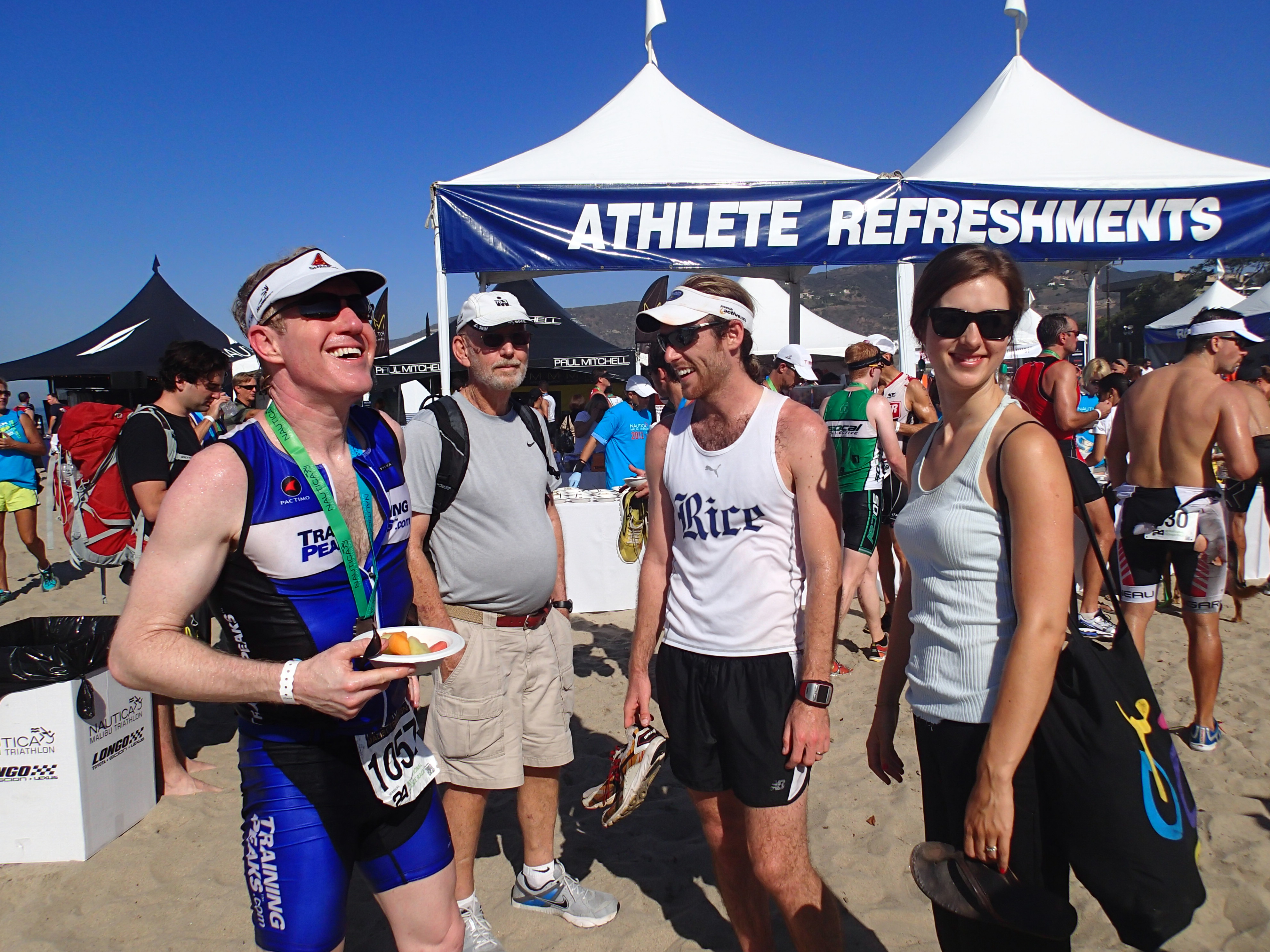
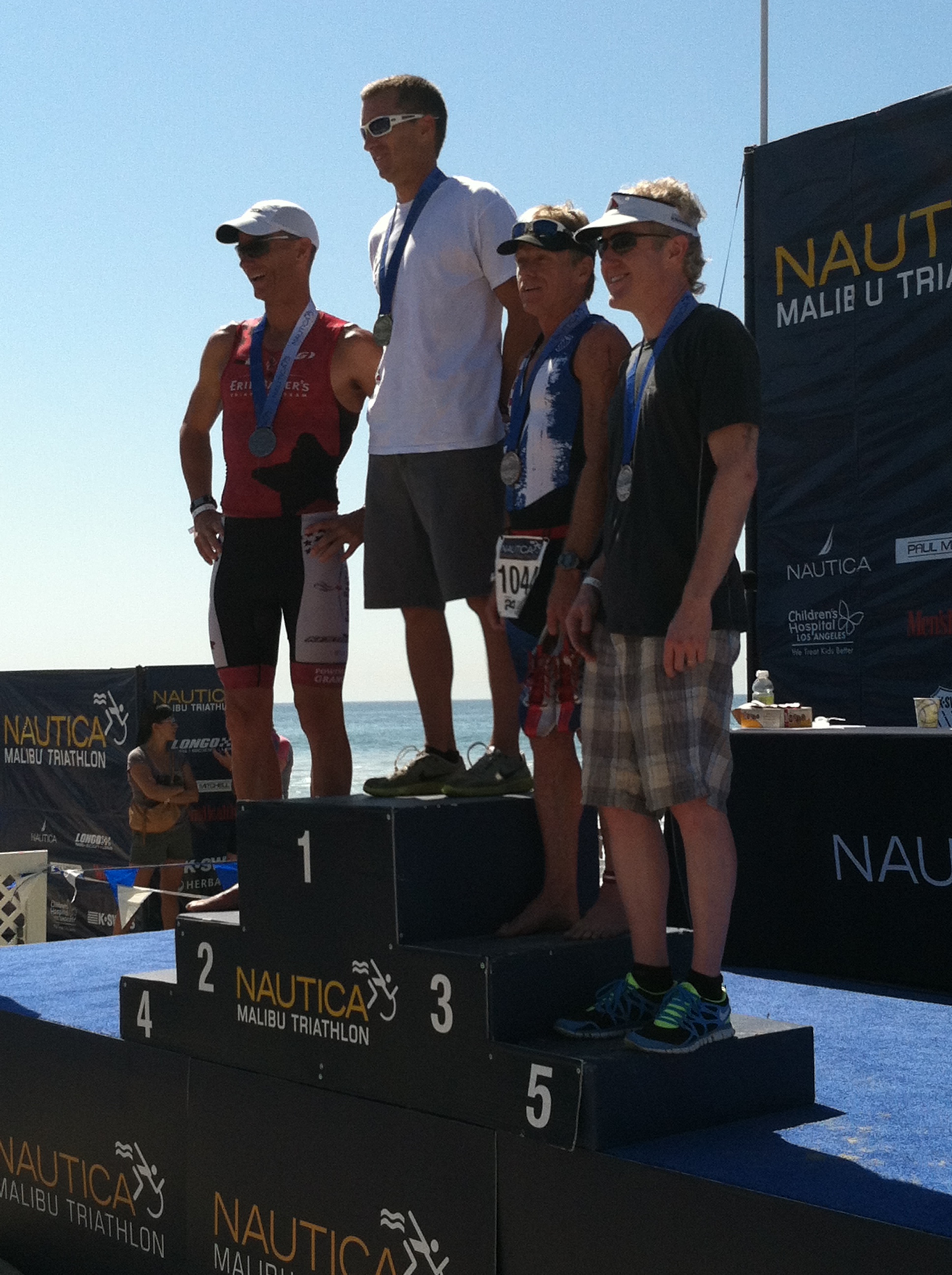
That was good enough for 5th in the M50-54 age group, which got me on the podium. Awesome! It sure made up for Vegas in a big way!


Vegas 70.3 Champs: Pride Goeth Before the #Fail

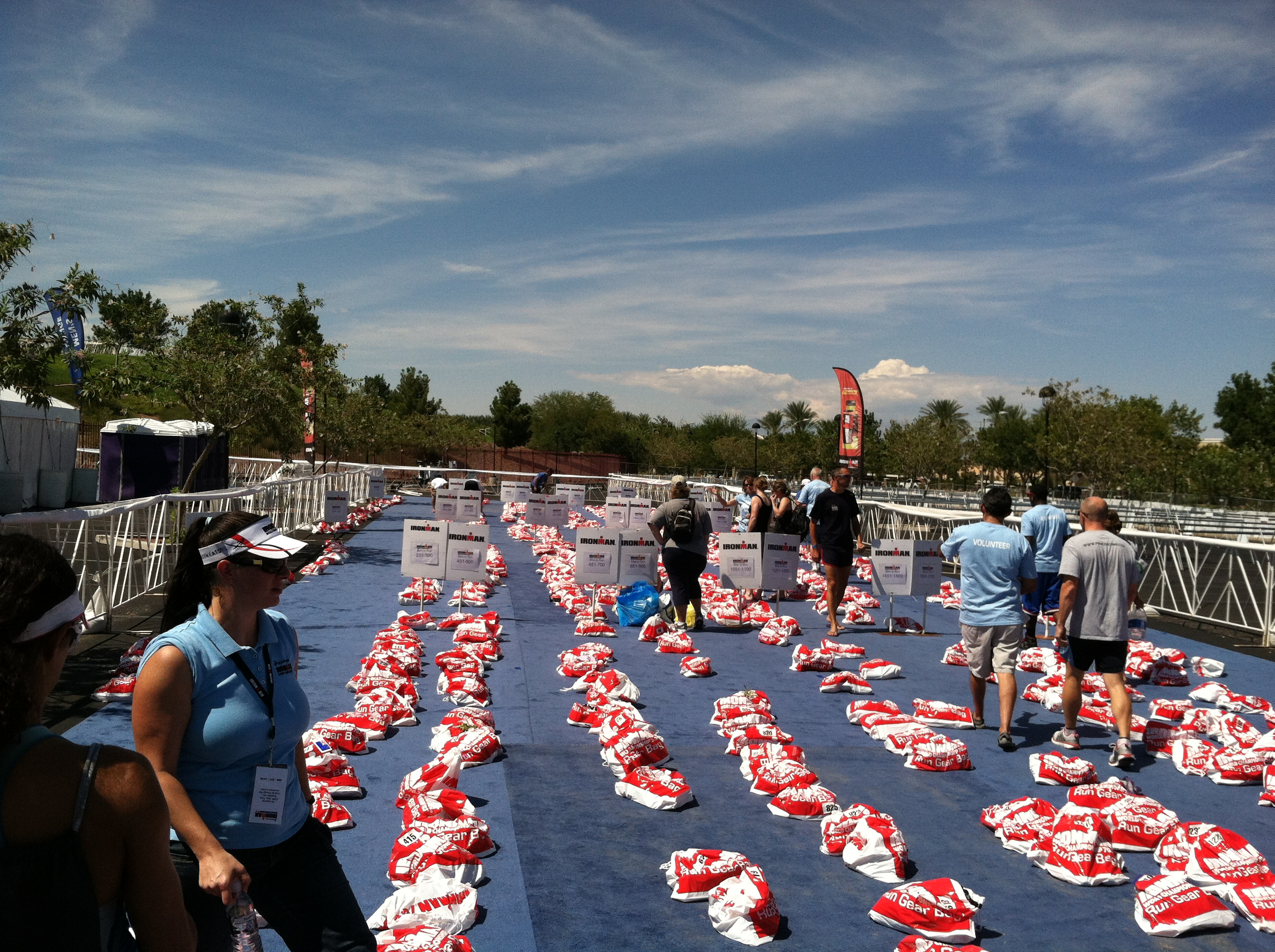
This is the run bag check-in the day before the Ironman 70.3 World Championship in Henderson, NV. The temperature hit 108F — I don’t know if that’s an Ironman expo record, but it was definitely a harbinger of things to come.

Living in the SF Bay Area as I do, I am not really accustomed to that kind of heat, especially after the pretty mild summer we had. On the other hand, I’ve done ok in some pretty hot races — Kona ’09, pretty much every Honu 70.3, IM Germany ’06 — “well” as in “I survived and paced myself conservatively for the conditions.” So at least I have an approach to challenging conditions that is known to work for me.

So why did I find myself charging up the hills in the first hour of the bike pushing over 300 watts like it was a Wednesday evening chase groups workout?

Because apparently I’m not really a learning organism.

In hindsight, the entire lead-up to this race was all wrong — I didn’t treat it like an A race, because it wasn’t. It was a race I was fortunate enough to get a rolldown slot for at the Hawaii 70.3 race, but my big goal this fall was and is Ironman Arizona. So this was supposed to be a good workout, a fun event that I hadn’t planned on doing, and one that I wasn’t coming in for tapered and with high expectations for.

And it started off fine: the swim was a much better experience than normal in IM events, because it used waves 5 minutes apart rather than one big mass start. So that meant I wasn’t getting the crap beaten out of me from the outset. The 82-degree bathwater of a lake, though, was not the most pleasant swimming experience — I’m sure I lost 4 or 5 lbs during it, as well as a lot of minutes compared to a wetsuit-legal swim. My left calf started cramping in the last couple hundred meters, which wasn’t a good omen, but I got my 40+ minute time and went on my way.

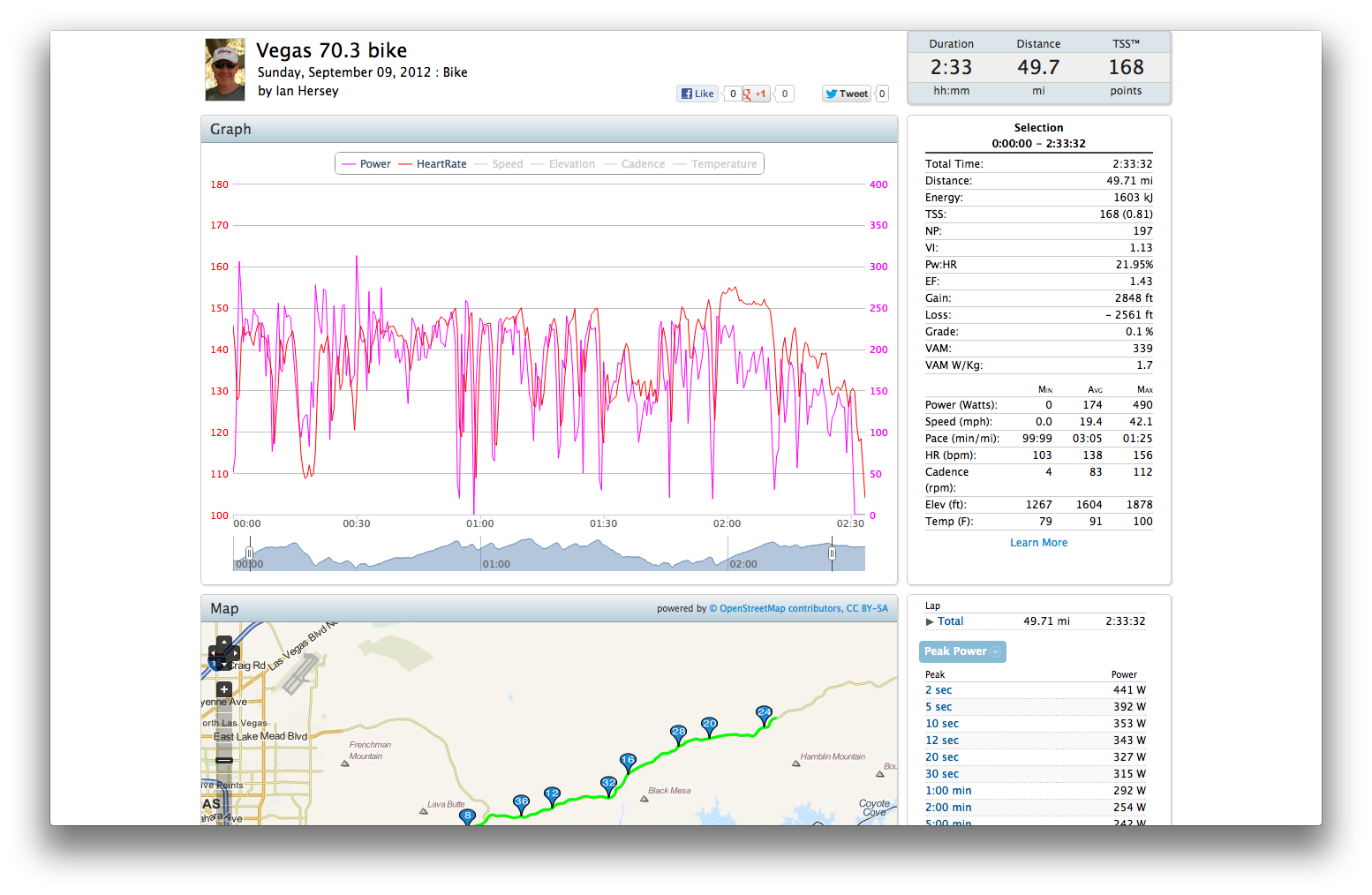
Here’s where things went wrong. I train with power all of the time; I know my numbers, I know the effect that heat has on your power output / heart rate ratio, yet I chose to ignore that and “go by feel” — race other people instead of doing my own race. This was probably partially due to all of the 50+ men being in one of the early waves and therefore being passed by younger, faster guys as the race went on. The TrainingPeaks graph pretty much tells the story:

You’ve got a lot of riding in the first hour well above 200 watts, spiking above 300 for some short efforts on climbs, but even with a CP 1 min of 292W.

Later on you see declining power but rising heart rate, an effect of both the early spikes in power and the increasing heat of the day — and most of all, of course, because of my increasing level of dehydration and electrolyte loss.

I was on a decent pace for most of the ride, on target to finish between 2:40 and 2:45, but there were signs of trouble. Number one, I was getting twinges of crampiness, which I managed to hold at bay by taking electrolyte caplets, but far more often than planned. I was also going through fluids very quickly but had no urge whatsoever to pee. What’s more, the aid stations seemed few and far between — usually you’re at them before you’ve emptied your bottles.

However, other than that, I was feeling ok and still had more than enough power to get up the relentless series of rolling hills in the Lake Mead recreation area. It wasn’t until past mile 40 that things began to unravel pretty rapidly: as the course went downhill, so did my race. I was able to coast down Lake Mead Parkway, but once it flattened out I started cramping when I turned the pedals. More electrolyte caps, more fluids, and I took advantage of more downhill on the early part of Warm Springs Rd.

But on the ensuing flat part of the road, my left quad completely seized up in a very painful series of cramps, followed quickly by the right quad. I was able to make slow forward progress by extending my left pedal, pushing down slightly, then pulling up slightly again and repeating. Almost like a push bike. That got me to the aid station at 50 miles, so close and yet so far.

I couldn’t control the cramping, but I did manage to unclip and get off the bike before another painful series of spasms hit me. The aid station volunteers were great — they brought me bananas, water, sports drink, energy bars — anything they thought would help. I set there on the median strip in the blazing 100F sun and felt cold enough that I got goosebumps. That’s a pretty clear sign of severe dehydration. I must have sat there for 20 minutes while the cramping came and went, and then I tried remounting my bike, determined as I was to finish the damn race.

As soon as my right leg got over the top tube, the quad cramped severely again. So back I went to the median strip, this time under the shade of a tent. I was soon joined by a 50+ woman named Linda, who was also cramping badly. I gave her a few of my remaining precious electrolyte caps, as it was becoming clear to me that I might not make it to the run. She needed them now more than I would later.

Various parts of my body continued to cramp — oddly my hands, which became twisted like pretzels. A race official with a truck came up to us and told us he would take us to T2 if we decided to drop out. I wasn’t ready to do that, but on the other hand I wasn’t feeling well enough to remount my bike.

Finally, after more than an hour at aid station #4, I (and Linda) pulled the plug. I wasn’t happy about it — I don’t like to quit, as I’ve come to feel that once you allow yourself to quit, it becomes easier and easier to quit the next time. But once I got to T2 and saw all of the folks suffering in the hottest part of the day on that run, I honestly couldn’t see myself being among them.

So what did I learn?

  1. The pros may treat the half Ironman as a long Olympic distance race in terms of how they pace themselves, but age groupers — even those good enough to qualify for the championship — need to treat the distance with more caution.
  2. When it’s as hot as Hades Henderson, pace yourself in a 70.3 as though it’s a full Ironman. Also, if I had watched my heart rate more closely instead of just my power, I would have seen that my body was putting out way more effort than it would have normally done at that power output — a sign that you should adjust your numbers downward to account for the conditions.
  3. Finally, just because you’ve gotten through two very tough races earlier in the year and have had some killer workouts lately with improved power and pace, it doesn’t mean you’re invincible and no longer subject to physiological limitations. Pride goeth before the #fail, after all. 🙂

On the upswing

After the Hawaii 70.3 race, I brought down the volume while injecting a little intensity, partly in the form of aquathons but also with some hard bike and run sessions. In july, it was time to officially kick off the second half of the training year, pointing towards Ironman Arizona in late November.

That meant injecting some long, flat rides into the program. We in the Bay Area are blessed with a lot of beautiful, hilly terrain to ride on, but most Ironmans are pretty flat and involve consistent pedaling over 5+ hours. My team’s normal weekend rides involve some long climbs and long descents, and the issue that presents for those doing Ironman is the uneven nature of the effort. Feast or famine, so to speak.

So a few of my teammates and I who are doing Arizona have taken to riding long from Lake Almaden in San Jose, going through Morgan HIll, Gilroy, Hollister and beyond, in order to get long, consistent pedaling time. The last one we did was 112 miles in 5:45 of riding time, which equals an Ironman bike leg. That went pretty well, and 10 or so days later, the benefits of that long ride and the previous one two weeks before that one seem to be kicking in: I feel like I’m on fire.

Analyzing things with TrainingPeaks, part of the reason is that I’ve pushed my base up from where I was earlier in the year when I was getting ready for Ironman St. George. The telling number is Chronic Training Load, or CTL. Prior to St. George, I was hovering just over 80. Currently I’m at 95, and it’s still on the rise thanks to a couple of pretty big weeks. Here’s the graph:

The 70.3 World Championship is in Vegas in a week and a half; I won’t be tapered for it, but hopefully I can maintain my “on fire” form until then. We’ll see!

A Tale of Two Aquathons

I thought I was done with racing after Honu until the Vineman 70.3, but somehow I got talked into two aquathons (swim/runs) within a week of one another.

First, my wingman Keith coaxed me into heading down to Morgan Hill last Sunday for the Splash and Dash, which offered a series of events: 1-mile  swim, 2-mile swim, 1-mile swim / 3-mile run, 1-mile swim / 6-mile run, and a 2-mile swim / 6-mile run. I chose the 1/6 aquathon, figuring that any race where the swim takes longer than the run is, well, just wrong. 🙂

Went out hard in the swim and paid the price with a slowdown and some sighting errors – the water was also a little warm for a fullsuit (need to get a sleeveless for warmer swims). I hit the exit in 28 and change, which is a pretty crappy mile time for me. Charged up from the reservoir and changed quickly, then set off on the run. Cycling after swimming vs. running after swimming is completely different – you don’t really feel the effects of the swim when you get on your bike, but you sure do on the run. I was breathing hard immediately, but started reeling some people in. Some were only doing the 1/3, so only one out and back on the run; those of us running 6M had to go out-back-out-back.

Try as I might, the first mile was a struggle to run 6:40 pace, which normally wouldn’t be that challenging but definitely was redlining it after that swim. I just kept that effort level, and my splits started getting faster – down to 6:30 and a little faster. Coming to the end of the first loop, I could tell that there were only maybe one or two people in front of me in the 1/6, since anyone doing the longer run and ahead of me would have to be going out again when I was coming in. I passed the one guy in mile 4, and from that point on I was the hunted. I did get passed by the winner of the 2/6, my teammate Mike, who’s a very fast swimmer/runner (he’s pretty quick on the bike too). He had started 10 minutes in front of me but done a mile longer on the swim, and he caught up to me just after mile 4. I focused on keeping him in sight for the rest of the run, which I managed to do.

With all the people on the course from the various races, it became a little confusing as to where I was in my race, but when I crossed the finish line, my teammates told me they thought I had won it. My run split (the Garmin said the run was a full 10K) was 40:45, which I’m happy enough with, and my overall time was 1:10. It turns out I did win the overall; 2nd was about two minutes back of me.

Pretty cool! I have had a few overall wins in running races, but never one in a multisport event. Of course, it was a very small field, and all the big guns were in the 2/6, but a win is a win! The announcer was pretty funny at the awards ceremony – when he saw that I had won the overall, he said “all you young guys suck – you got beaten by an old man.”

Fast forward five days, and I found myself in Boulder, CO for a conference. I decided, as one does, that since I was in Boulder that I needed to make an ambassadorial trip to TrainingPeaks. I had alerted Dan McIntosh, but apparently I surprised the rest of the TP crew when I showed up around 5 p.m. on a Thursday. Next thing I know, I’m following Dan to Boulder Reservoir (or trying to – my gutless rental car had trouble keeping up with his Audi) for a Stroke and Stride. Again, various distance options were to be had: a 1500m swim / 5K run and a 750m swim / 5K run, and a 5K run only. Remembering my rule about not swimming longer than I run, I opted for the one with the shorter swim, which was alos useful since I hadn’t brought my wetsuit. Or my race belt, which meant I pinned my number to my tri top (as if I needed any more drag in the water :-)). The running shoes I had brought didn’t have quick laces, so I opted for my slip-on Nike Frees – not fast shoes, but fast to put on. Clearly, I hadn’t come to Boulder prepared to race.

Everything started ok, but then I rapidly became hypoxic in the water – almost a panic attack, but I guess it was just the altitude (something to think about for next year’s Ironman Lake Tahoe race, which I signed up for). I had to move to the side and spend a little time on my back to relax and get my breathing and heart rate under control. After that, things were fine, but my swim was slowwwwww. 16:50 for what looks on the Garmin like it was 800m, but that could just be my inability to swim straight.

I had an OK transition, and I was off and running. At first it took me a while to pass people – they were starting out hard – but then I started my usual move through the field. I felt the altitude for sure, but was able to keep a consistent 6:45 pace, which actually netted me the fastest run split in that particular race (I got outsplit by a few of the guys doing the 1500m version, including Cam Widoff, but as usual most of the big guns were in the longer race) and 9th overall. I won the M50 division, but only would have gotten 2nd in the F50 division. Talk about getting “chicked!” 🙂

Anyway, these short, intense races without the bike have been pretty fun. I think I’ll do a few more this summer.

Thanks to the great folks at TrainingPeaks for the hospitality today and especially to Dan for making me get my old butt out there to race.

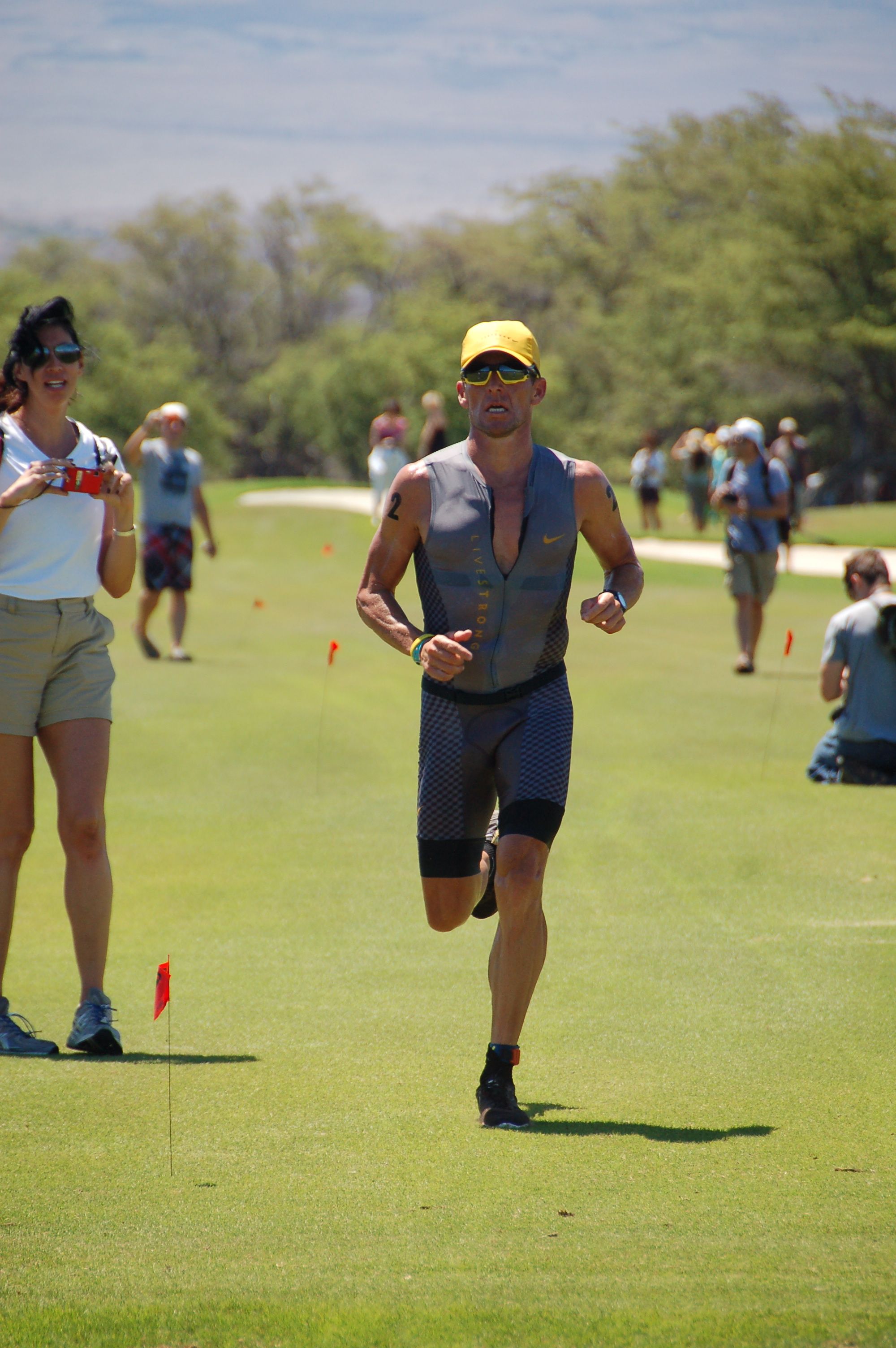
Honu 70.3: The Old Man vs Lance

This race wasn’t originally on my calendar, what with its being four weeks after The Toughest Ironman EVER™, but two things changed my mind:

  • Lance announced his intention to do it
  • I remembered I was turning 50 two days before the race, and what better place to turn Five-O than the 50th state?

So we booked it, Danno.

I have a love/hate relationship with this race; I’ve never raced well here. My PR is from the first time I did it in 2006 — 5:26 — and that was with a 45-minute swim but a somewhat-redeeming 1:38 run. It’s been downhill after that: a disastrous 5:48 in 2008, followed by a mechanical DNF in 2009 (flatted a tubular and couldn’t repair). The conditions don’t really suit me — I always sunburn, since the Hawaiian sun is at its most intense this time of year, it’s windy, it’s hot, etc. — but on the other hand it’s hard to imagine a more breathtaking venue. I love the Big Island; if I could do my software gig from there, I would. In a heartbeat. But that’s not reality.

Reality hit hard on race morning, though, when it became clear just how windy the day was going to be. That made my use of deep aero wheels a particularly bad choice (don’t buy into the video Zipp put out about how the 808 Firecrests aren’t susceptible to crosswinds — I’ve got a Kona ’11, a St. George ’12 and now a Honu ’12 that say otherwise. Looking for new wheels. :-))

Too concentrated on my own race preparation, I didn’t have a pre-race Lance sighting, but I did see a woman in identical TrainingPeaks kit to mine, and it turns out it was fellow Ambassador Tyna from New Zealand. How cool is that! Other than that, got myself covered with sunscreen and lubed various and sundry parts, and pretty soon we were off.

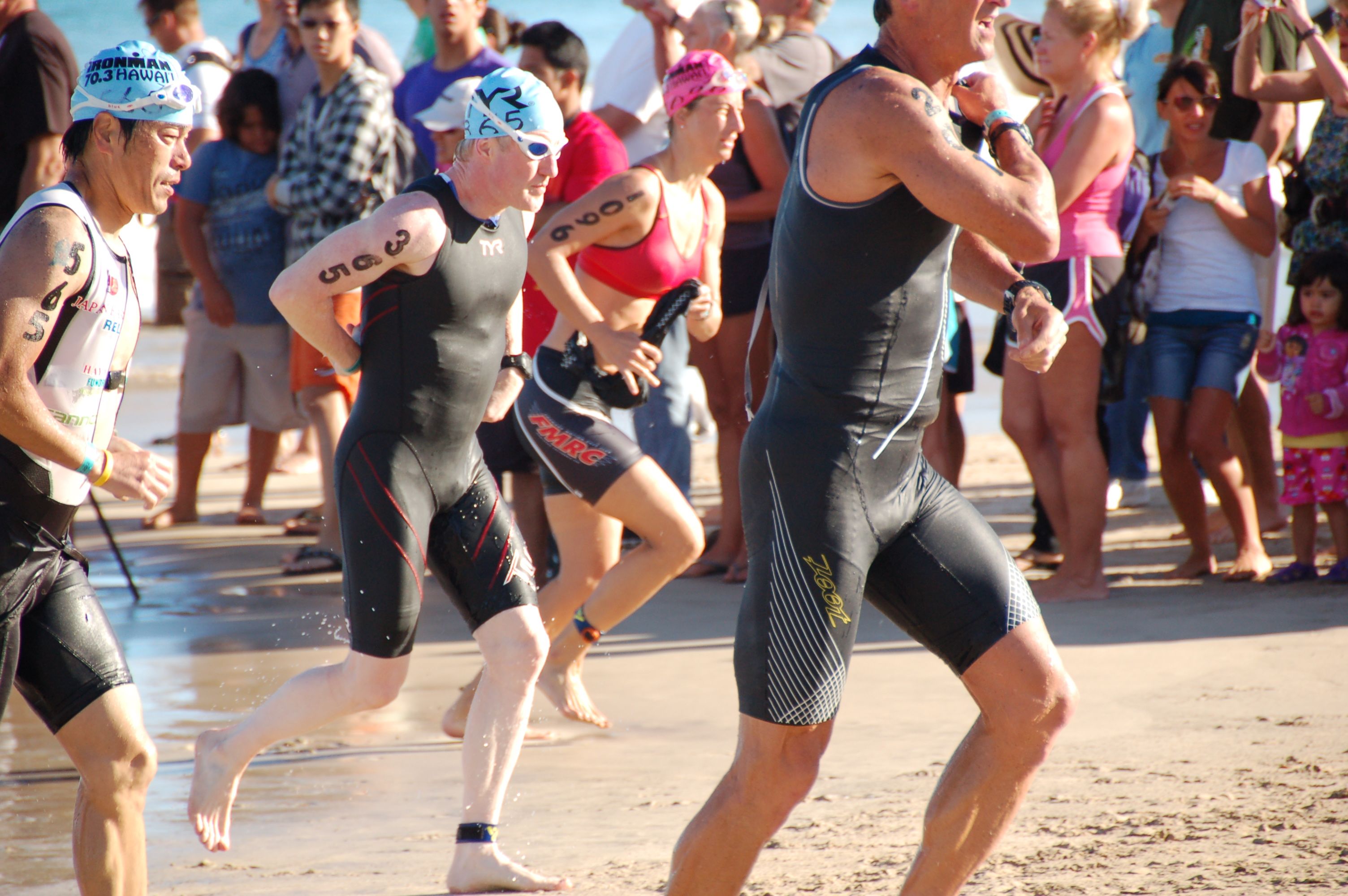
Hapuna Bay has very clear water, so visibility is really good — you almost have to remind yourself that a race is underway lest you get distracted by coral and fish. I got a clean start and wasn’t getting pounded by anyone, so I count that as a victory. I went wide at the first turn buoy to avoid the scrum, and then things started getting rough thanks to a strong headwind that was creating some chop and slow conditions and a low-but-bright sun that made sighting difficult. I got a little too wide and found myself with no feet to follow (and draft off of), and that probably cost me some time. Still, I exited the water in 38:37, a usual swim for me in ocean water with no wetsuit, and looked forward to my two better events.

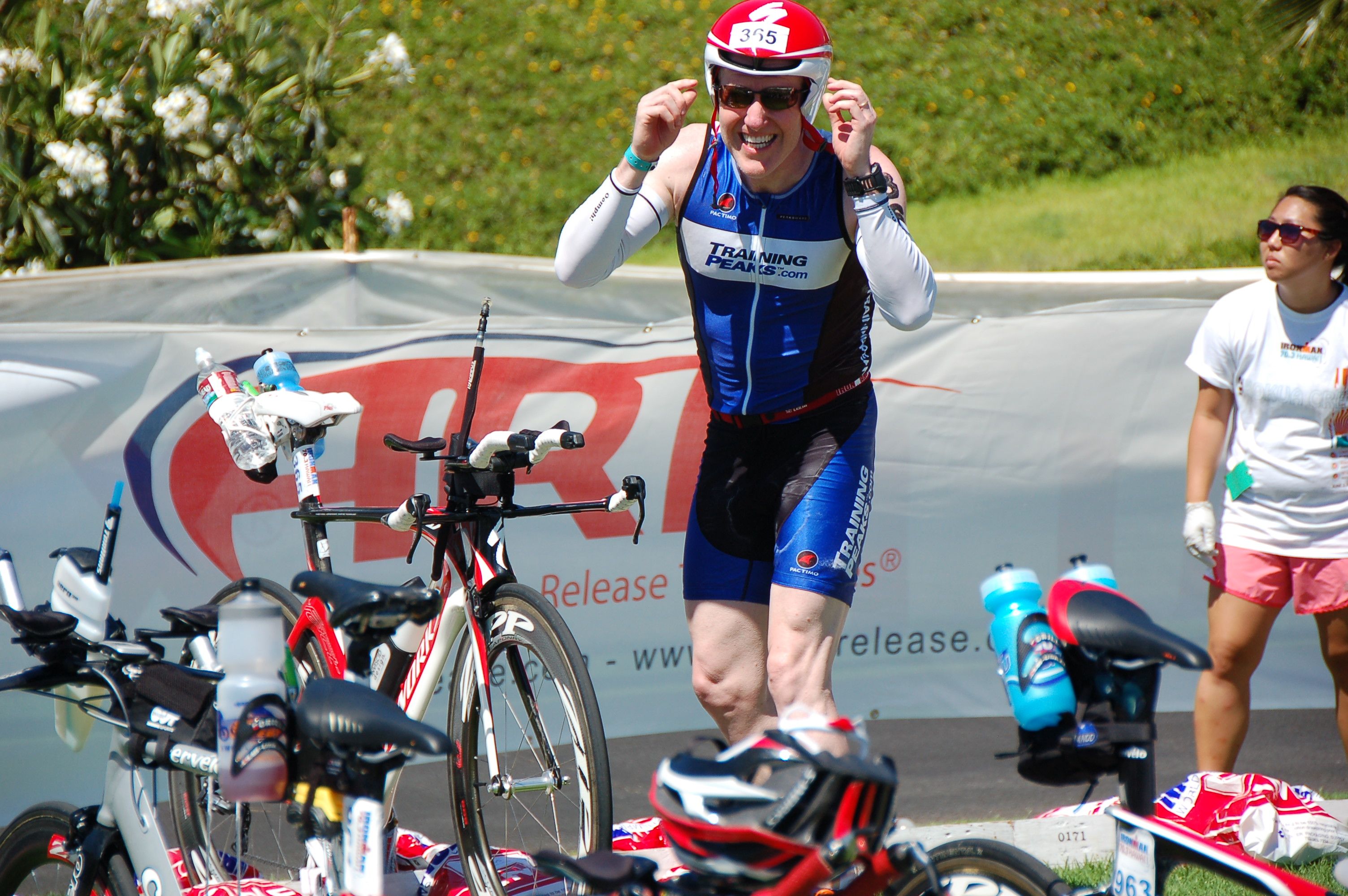
T1 involves a long run up from the beach to the bike racks, and I was reasonably quick but could definitely stand to improve. Off on the bike, it was time to put the hammer down. My race plan was to be aggressive on the bike, figuring that the run leg was going to be tough no matter what — I still had a little St. George in the legs — so there wasn’t going to be much in the tank regardless. The winds were pretty strong even early on on the Queen K, which meant a lot of fun was in store for us between Kawaihae and Hawi — where it gets really windy. I was averaging 220-230 watts in the first hour, which might have been a little too high, but at that point I was all in, so I kept working it.

The crosswinds normally start at the turnoff to Mahukona, but on this day they were at their fiercest between Kawaihae and the Mahukona sign — I almost got blown off the road a number of times on the return trip. While still going out, I saw the lead escort vehicles coming the other way, followed by Mr. Armstrong himself, then … no one. For at least a minute or two. It was clear he was crushing it on the bike. I was trying to do my own crushing and was feeling pretty good, working it on the climb to Hawi and waiting for the screaming descent that comes after the turnaround — with of course the accompanying white knuckling caused by the crosswinds.

Those got worse and worse as I neared Kawaihae, and once up the tough little climb that leads back to the Queen K, I was treated to … more crosswinds. This must be the year of epic race conditions.

Still, the trip down the Queen K to the Mauna Lani resort was quick, and I was soon working my feet out of the bike shoes before hitting the dismount line at T2 with a big bike PR (I believe my fastest half IM bike split, not that I’ve done that many) of 2:40:27, just under a 21 mph average. I’ll take it!

The winds did have one positive effect: they made the run a little bit less hot, and they also provided a tailwind on parts of the course. However, they also provided a considerable headwind on other parts, so that was kind of a wash. I felt decent but not exactly spry, so I set a pace goal for myself of 7:20-7:25 per mile, thinking that would get me close to 5 hours at the finish. That worked well for four miles or so until I hit the first long stretch of headwind, and then my pace, er, suffered. When the going gets tough, the tough focus on going aid station to aid station and on making sure they get enough fluids and electrolytes.

I was doing fairly well on that score, and around mile 9 I caught up to a guy whose number indicated he was in my age group. I had no idea what place I was in, but I was determined to make it one place better. He must have spied my number when he was walking through the aid station, because he surged ahead of me up the long gradual climb straight into the teeth of the headwind. I couldn’t do anything but bide my time and run my pace, and sure enough he started walking again after about a mile. I pounced and pushed past him, not daring to look back.

The turnaround finally came, and I looked forward to the downhill and tailwind that I’d been working to earn. The thing was, the tailwind just made it hotter, and I wasn’t feeling the easy flow that I normally feel on downhills, so I can only conclude that somehow they made it uphill both ways! I was really ready for the fun to end, though, and with about a quarter mile to go, it did — both hamstrings went into massive cramps. I’m pretty sure I yelled the f-word, for which I sincerely apologize to anyone within earshot.

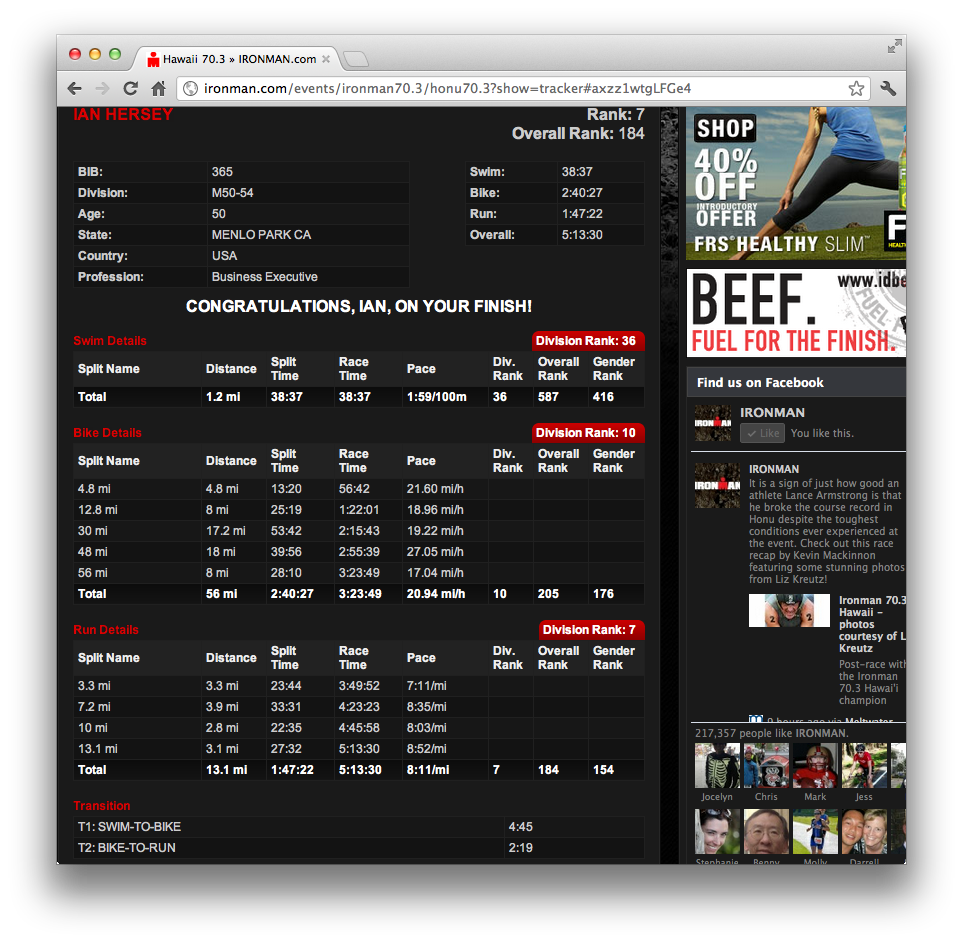
People always have best intentions in willing you to go on, but with these kinds of cramps, even walking isn’t an option. I tried walking backwards — that didn’t really help. I popped a salt caplet and just waited. After what seemed like an eternity, with competitors streaming by me (fortunately, no one in my age group), I was able to jog, then run, again. I hit the finish line — finally — in 5:13:30, a course PR by 13 minutes, and 7th in my newly-joined M50-54 age group.

The icing on the cake was two-fold:

  • a post-race Lavaman Red Ale at the poolside bar, courtesy of my sweetie
  • a rolldown slot to the 70.3 championship in Vegas, so add that to my race calendar

This is turning into a fun race year — I’m two for two on races in epic conditions and on highest-ever age group finishes outside of smaller local events. The bike emphasis I started at the beginning of the year really seems to be paying off.

Not that Lance is worried.

For data geeks, my TrainingPeaks files: swim / bike / run

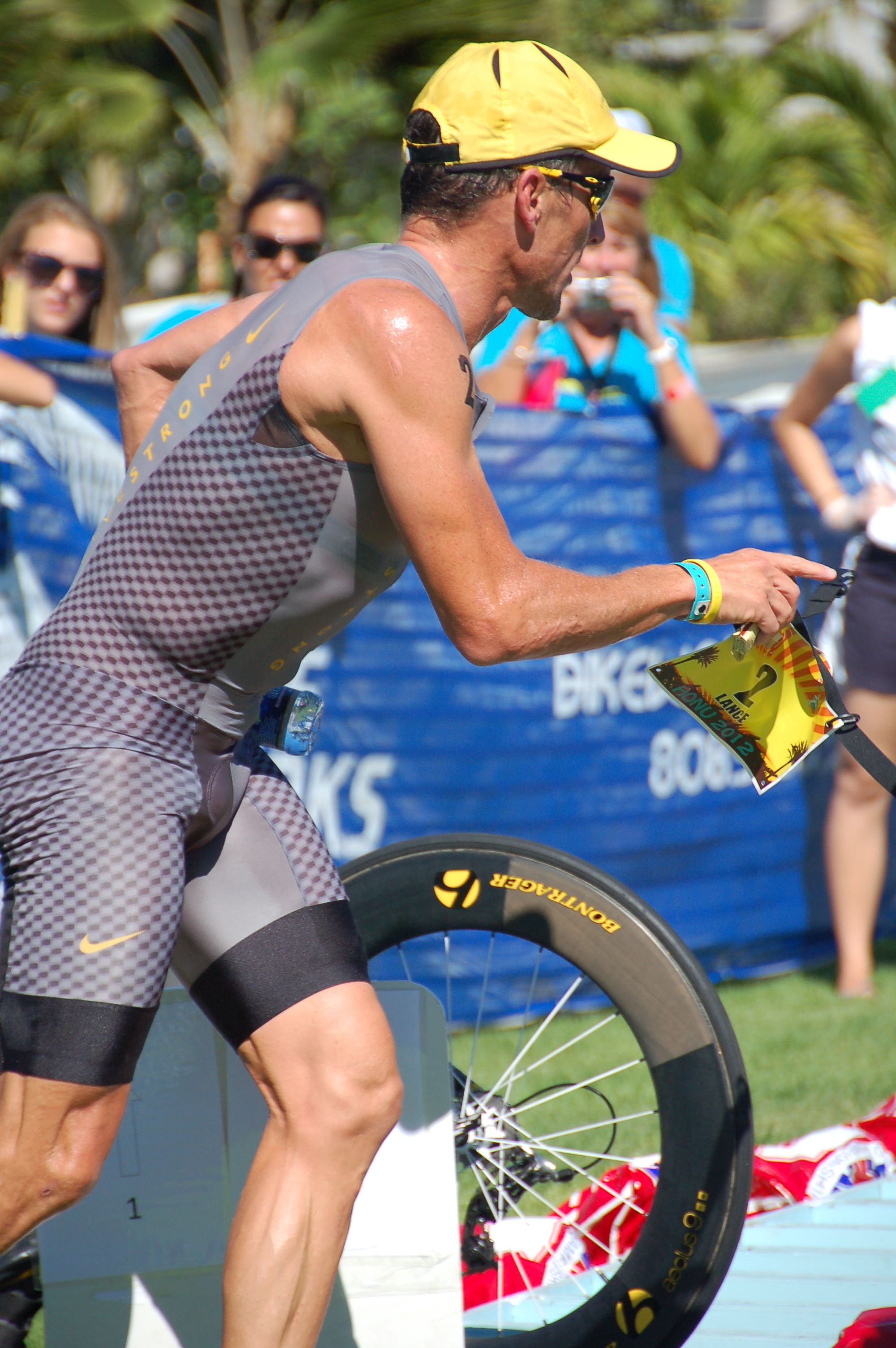
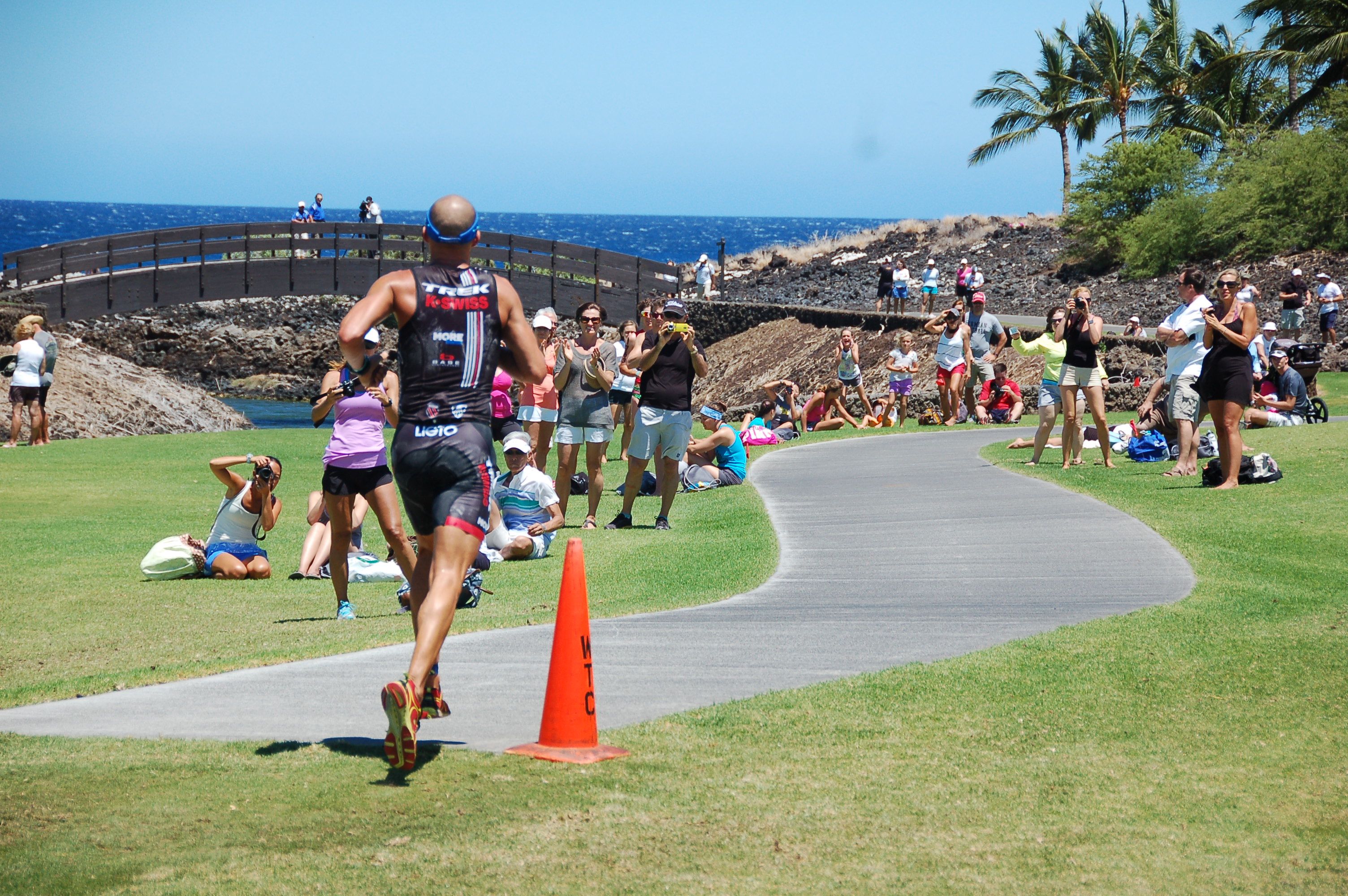
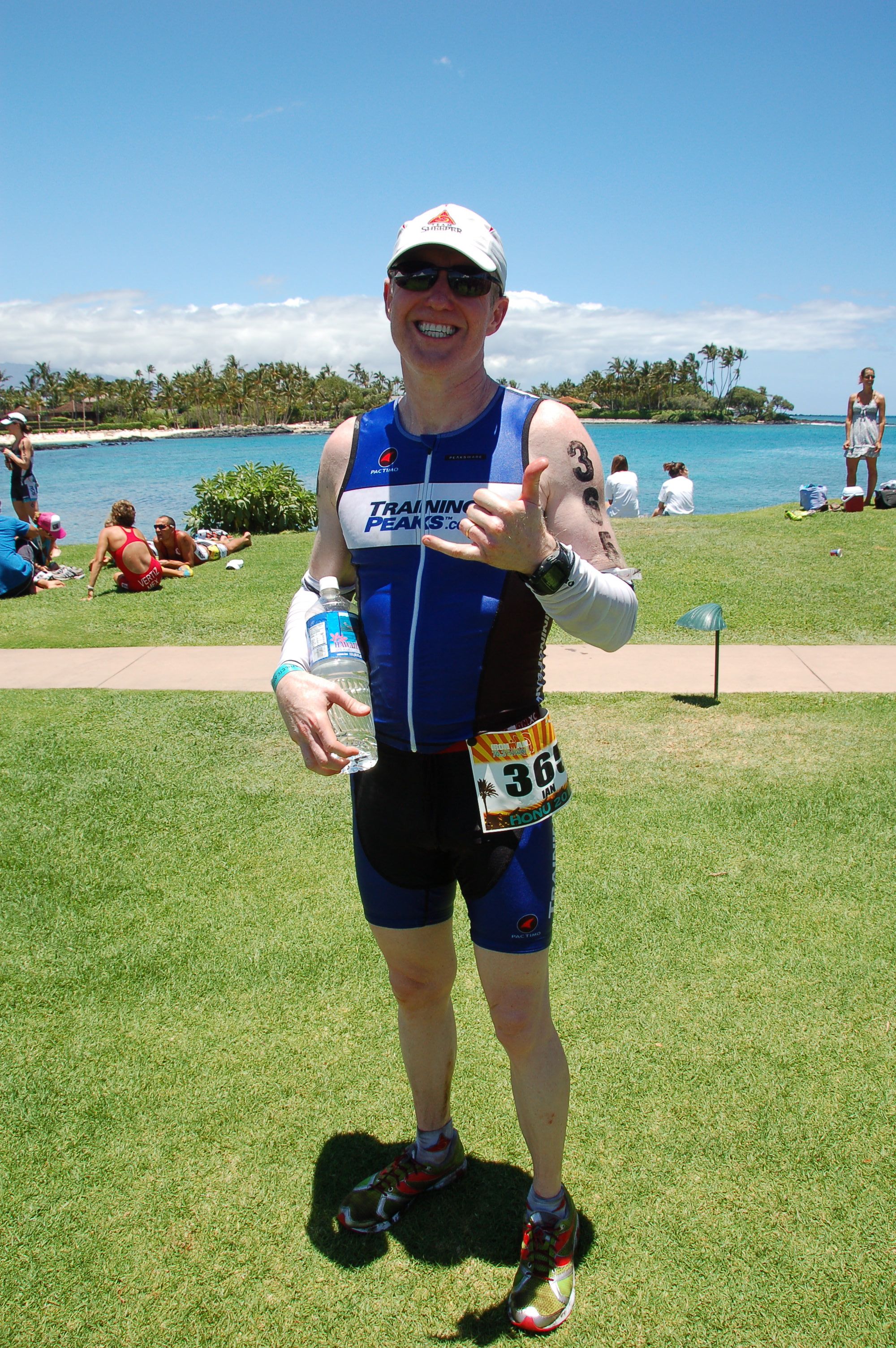
Some event photos (copyright © 2012 Jeanne Cooper):


Ready or not…Hawai’i, here I come!

It’s coming up on three weeks since The Toughest Ironman EVER™, and it’s one week until I hit the scary age of 50. A couple of days later, I’m racing Lance Armstrong I will be in the same race as Lance Armstrong at the Ironman Hawaii 70.3. Actually, I’m pretty sure I was in the same race as Lance back in 1987 at the President’s Triathlon in Dallas, but I can’t find any documentation for that online. I know that I did the race, but it might have been 1986 — one’s memory fades when one gets to be my age. Anyway, that was when Lance was a 15-year-old triathlon pro and I was a mediocre 24- or 25-year-old age grouper in the relatively early days of the sport. Now I’m 50, goddammit, and I’m gunning for him. 🙂

Not that he should be sweating it. I’m not even sweating it, because this wasn’t even originally on my race schedule. I love going to Hawaii, but I’m a little snake-bitten in this particular race — it’s one of the harder half IMs on the circuit due to the heat and winds (and even the swim can be pretty choppy). So I don’t really have great expectations going in, which sometimes means you end up having a great race, and other times…

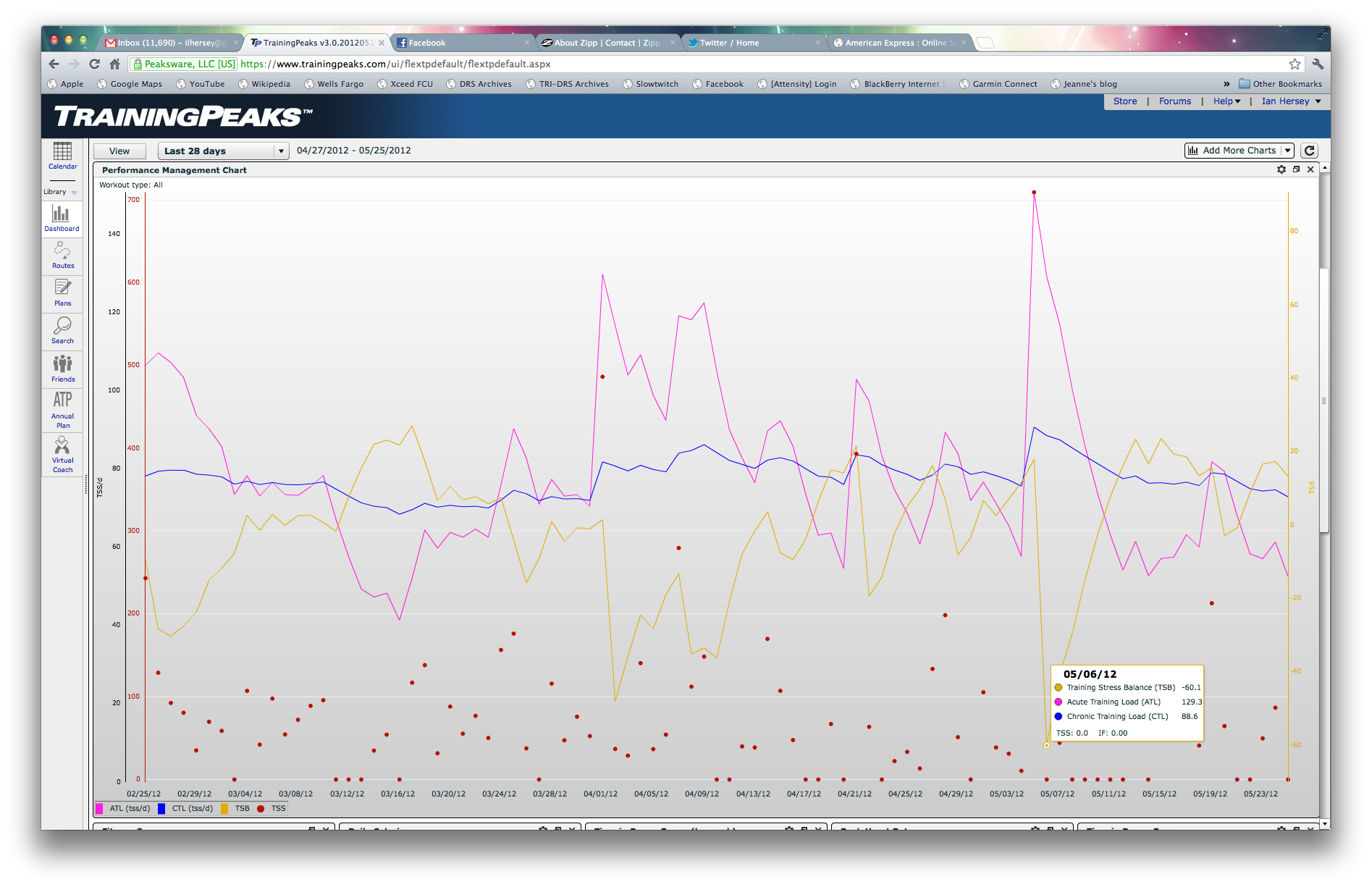
I’ve been using TrainingPeaks to monitor my IMStG recovery, and I have done a few key workouts — mostly some intensity to remind the muscles and cardio system what it’s like to go hard. Here’s the latest Performance Management Chart:

I ran quite a Training Stress Balance deficit by doing IM St. George, but a week-long work trip in Europe after the race forced me into little post-race training (though not exactly rest and recovery), and I’ve gradually reintegrated training. Still, I sometimes feel as though I’m teetering on the razor’s edge between fitness and illness. What I do know is that my power numbers on the bike are still down, particularly at the high end. On the other hand, running-wise I was able to knock out a few 1km repeats in around 3:40 (about 5:55 mile pace) on Sunday before deciding not to press my luck, so I’ve still got a little leg speed.

We’ll see — I’m looking forward to a nice time on Maui and the Big Island, and the race will be a little lab experiment.

Ironman St. George 2012

“Mr. Golan-Globus, this Ironman thing is hard!”

If you don’t get the reference, you need to bone up on your MST3K. But squeaky Kathy Ireland impressions notwithstanding, any Ironman is hard. You train, you plan, you envisage how the event is going to unfold – then the race throws you curve balls.

The 2012 Ironman St. George was an epic curve ball.

I had trained hard for the event, in particular on the bike. I’m a decent runner but a mediocre cyclist and an even more mediocre swimmer. With limited training time available, it made sense to me to focus on the bike – you spend about 50% of your IM race on the bike, so there are bigger time gains to be made there than in the swim, and those gains extend to the run if the bike also takes less out of you.

Most of my workouts were in my fitness studio, aka my garage, on my PR-setting Specialized Transition mounted on a Kurt Kinetic Rock and Roll Trainer (I found the additional core-stabilizing compensation of the side-to-side movement of the trainer to be beneficial). (Lest the reader think this is product placement, I have no financial interest in nor did I receive free product from either Specialized or Kurt Kinetic – though they are welcome to contact me. I can be bought. :-)) I did ride outdoors occasionally when the weather was good, but to my old school coach’s dismay (and to Spinervals’ Coach Troy’s financial benefit), I was equally happy to crank out hour after hour on the trainer.

All training progress was monitored on TrainingPeaks, who is my sponsor this year. For data geeks, I progressed steadily to a CTL of just over 80 (low for those hoping to qualify for Kona, I know, but the best I could reasonably manage with work, travel, life, etc.), and had a number of ATL weeks over 100. My indoor 20-min threshold power ramped up to 261 watts, but I also found I could go about 30 watts higher than that with less effort outdoors. I did the Team Sheeper 110-mile, 10,000-ft-of-climbing Epic Ride averaging 202 watts for just under 7 hours, so I thought a target wattage of 200-210 would be reasonable.

My swimming and running were a little suspect – when you ride 5-6 days a week, something has to give. I counted on my running background to see me through, so I only ran 2-3 times per week, and I really had no runs over about 90 minutes. Swims were, well, spotty. I did use my Vasa Ergometer a fair amount, and I did start showing up for masters workouts as the event approached. I had some good test swims in my wetsuit, both in the pool and in open water, and those indicated I could easily hold about 1:30/100y pace for an IM swim – 1:05 or so for 2.4 miles.

Race day had other ideas, though. Forecasted to be a good day with highs in the low 80s and 10-mph winds, the race began uneventfully with the usual scrum when the gun went off. I settled into what felt like a good pace and kept from being pummeled by other swimmers. The water was a cool 63F but not bad in the wetsuit. I felt good.

Then it hit. Near the first turn buoy, I felt waves washing over me from behind. I thought that a large boat must have passed by. By large, I mean an aircraft carrier. I looked back, and what I saw was just ridiculous. Whitecaps, strong winds, swimmers panicking all around, trying to grab on to kayaks and paddleboards. Chaos.

It took a while for me to process what was happening: this race had just turned epic! Swells of 3-4 ft., and unlike ocean swells these came in rapid succession. The hardest part mentally and physically came when I turned onto the 1800m leg back towards the start, heading straight into the teeth of the chop and wind. I found that by breathing to my left I could both avoid a mouthful of water and make somewhat faster progress, so I decided to “just go ahead and do that.” Swim exit came in an all-time personal worst of 1:37:21 – a good 30 minutes worse than I had trained for – but at least the hardest part of my day was over.

My TrainingPeaks swim file.

Or was it? Those same winds kicking up the swell were howling through T1, so it quickly became apparent that the bike was going to be, um, interesting. It took about 20 miles from the Sand Hollow Reservoir towards town to hit the first of the two main bike loops, and then came the endless climb through the canyon being buffeted by howling winds. Progress was slow but steady; I was averaging a little over 200 watts but only 15 mph (vs normal 20-21), so the effort was honest but controlled. My equipment mistake was riding a Zipp 808 Firecrest front wheel – it may not be as susceptible to crosswinds as other similarly deep-rimmed wheels, but I was definitely getting blown all over the place, just as I was on the climb to Hawi in Kona 2011.

The climb on the first loop was very taxing mentally as well – you have certain expectations of goal times, podium finishes, whatever – and when it becomes clear that you’re not going to achieve your time goals, it’s easy to start thinking about quitting and saving it for another day. I probably did this 1000 times. But three things kept me going:

  1. I didn’t feel bad, and I was keeping up with my fluids and nutrition well. Just because an Ironman is hard isn’t a reason to give up, I told myself – they’re supposed to be hard.
  2. Going into the race, I had ten Ironman finishes, none of them over 12 hours. It became pretty clear that unless I could crank out a 3:30-3:35 run, I was going to go over 12 hours on this day. I asked myself whether I wanted ten finishes under 12 hours and a DNF, or 11 finishes.
  3. This was my first race in TrainingPeaks kit, and I didn’t want to disappoint the TP guys. But the bigger reason was my personal cheering section: my friend Greg and his daughter Alexa, who had traveled all the way out from San Francisco to support me. They had been at my disastrous Big Kahuna last fall, where I crashed on the bike and ended up in the ER. I couldn’t let Alexa go 0-2 on my races.

The situation improved considerably once I reached the top of the climb and began heading down the screaming, tailwind-driven descent back into town. 18 miles or so of 30-40 mph does wonders for your average speed as well as allows somewhat of a recovery. Things were looking up, so I embarked on the second loop mentally rejuvenated.

The wind seemed to have let up some on the second climb through the canyon – I could at least stay in my aerobars without being blown off the road. I started planning for the run, knowing that I had 20 or so miles of mostly downhill to go to the finish – it’s rare that you get that kind of recovery time prior to the run. I took every opportunity on that second descent to hydrate, fuel and get electrolytes down. Other than a last insult of a little climb coming back into town, it was a very easy final few miles, and I hit the dismount line going into T2 with yet another personal worst of 6:39:18. I got through T2 as quickly as I could, and entered the run course about 8:25 into the race, almost an hour slower than what I would have normally considered a “bad race.”

My TrainingPeaks bike file.

Now I was finally in my element, or at least I would have been under normal circumstances. The numbers tell the story: apparently, the “magic number” on the Ironman bike is a TSS of 280 in order to be able to run well (my past few have been around 300, which is close enough); my TrainingPeaks file shows a TSS of 413 for St. George. Not that I knew that at the time, but it’s a simple consequence of riding my planned power output, but for 70 minutes longer than planned due to the extreme conditions.

After mile 1, I caught up to my teammate and training partner Jess Smith, who is normally extremely upbeat and positive but was not having a good day. Still, she was a loop (8.7 miles) ahead of me. I was running crazily fast on the slight downhills – sub 7:00 pace early on, which was just stupid. I quickly reined myself in and settled into an 8:00 pace, just aiming for around a 3:30 run.

It got progressively more difficult, but I used whatever I could to keep going. Mainly other competitors – the LA Tri Club guy in my age group who had smoked me on the descent into town but whom I had passed in mile 1 and kept putting time on; the male pro named Heath that I had done Epic Camp New Zealand with a few years back who was running around my speed (but a lap ahead); various other people. But the second loop was tough, and my pace was suffering. I finally resorted to taking Coke at the aid stations, and that really started helping – I wish I had done that earlier. 10:00 pace became 9:00 pace, and my new goal became breaking 4 hours for the run, which started looking more and more doable as I clicked off the miles.

With a few miles to go, I really started smelling the barn, and kicked it up into a slightly higher gear for a strong finish. I made the last downhill mile an all-out charge for the finish, pumping my fists in a celebratory sprint to the line, stopping the clock at 12:18:38 and running 3:53:25, at least keeping my sub 4:00 IM run streak alive. I also notched my best age group finish ever, at 10th in M50-54.

My TrainingPeaks run file. 

Afterwards it became clear just how hard the day had been – a DNF rate of almost 30%, which may be an all-time high in Ironman racing. In light of that, I’m particularly grateful to have found the strength to finish, despite wanting to quit many times during the day. I think I’m proudest of this one, of all of the Ironman races I’ve done and all of the suffering that goes along with them. I will never forget it.

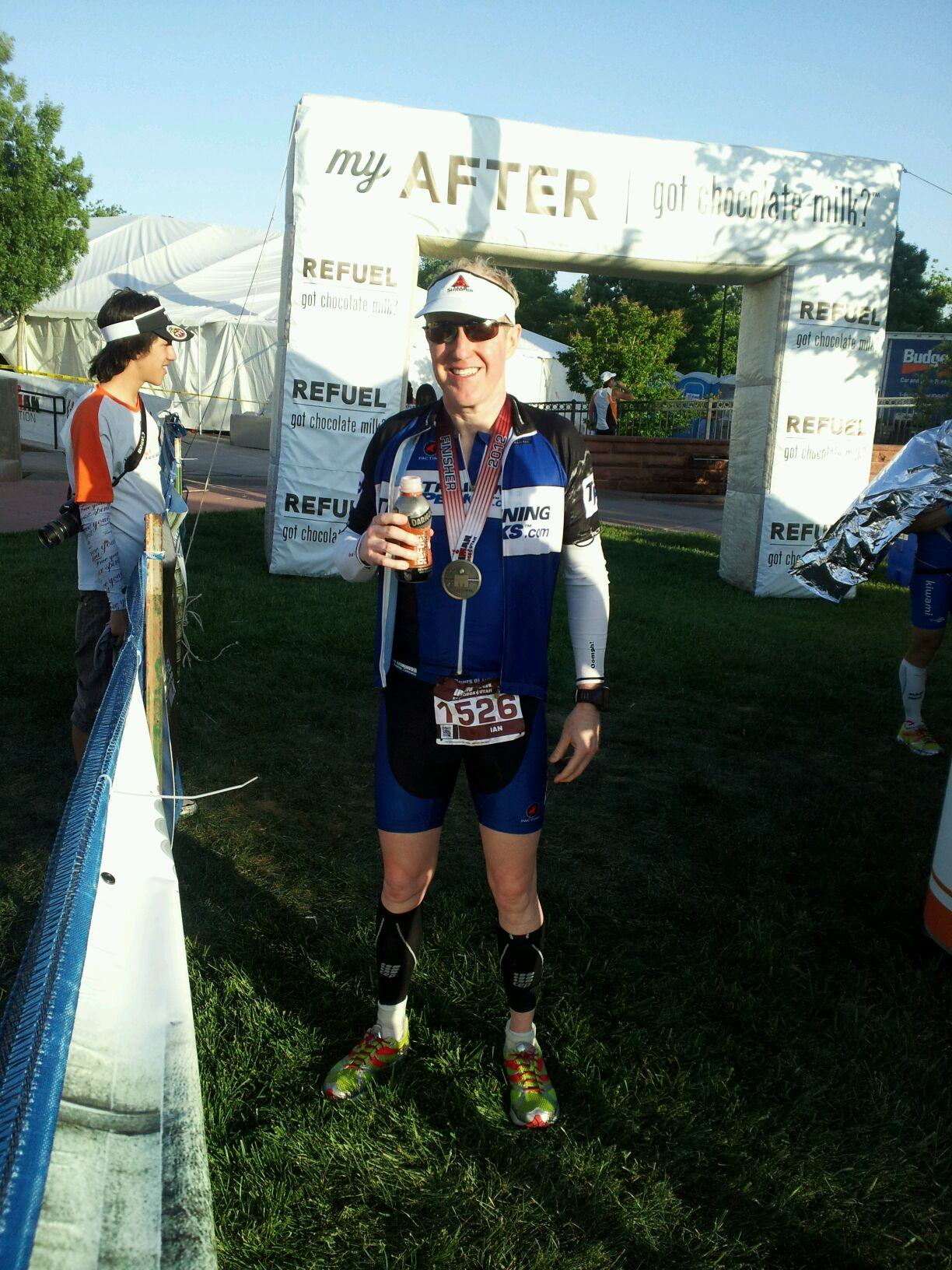
Able to crack a smile now that I’m done

Epic.
Racing Makes You Old Before Your Time

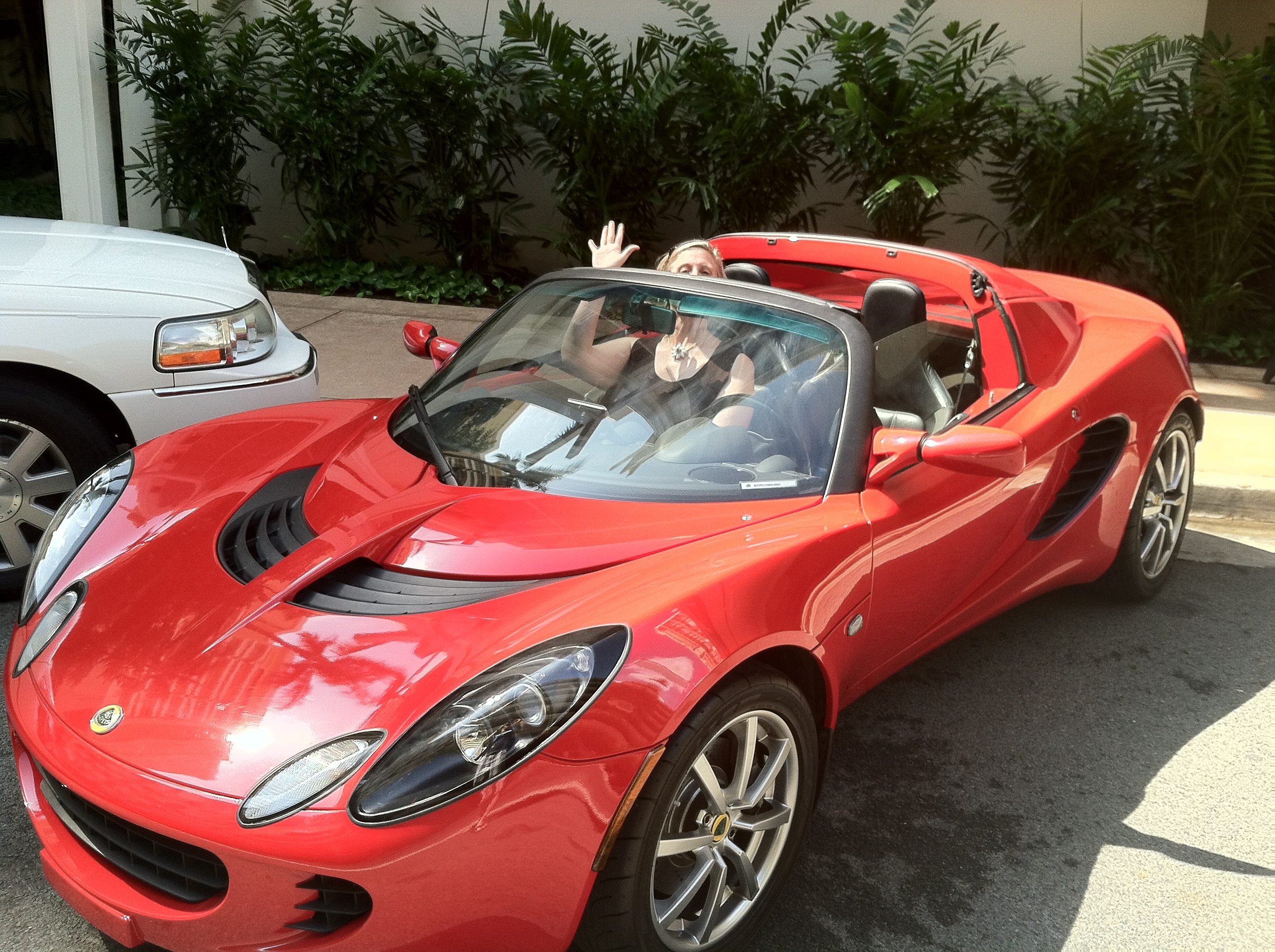
In a month or so, I’m turning 50. Gulp! I see something like this on the horizon:

Actually, I did get to drive that car while last in Honolulu, and I’m married to a young (all of six weeks younger) blonde, so I’ve pretty much ticked the boxes on my midlife crisis.

My first goal race of the season, Ironman St. George, is coming up on May 5, and in triathlon you race in the age group based on your age at the end of the year, which means this will be my first race in the M50-54 division. Even though I won’t technically be 50 yet.

Six days before that, I’m entered in the Big Sur 5K, a nice scenic little run held in conjunction with the marathon. There I’m racing as a 49 year old. In running, you race the age you actually are.

Theoretically, I guess I could jump into another running race in mid May and race as a 49 year old once again, after having raced IMStG as a 50 year old.

I wonder if this is that “fountain of youth” that Ponce de Léon was looking for.

Balancing Quantity, Quality and Incomplete Data

I’m a data-driven guy, both professionally and in my training, but in both sides of my life, numbers alone don’t tell the entire story. Words, feelings, tone, etc. all provide a qualitative dimension to what would otherwise be pure numbers, which you can interpret often any which way you want (“lies, damn lies, and statistics”).

A recent example of numbers not telling the whole story is my company’s analysis of Twitter for Super Tuesday — the numbers of positive posts for each candidate alone were not accurately predictive of outcome in 5 of the 10 states. However, if you look at the data more closely, you’ll note that we did get the most populous states — the ones we had the most geo-coded data for — we did get it right. That at least puts our 5-5 record in a slightly better light. 🙂 We did go out on a limb with USA Today in a pre-Super Tuesday article as well as a post-event analysis, and we ourselves didn’t believe we would get every state right, in particular the ones where we had very low numbers of tweets and where the difference between candidates wasn’t large. In this case, more data would likely have been better.

More interesting, though, is the qualitative data behind it — what did people say about the candidates and issues that would explain the why behind the results? We provided some of the insight here, but we have a lot more behind the scenes that we haven’t yet made public.

With my triathlon training, balancing the quantitative with the qualitative is a different exercise. I’m an experiment of one, so large numbers of experiential data from other athletes can tell you a lot about what has worked in general, but you still need to map the numbers to your own situation. High volumes of training that work for some athletes break other athletes.

This is where I’ve been using TrainingPeaks’ Performance Management Dashboard to help me look at how I’m progressing over the course of my buildup to Ironman St. George. I’ve been investing a lot of time and effort in cycling, since I come from a running background and have that leg pretty much nailed as long as the bike doesn’t take too much out of me. I’ve been following Coach Troy’s Spinervals Super 6 challenge, and it’s worked well for me — I improved my 20-minute threshold power number by 13 watts in the first six-week phase, and am looking for more in the second phase.

This improvement hasn’t come without cost, though. I had a sub-par half marathon in Austin in mid February (a 1:28:30, which normally would be a moderately hard training run, but on that day was “all out” on a pretty hilly course), and in general I’ve been feeling pretty tired on a lot of days.

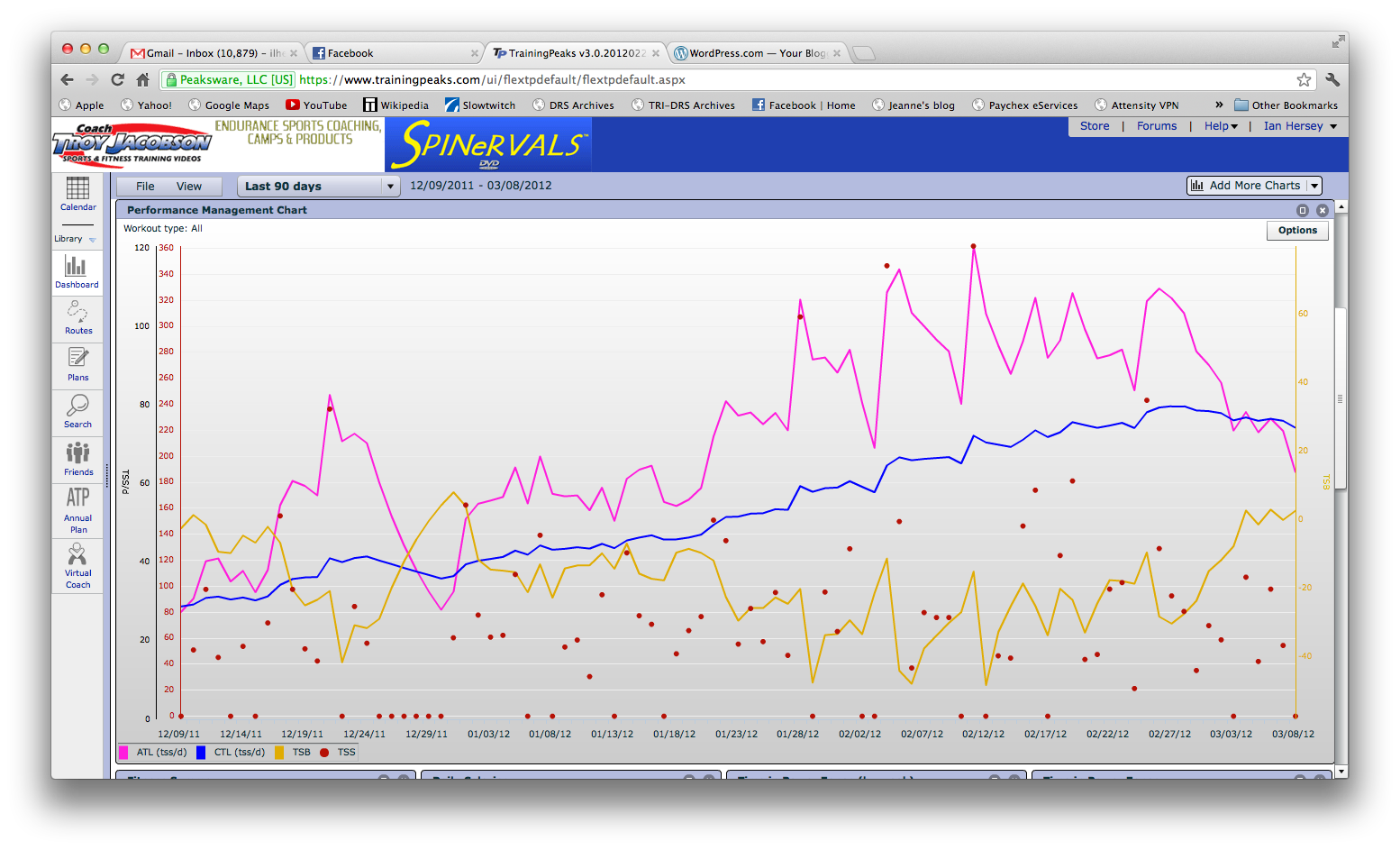
Looking at my Performance Management Chart, I can see a couple of things happening:

Image

First, my CTL (Chronic Training Load, the blue line) has been on a steady increase over the past 90 days. This is a good thing. I’m averaging above 70 TSS points a day on a consistent basis (the CTL in my case is a weighted average over the past 42 days). The pink line, my ATL (Acute Training Load), reflects my activity over the past seven days. The difference between these is my Training Stress Balance (TSB), the yellow line. You can see that that has been negative for some time, which pretty much explains why my one race wasn’t good and also why I generally feel tired.

This week, however, I’m on a little family vacation in Hawaii, and I didn’t take my bike (I’m on Oahu, which is not the most bike friendly of islands), which means I’m using the stationary bikes in the fitness center where I’m staying and not putting in really long rides. I also don’t have power data being uploaded (the bikes do display watts, however), so my TSS scores are being calculated based on heart rate data, which is ok but not the same. Anyway, the bottom line is that it is a true recovery week for me, and the numbers bear that out.

Qualitatively, I’m starting to feel less tired. After a few hectic days (the Super Tuesday stuff mentioned earlier) of “working from paradise,” I’m also now catching up on sleep (9+ hours last night), and that also seems to help. Which brings us to the topic of “incomplete data”: although TrainingPeaks provides for the analysis of nutritional data and other metrics, it’s a lot more work to enter that stuff, so I basically don’t do it. However, that means that my analysis by definition is based on incomplete data; how well you eat, how much you sleep, how stressful other parts of your life are — these can all affect your training, your relative feelings of fatigue, even your day-to-day level of motivation to train hard.

It’s just like with the primaries and social media — we know where some tweets are coming from, and we can analyze the language in them to know who and what they’re talking about, but we don’t, for example, know whether they’re actual voters, whether we’re looking at a second or third account from the same person, exactly what their age, sex and political/religious/etc. affiliations are, so the data is incomplete. But in the aggregate, it still tells you a lot about the issues facing the candidates, their relative chances of success both now and in the general election, and which messages are resonating with the public.

So I guess the lesson is that data will necessarily be incomplete, but it’s still useful if you know what to listen for.